 By Yannick Schroth
Coffee cultures · 4 min read · October 2026
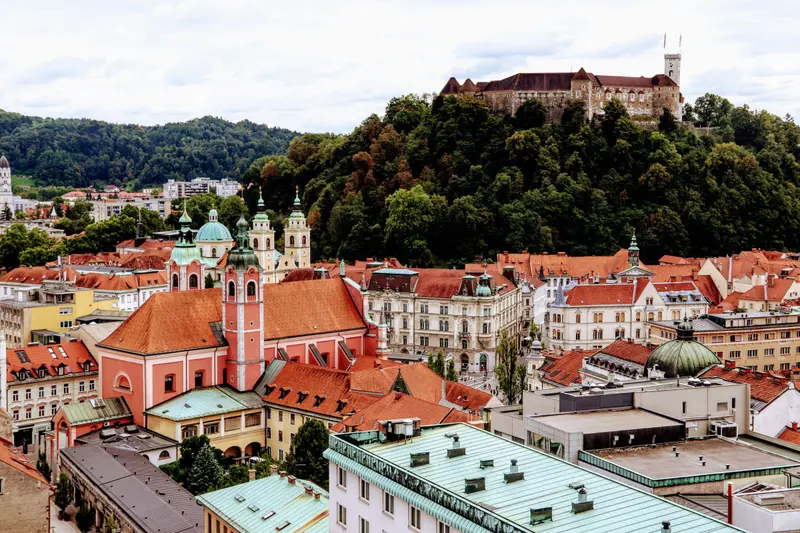
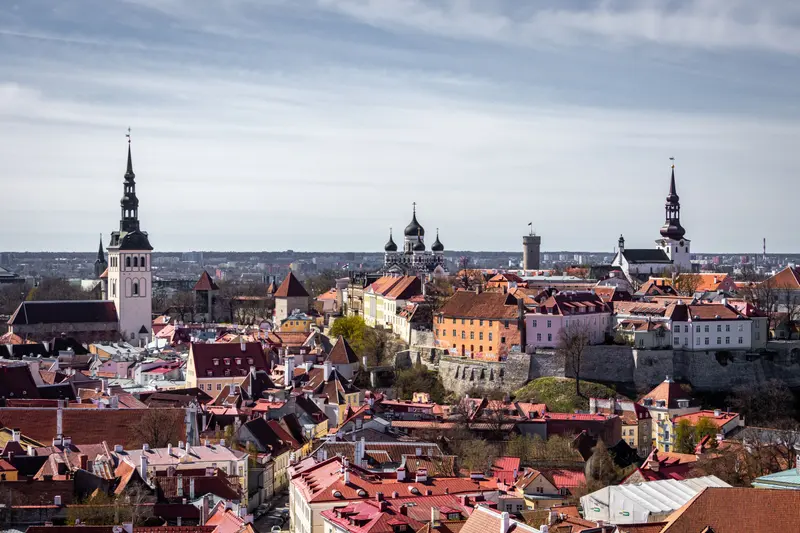
Ljubljana and Tallinn are small European capitals, and both drink coffee as a social habit more than a quick fix. Ljubljana's first café opened in 1713.3 Tallinn's first known café opened earlier, in 1702, at Raekoja plats 12 on Town Hall Square, run by Alphonso Tellado Carvallido from Zaragoza.11
The two cities took different roads afterward. In Slovenia, coffee settled into a daily invitation and a pot on the home stove; in Estonia, a pre-war café culture was cut off in 1940 and rebuilt twice, first as Soviet-era design cafés and later as a specialty scene in former industrial districts.111415
Greva na kavo: coffee as an invitation
"A greva na kavo?", shall we (two) go for coffee, is one of the most common questions in Slovenian; at home the counterpart is "Naj pristavim za kavo?", shall I put the coffee on.2 The invitation can be a chat, a business meeting or a date.3 Ljubljana's tourist board describes coffee there as more a social ritual than a drink, and once people sit down they often stay for hours.1
There is a clock to it. The coffee invitation is usually made before noon; by around 19:00 the natural offer becomes a beer instead.1 Two habits run side by side: a quick cup standing at the counter before errands, and kofetkanje, the long sit over coffee with friends.3
Coffee reached the Slovene lands in the 17th century, mostly through Trieste, and stayed a drink of the wealthy until the 19th.3 Its best-known image is Ivana Kobilca's painting Kofetarica (The Coffee Drinker), painted while she was a student in Munich and now in the National Gallery in Ljubljana.3
How much coffee Slovenia drinks, and what it pays
Consumption figures depend on who counts. A 2019 Sprudge report, citing Caffeine Informer, put Slovenia fourth in the world by weight at 6.1 kg per person a year.4 Ljubljana's tourist board uses "more than 6 kilograms".2 A 2024 report by the STA news agency, citing the latest available data, put it at about 3 kg per resident.5
Prices are better documented. According to the Statistical Office of the Republic of Slovenia (SURS), an espresso in a bar cost €1.63 on average in 2023, 10.1% more than a year earlier.5 Ljubljana's center runs higher: in April 2025 a survey by the broadcaster 24ur found an espresso at €2.20 and a coffee with milk at €2.50 at Slovenska hiša on Cankarjevo nabrežje, and €2.60 and €3.00 at Cacao on Petkovškovo nabrežje.7
In the same survey, Čokl, a small specialty bar in the center, charged €1.80 for an espresso and expected to add about 20 cents that month.7
Ordering in Slovenian, and turška kava at home
In bars the base is espresso, a habit shaped by neighboring Italy.4 Unlike in Italy, coffee with milk is drunk at any hour without odd looks.10 The most popular café order is an espresso-based coffee with milk.6 Milk or cream (smetana) is the usual addition.2
At home the picture changes. Slovenes most often make turška kava (Turkish-style coffee) or use a kafetjera, the stovetop moka pot.6 In 2019 about 86% of the roughly 8,800 tonnes of coffee sold in Slovenia each year was ground for Turkish preparation, and one brand, Barcaffe, held about three-quarters of the market.4 Many people still brew the morning cup in a copper džezva (a long-handled pot), and a bag of ground coffee is a standard gift when visiting friends.4
| Slovenian | What it means |
|---|---|
| Eno kavo, prosim | One coffee, please9 |
| Eno kavo z mlekom, prosim | One coffee with milk, please9 |
| Črno kavo, prosim | A black coffee, please9 |
| Bela kava | "White coffee", close to a caffè latte, usually 250 to 330 ml10 |
| Turška kava | Turkish-style coffee, boiled in a džezva; the usual coffee at home46 |
Kavo is the object form of kava; you hear it after eno (one) and in na kavo.9
The Ljubljanica embankments
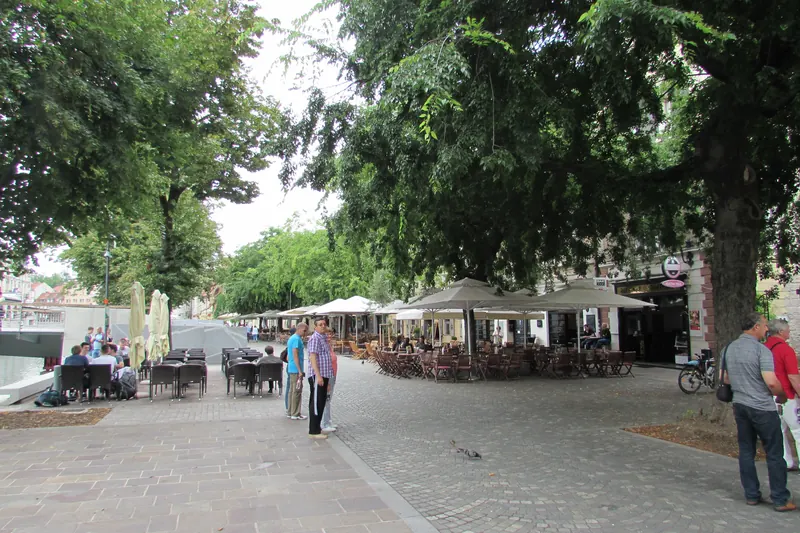
Ljubljana's social life centers on the embankments of the Ljubljanica river, lined with cafés that put their tables outdoors.8 The architect Jože Plečnik designed the old center's embankments and built or renovated the Triple Bridge, the Cobblers' Bridge and the Trnovo Bridge.8 Upstream, the willow-lined terraced walk along Trnovski pristan is also his.8
Prices follow the water: the two most expensive coffees in the 2025 survey were both on riverside embankments, Cankarjevo and Petkovškovo nabrežje.7 Nabrežje means embankment, so the word on a street sign tells you the river is a few steps away.
Tallinn: kohvik, Maiasmokk and the Soviet design cafés
A kohvik is a café in Estonian.17 Tallinn's café culture peaked at the end of the 1930s, when owners copied European standards; after the Soviet occupation in 1940 the cafés were nationalized and that development stopped.11
Maiasmokk (Sweet Tooth), at Pikk 16 in the Old Town, calls itself the oldest continuously operating café in Tallinn.1213 A small pastry shop stood in the building from 1806. In 1864 the Baltic-German confectioner Georg Johann Stude bought it and turned it into a café and confectionery, and the Russian imperial court ordered his marzipan figures.12 The ground-floor room, with reddish wooden counters, bronze fittings and a glass ceiling of back-painted tiles, was completed in 1913. It took the name Maiasmokk only in 1984.12
The 1960s brought a new kind of café. The interior architect Väino Tamm designed Café Pegasus in 1963, spread over three floors with a window onto St. Nicholas Church and bent-plywood chairs; its youthful style set it apart from other cafés of the time.14 He went on to Café Moscow in 1965 and Café Tallinn in 1967–69, the latter known for its pastries.14
Telliskivi, Kalamaja and ordering kohv
The newer scene grew northwest of the Old Town. In 2019 a specialty-coffee blogger visiting six Tallinn cafés found many serving locally roasted beans, several of them inside restaurants, and classic Faema E61 espresso machines in three.16 Some sat in Kalamaja, a residential district just over a mile northwest of the Old Town, and one roastery in Telliskivi, a former industrial area turned "creative city".16
By Barista Magazine's count in November 2023, Telliskivi Creative City held about 250 businesses, with a roastery, The Brick, around the corner.15 The same report described Tallinn's specialty scene as still growing.15
Ordering is short. Kohv is coffee, and "palun üks kohv piimaga" is one coffee with milk, please.17 The word changes to kohvi in most other grammatical cases, as in "ma joon kohvi", I'm drinking coffee.17