 By Yannick Schroth
Coffee cultures · 5 min read · October 2026
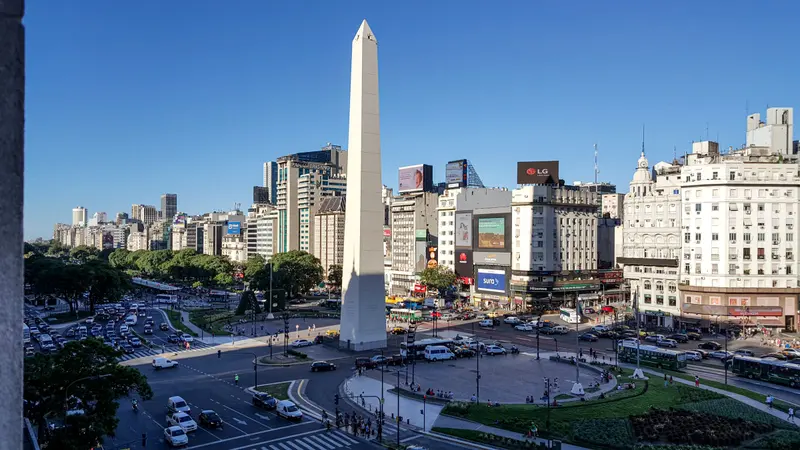
In Buenos Aires the old café is protected by law. Since 1998 the city has kept a catalog of bars, billiard halls and confiterías it calls notable: places tied to significant cultural events, or whose age, architectural design or local relevance gives them a value of their own.1 The oldest and best known of them is Café Tortoni, opened in 1858.34
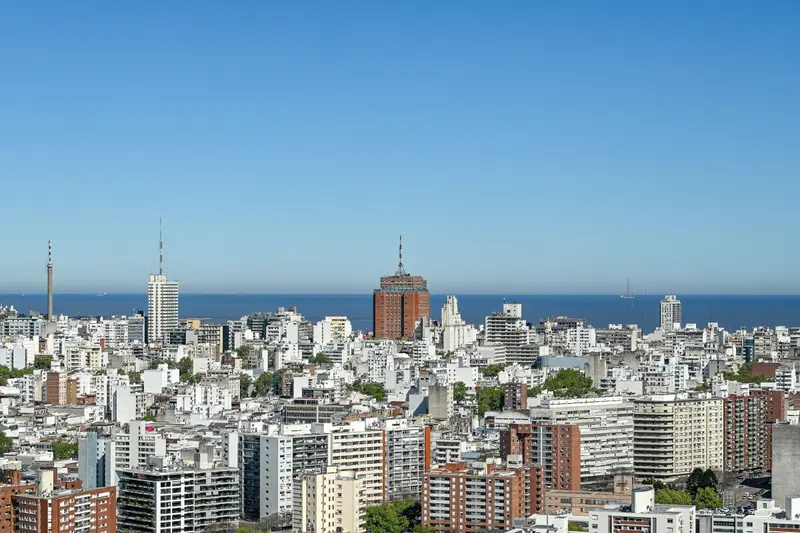
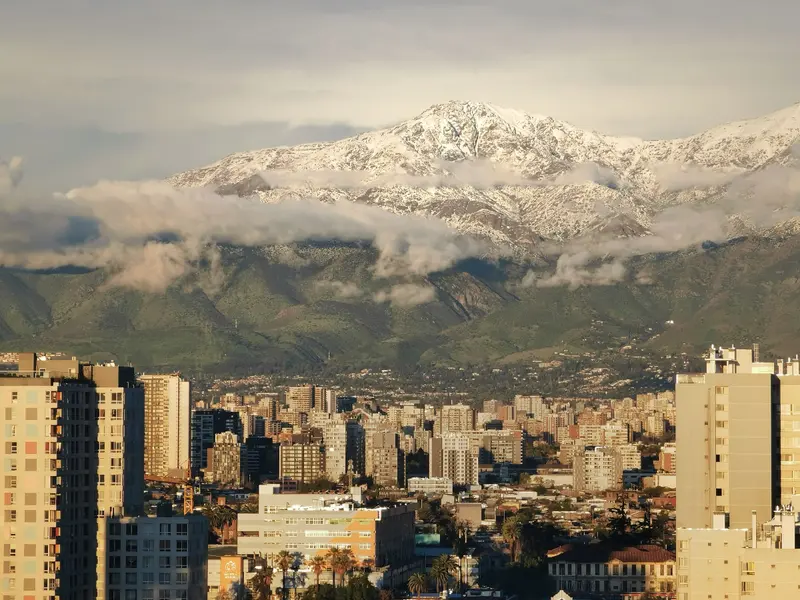
Across the Río de la Plata, Montevideo has cafés almost as old, but Uruguayans drink more yerba mate per person than Argentines, and carry it through the streets in a thermos.17 Santiago took another road: a downtown custom known as café con piernas, 'coffee with legs', in a country where most coffee drinkers still reach for instant.1821
Buenos Aires' bares notables and the Tortoni
Ley 35, passed by the city legislature on 4 June 1998, defines a notable bar, billiard hall or confitería (a café that also sells pastries) and set up a commission to protect and promote them.1 A later law, Ley 5213, created a promotion scheme for the places on the catalog, and the city now programs music, visual art, literature and heritage talks inside them. More than 75 took part in the fifth Noche de los Bares Notables, a night of events across the city.2
Café Tortoni shows what the list protects. It opened in 1858 and moved in 1880 into the ground floor of Saturnino Unzué's house on Rivadavia. When Avenida de Mayo was cut through, the owners kept the building and added a grander facade facing the new avenue, finished in 1898; the address is Avenida de Mayo 825.3 Its regulars included Alfonsina Storni, Roberto Arlt, Jorge Luis Borges and Carlos Gardel.3
The rooms are older than the taste for good coffee. A 2019 BBC Mundo report said Spanish immigrants brought torrado, a low-grade coffee roasted with sugar, which still holds the largest share of the Argentine market, and remarked that the Tortoni's specialty is not its coffee.8 The same report counted more than 100 specialty coffee shops in the city, most of them in Palermo.8
Pocillo, jarrito, cortado and lágrima
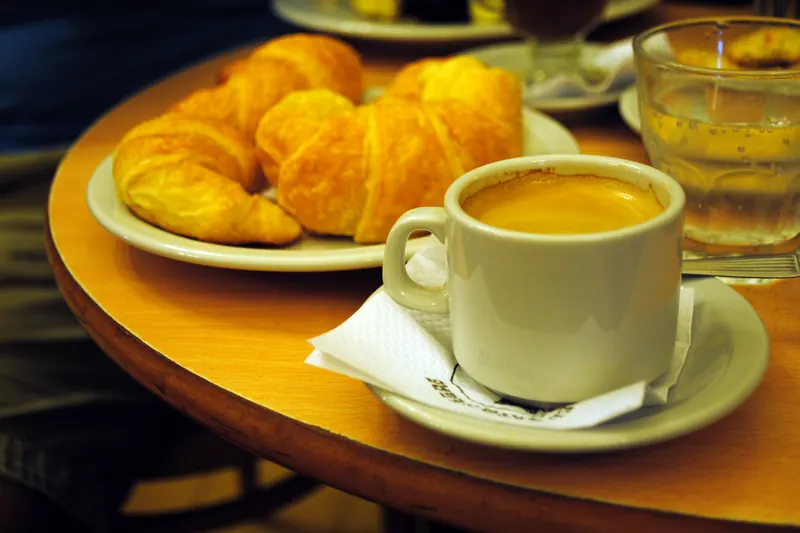
A plain café in a Buenos Aires bar is an espresso in a small cup, also called a café chico.5 That cup is the pocillo. Ask for your coffee en jarrito and it comes in a jarrito, a glass or cup with a handle a little bigger than the pocillo, which usually means a double.45 Café con leche, served in a full-size cup, is coffee and steamed milk in roughly equal parts.45
The cortado is espresso 'cut' with a splash of milk, and a cortado en jarrito doubles the coffee.45 The lágrima, a 'teardrop' of coffee in hot milk, reverses the proportions.45 A submarino holds no coffee at all: a bar of dark chocolate is dropped into a tall glass of hot milk and stirred until it melts, and the glass sits in a metal holder with a handle. It is drunk in Argentina and Uruguay, mostly in winter.6
| Order | What arrives |
|---|---|
| Un café / café chico | A single espresso in a small cup, the pocillo45 |
| Café en jarrito | A double espresso in a slightly bigger cup or handled glass45 |
| Cortado | Espresso with a splash of milk45 |
| Cortado en jarrito | A double espresso with a splash of milk5 |
| Lágrima | Hot milk with a drop of coffee45 |
| Café con leche | Coffee and steamed milk in about equal parts, in a full cup45 |
| Submarino | Hot milk with a bar of dark chocolate to melt in it; no coffee6 |
Café con leche comes in a cup; the other coffees can be ordered in a pocillo or a jarrito.4
Medialunas, and the glass of soda
The usual partner is the medialuna, a slightly sweet half-moon pastry made with butter (de manteca) or with lard (de grasa); the lard version is drier and less sweet.5 It is also flatter and smaller, with a slightly salty edge, while a good one de manteca is crisp outside and moist inside.7 The Código Alimentario Argentino, the national food code, sets no separate requirements for either kind.7 Both turn up at breakfast and again at the merienda, the afternoon snack.5
Coffee in a Buenos Aires bar comes with a small glass of water or soda, often with a sweet on the side.4 Soda water once accompanied coffee, drinks and aperitifs in bars and confiterías; many soderías, the soda works, split off from liquor shops in 1904–1905, and home delivery of siphons spread in the 1930s.9 The 2019 BBC Mundo report gave a practical reason for the glass: the usual bar coffee is bitter.8
What a café con medialunas costs in Buenos Aires
Argentine prices move fast, so every figure needs a date. Since August 2022, Jeremías Madrazo and Pilar Viega have crowdsourced an informal 'índice café con medialunas', the price of a coffee with two medialunas across the city; in 2023 they checked reported prices by phoning each place.1011
Single espressos followed the same curve. In December 2024, La Nación found a Recoleta café charging ARS 3,200 for an espresso that had cost ARS 1,800 a year earlier, and put a Buenos Aires espresso at about US$2.60, up from US$1.60 at the start of that year.13
| Date | Coffee with two medialunas in Buenos Aires |
|---|---|
| August 2022 | ARS 150 at a university bar to ARS 910; ARS 800 at Café Tortoni11 |
| August 2023 | ARS 400 to ARS 3,000; ARS 2,250 at Café Tortoni10 |
| August 2024 | ARS 3,000 to ARS 4,000 at most cafés and bars; top price ARS 9,80012 |
Prices as reported at the time; check the menu before ordering.1012
Montevideo: old cafés and the mate thermos
Café Brasilero, on Calle Ituzaingó in the Ciudad Vieja, dates from 1877 and keeps much of its original facade and furniture, including Italian chairs and Art Nouveau bronzes.14 Juan Carlos Onetti wrote the first pages of El pozo there in the 1930s, and Eduardo Galeano was a regular for more than twenty years; the menu carries a café Galeano.14 Bar Facal, at 18 de Julio and Yí, was founded in 1882 by the Galician Manuel Facal and his brothers, and began as a chocolate and quince-paste factory.15
A 2016 column in Delicatessen recalled the Tupí-Nambá on Plaza Independencia, founded in the 1870s, and the Sorocabana, a meeting place from the 1940s, quoting the journalist Alejandro Michelena on an era of tertulias, regular discussion circles held over coffee.16
The everyday hot drink, though, is mate. A 2017 BBC Mundo report put Uruguay's consumption at 8 kg of yerba per person a year, against 6.4 kg in Argentina, and described Uruguayans drinking it on the move with the thermos under one arm.17 Union meetings that once served only coffee or tea, the report added, now always have a thermos and mate on the table.17
Santiago: café con piernas and the specialty turn
Santiago's cafés con piernas appeared toward the end of the military regime in the 1980s and multiplied in the 1990s.18 The usual starting date is 1982, when the Café Haití chain put its waitresses in short, revealing outfits.19 Haití and Café Caribe are the best-known chains, with large windows and even street tables. Customers stand at a thin steel bar with no chairs, and the waitress serves from a step above.18 In the 2000s several mayors of Santiago restricted the business, and the cafés now open only by day.19
At home, Chile is still mostly an instant-coffee country. In a CORPA market study reported in July 2026, 66% of consumers drank instant powder and 28% coffee beans, the fastest-growing segment; 77% of Chileans drank coffee at least once a week, on average two cups a day.21
Ordering a coffee in Chile used to mean a spoonful of instant powder in boiling water, a 2026 article in The Clinic noted.20 ExpoCafé, a coffee fair first held in 2018, expected more than 30,000 visitors and more than 170 exhibitors at Espacio Riesco in July 2026.20
Tip. If a single espresso in a pocillo is too small, order un cortado en jarrito in a Buenos Aires bar: it brings a double espresso with a splash of milk.5