 By Yannick Schroth
How to order · 4 min read · October 2026
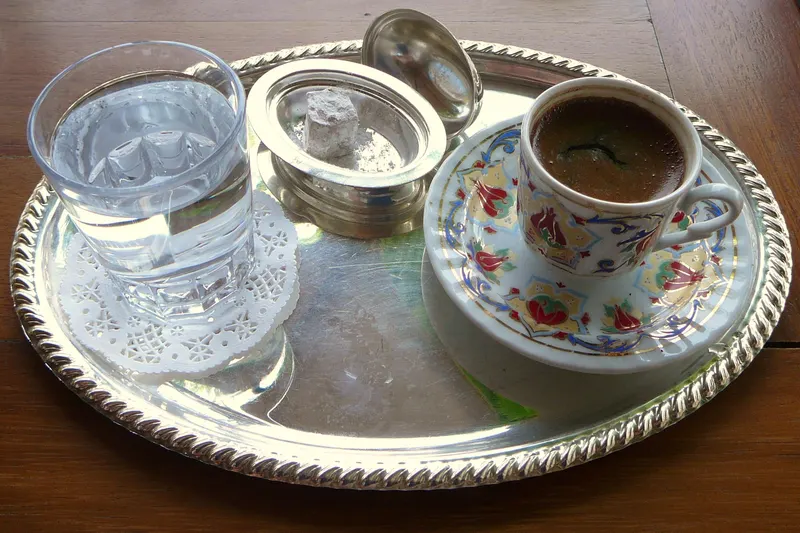
Türk kahvesi, Turkish coffee, is ground coffee, cold water and sugar, brewed slowly in a pot to raise a foam and served in a small cup with a glass of water.1 Nothing is filtered: the grounds stay in the cup, which is why the sugar has to be decided before the coffee goes on the heat.2 In 2013 UNESCO added Turkish coffee culture and tradition to its list of the intangible cultural heritage of humanity.3
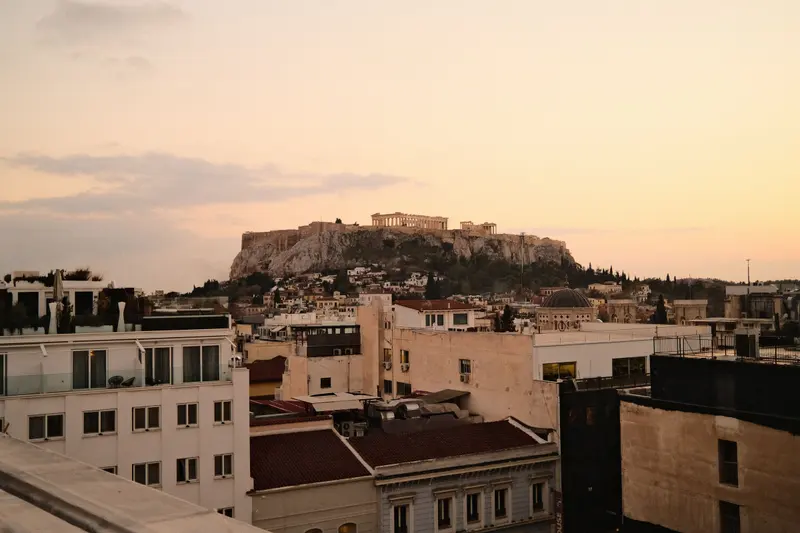
Across the Aegean the same cup goes by ελληνικός καφές, Greek coffee, a name that spread after tensions with Turkey in the 1950s and the 1974 invasion of Cyprus.2 Among the most popular coffees in Greece, though, are cold ones: the shaken frappé and, more and more, the freddo espresso.11
The cezve and the köpük
The pot is the cezve, which has a wide bottom, a narrower neck and a long handle; Greek kitchens call it a briki.42 The coffee is ground to a fine powder and mixed with cold water, one Turkish-coffee cup of water per serving, plus any sugar.14 When the froth climbs to the cezve's neck, the pot comes off the heat; it should rise two or three times before it is poured.4
That froth, köpük in Turkish, is part of what defines the drink, along with its smell and the way it is served.3 Pouring a little foam into the cup first, then reheating the pot once or twice before topping it up, is how careful makers give every cup a full head.2 In Greek the foam is καϊμάκι, kaïmaki, and the richer it is, the better.10
Ordering the sugar: sade to çok şekerli
Because sugar goes into the cezve with the coffee, you name the sweetness when you order, not at the table. Plain sade is unsweetened and fairly bitter; az şekerli has a little sugar, less than a teaspoon; orta şekerli, often just orta, is medium; çok şekerli is two teaspoons or more.24
Greece uses its own words for the same scale. Sketos means no sugar, metrios about one teaspoon, glykos two, and variglykos is sweet and strong; if you say nothing, the coffee usually comes moderate to sweet.9
| Order | What arrives |
|---|---|
| Sade (Turkish) / sketos (Greek) | No sugar29 |
| Az şekerli | A little sugar, under a teaspoon4 |
| Orta şekerli or orta / metrios | Medium; metrios is about one teaspoon29 |
| Çok şekerli / glykos | Sweet; two teaspoons or more49 |
| Variglykos | Very sweet and strong, a Greek order9 |
Spoon counts vary from one maker to the next; the words are the same everywhere.2
Water, lokum and the fal
The glass of water comes first. It is sipped before the coffee, not after it, to clear the mouth.32 The traditional companion is a piece of lokum, Turkish delight.4 The grounds settle at the bottom and stay in the cup.2
Those grounds are the material for fal, fortune reading. The drinker turns the cup over onto its saucer and leaves it to cool, and the reader interprets the shapes the grounds leave running down the sides.24 Turkish coffee is the only coffee used for kahve falı, the coffee-grounds fortune.3
The coffee also gave Turkish its word for breakfast. Kahvaltı means the first meal of the day and refers to what is eaten before coffee.3 A proverb, "bir fincan kahvenin kırk yıl hatırı vardır", says a cup of coffee is remembered for forty years.3
Istanbul's kahvehane since the 1550s
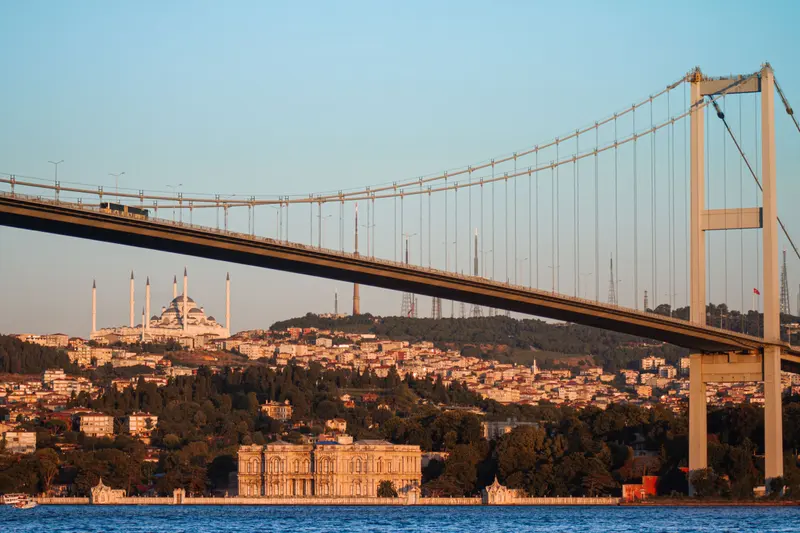
Coffee was in use in Istanbul by 1539.2 Ottoman sources date the city's first kahvehane, or coffeehouse, to 1555; other accounts give 1554 and credit two merchants, Hakem of Aleppo and Shems of Damascus.52 Starting from Tahtakale, coffeehouses spread through the city and on to small Anatolian towns.32
Inside, people read, played backgammon and chess, and brought new poems to discuss; the chronicler İbrahim Peçevi called them meeting places for pleasure seekers and idlers.5 Authorities pushed back. The jurist Ebussuud issued a fatwa against coffee in 1543, and Sultan Murad IV closed the coffeehouses again in the 17th century; they reopened.5 Under Murad IV a first offense brought a cudgeling.2
Ground coffee for the home came later. In 1871 Mehmet Efendi, who had taken over the family business from his father, began roasting and grinding beans there and selling them in small paper bags, which earned him the name Kurukahveci, coffee roaster.6
What a Turkish coffee costs
Neighborhood sets the price in Istanbul more than the cup does. A September 2025 price check by Ekonomi Gazetesi found Türk kahvesi at 170 TRY in Caddebostan, around 160 TRY in Moda in Kadıköy, 150 TRY in Nişantaşı and Kanlıca, and 80 TRY in Esenler.7 Chains sat in between: 95 TRY at Kahve Dünyası and Starbucks, 100 TRY at Nevada and 90 TRY at Coffy, as of 2025.7
Some cities cap the price by type of venue. Bursa's coffeehouse chamber set 2026–2027 ceilings of 60 TRY for a Turkish coffee at a çay ocağı (a tea stand), 100 TRY at a first-class kahvehane, 150 TRY in a tea garden and 200 TRY in a cafeteria, about 30% above the previous tariff.8
Greek coffee, frappé and freddo
Greek coffee is made the same way, in a briki that comes in sizes for two, four or six small cups, and served hot with a glass of cold water for each person.10 For years it was simply called Turkish; in the 1990s the roaster Bravo ran a campaign called "We Call It Greek".2
The frappé is instant coffee, sugar and a little water shaken or blended into a thick foam, then poured over ice and cold water and drunk through a straw.11 Its origin story puts it at the Thessaloniki International Fair in September 1957, when Nescafé's Dimitris Vakondios found no hot water; Nestlé ads selling a "Nescafé frappe" before the fair cast doubt on that account.11
Order a frappé skétos, métrios or glykós, then me gála (with milk) or horís gála (without).119 The freddo espresso, an iced espresso first made in Athens in the early 1990s, has gained ground since; a freddo cappuccino adds afrógala, a cold milk foam.119 Say freddo first, then espresso or cappuccino.9
Where you drink changes the bill. From July 2024 coffee served at a table in Greece carried 24% VAT, and sit-down prices rose: Greek coffee from €2.10 to €2.40, freddo espresso from €3.80 to €4.20. Takeaway, at 13% VAT, ran €1.50–2 for Greek coffee and €2–2.50 for a freddo espresso.12