 By Yannick Schroth
City guides · 4 min read · October 2026
Istanbul's coffee day is split between two drinks and two continents. Çay, black tea in a small glass, is part of daily life for everyone,8 while coffee has grown fast: Türkiye drank about 350–400 g a head a year in the early 2010s and about 1.5 kg in 2025, roughly four times as much.7 Sector figures for 2026 point to 2.2–2.5 kg.7
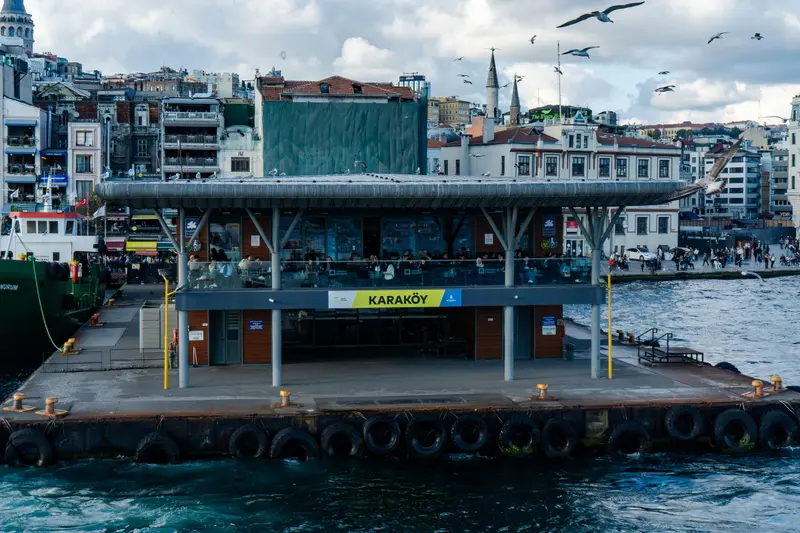
The newer coffee bars sit on both sides of the water. On the European shore they cluster from Karaköy up to Nişantaşı; on the Asian shore, in the streets behind the Kadıköy ferry piers. In September 2026 the city's coffee festival drew 162 brands to Kadıköy for four days.5
Tea all day, coffee by choice
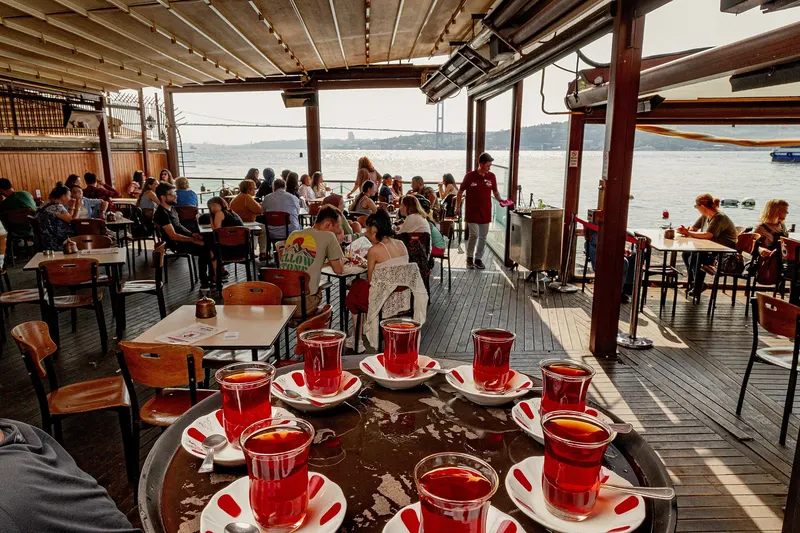
UNESCO added the culture of çay to its intangible heritage list in 2022, in a joint nomination by Türkiye and Azerbaijan.8 It describes black tea brewed fresh, served hot in pear-shaped glasses and offered with sugar, lemon, jam or dried fruit, as a practice of hospitality.8 In Türkiye the usual addition is cube sugar; milk is rare, though you can ask for it. Nobody stops at one glass, so order the next when the first is empty.9
The tea garden, çay bahçesi, was never meant for long meals. People sit down in the middle of a walk, straight off a ferry or to meet friends, and a simit, the sesame bread ring, is the usual thing on the table.10
Tea took over from coffee after the republic was founded. The state encouraged it to support domestic tea plantations, and drinkers took to a cheaper drink that was easier to serve.2 Much of coffee's comeback happens in newer cafés like those in Kadıköy, which brew V60, Chemex and AeroPress as well as espresso.4
The European shore: Karaköy to Nişantaşı
Specialty coffee on this side dates from 2012, when Çağatay Gülabioğlu opened Kronotrop, Turkey's first specialty coffee shop.2 Karaköy, the old port quarter, was an early base: Coffee Sapiens made its name in a tiny shop there before opening a second branch in Levent.2
Further north, Nişantaşı, the shopping district beyond Taksim, had perhaps the city's highest concentration of specialty coffee shops by 2018, and Istanbul had nearly as many microroasters as cafés.3 The same report noted that a pour-over or espresso cost close to what it did in Western Europe or America, on far lower local incomes.3
The city's coffee festival has moved between venues on both shores, among them the Galata Rum Okulu (Galata Greek School), Haydarpaşa station, KüçükÇiftlik Park, Tersane İstanbul and Ataköy Marina.6
The Asian shore: Kadıköy, Yeldeğirmeni and Moda
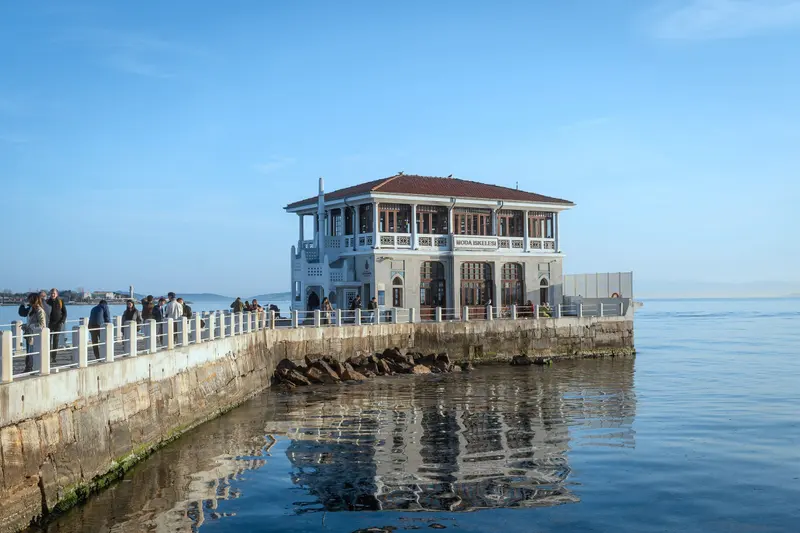
The Asian side got its first specialty coffee shop in late 2012.2 Today the streets near Kadıköy's ferry port are full of third-wave cafés, and many double as bookshops, art spaces or sellers of retro memorabilia.1 Boutique roasters and specialty bars have spread into Moda and Yeldeğirmeni and further out to Caddebostan and Erenköy.4
Yeldeğirmeni, in the north of Kadıköy, is the grungier, bohemian quarter, with quiet narrow streets lined with cafés and breakfast places. About two dozen murals commissioned for the Mural İstanbul Festival cover walls around Misak-ı Milli Sokak and Reşit Efendi Sokak, and Karakolhane Caddesi has street-art installations. Moda, to the south, has a more settled kind of cool.1
In 2025 the coffee festival came back to Kadıköy after nine years, at Tepe Nautilus.6 The 2026 edition, the twelfth, ran there from 10 to 13 September, with tastings and brewing and roasting workshops by day and concerts in the evening.5
Bosphorus tea gardens and the Golden Horn
Up the Bosphorus, the villages on the Asian shore drink tea by the water: simit and a glass of tea at sunset in Çengelköy, tea gardens in Kuzguncuk and small ones with benches in Beylerbeyi. On the European side, most visitors to Emirgan Grove settle in its tea gardens.12 Closer in, Salacak in Üsküdar faces the Maiden's Tower, the city's most photographed view; the tower's lights come on as the sun goes down.12
Çengelköy's Tarihi Çınaraltı tea garden sits under a plane tree thought to have been planted in the 1200s, and the site has served tea since the 1970s. It is open 24 hours, seven days a week, and you may bring your own food as long as you buy your drinks there.11 The usual move is börek from a nearby bakery with tea from the garden.10
At the far end of the Golden Horn, the café on Pierre Loti hill above Eyüp keeps the name of the French novelist who came there to look over the water. In his day it was a simple place with a few stools and a small stove for Turkish coffee.16 Take the tram to Eyüp and then the cable car, or walk up through the cemetery in about 15 minutes.1016 Go in the morning, as service slows when the terrace fills.10
What coffee and tea cost in 2026
Specialty coffee in Kadıköy cost about ₺100–220 a cup in September 2026, with sweet drinks such as mochas higher.4 Chains are no cheaper. On 2 January 2026 Starbucks raised Turkish prices by 25–30%: a filter coffee went from ₺115 to ₺145, and a tall caffè latte cost ₺175.13 Its Türk kahvesi comes in sizes: ₺115 for a tall, ₺135 for a venti.13
Tea scales with the view and the pot. A single glass at a scenic or tourist spot ran ₺80–150 in September 2026, and a small semaver (samovar) for two or three people ₺300–450.10
| Drink | Price (₺) | Where and when |
|---|---|---|
| Espresso | 89–180 | Kadıköy specialty cafés, September 20264 |
| Latte or cappuccino | 109–200 | Kadıköy specialty cafés, September 20264 |
| Filter or pour-over | 100–195 | Kadıköy specialty cafés, September 20264 |
| Cold brew | 149–215 | Kadıköy specialty cafés, September 20264 |
| Filter coffee / caffè americano (tall) | 145 / 150 | Starbucks Türkiye, from 2 January 202613 |
| Türk kahvesi | 115 | Starbucks Türkiye, from 2 January 202613 |
| Semaver of çay, 4–6 people | 450–700 | Tea gardens, September 2026; ₺600–900 at scenic restaurants10 |
Kadıköy ranges span the district's specialty cafés; the chain's prices apply across Türkiye.413
Timing, cards and tips
Kadıköy's cafés are quietest from 08:00 to 10:00, busiest over lunch from 12:00 to 14:00 and lively again from 17:00 to 19:00.4 Tea gardens are easiest between 09:00 and 10:00.10 Weekday breakfasts are calmer and more practical; weekend ones are slower, more social and much more crowded in the popular neighborhoods, and Beşiktaş fills fast, so go early.15
Tapping a card is the norm: in October 2025, four out of every five in-store card payments in Türkiye were contactless.14 Tipping is small. Leave some change on the table at a café, or add a tip when you sign a card slip, and pay in lira rather than euros, Istanbul included.17