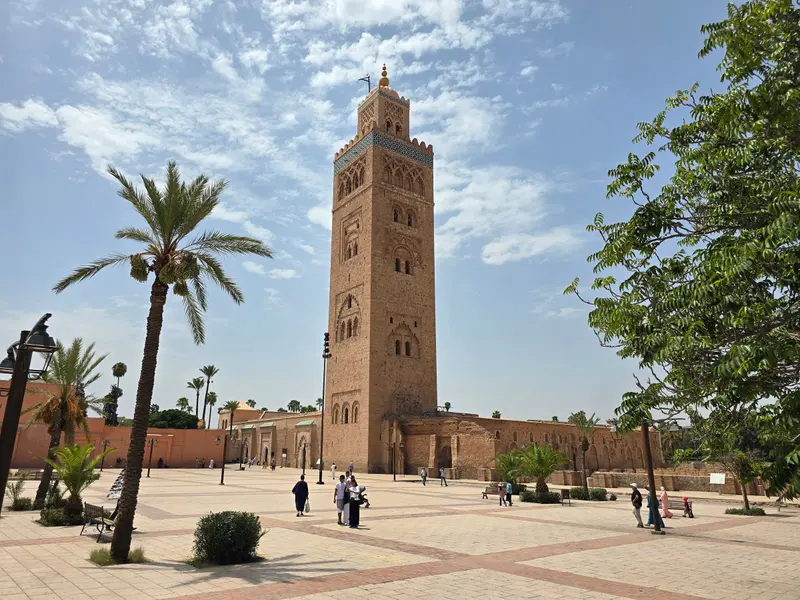
Marrakech · Daoudiate & the north
Cafés in Daoudiate & the north
Cafés along the route de Safi, Dar Yemma in Assif, the Amerchich campus quarter and a café open to midnight.
Photo: Zak H, Pexels License
North of the medina and Guéliz, the districts between the Casablanca railway and the Oued Issil were mostly built between independence and the end of the 20th century, and they are largely residential.1 Daoudiate is the oldest of them, put up from the 1960s to the 1980s as working-class quarters split into five units; Unit 3 is still called Diour El Masakine, "the houses of the poor".1
Three roads carry the traffic: Avenue Allal El Fassi, Avenue Abdelkrim El Khattabi, known up here as the route de Casa, and Avenue Moulay Abdallah, the N7, which everyone calls the route de Safi.1 That last road has the clearest run of cafés, with Coin Mars at No. 203, أمين (Amine) at No. 313 and Cafe Al Finjane in the Sakan Ennakhil residence.
Local tip: To see the whole route de Safi café strip, ride bus L15, which in 2019 ran the full length of the road from Arset El Bilk, near Jemaa el-Fna, to Souk Laaouad.1
At a glance
14Cafés listed
1With opening hours
08:00Earliest opening
00:00Latest closing
- Opens earliest: Cafe Jardin, from 08:00 (Daily 08:00–00:00).
- Most common features: vegetarian options (7%), open late (7%), bakery café (7%).
Coin Mars
Dar Yemma
- Vegetarian options
أمين
Amine
Cafe Jardin
Cafe Bab Al Hara
Café Lanice
El Cinco 5 Café
Granada resto cafe
Le Bellaria
Le Cristal
Musée
RAAH Coffee and Bakery
Vis ta vie
Nothing matches those filters here. See all cafés in Marrakech.
Route de Safi and a classic breakfast
Across Morocco cafés widely offer the café complet, a breakfast set of fresh orange juice, a hot drink, a savory and a sweet pastry, and baguette with butter and jam.4 Places that serve ftour beldi, the traditional breakfast, bring eggs, honey, cured meats and msemen, a flatbread whose dough is laminated with ghee, rolled thin and fried in the pan.4
RAAH Coffee and Bakery pairs its coffee with a bakery counter, and Vis ta vie has Wi-Fi for guests. Granada resto cafe, El Cinco 5 Café, Café Lanice and Cafe Bab Al Hara add more tables to the district.
Daoudiate's markets, offices and cinema
At the southern end of Daoudiate, between Avenue Abu Obeïda al-Jarrah and Avenue du 11 Janvier, stand the offices of the Marrakech-Safi wilaya (regional government) and the Dar Attaqafa cultural center.1 Unit 5, to the west, has the Jebran garden, the municipal pool and the quarter's covered market, and neighboring Belbekkar has a larger covered market of its own.1
Cinéma Rif, in Unit 2, opened in 1970, was badly damaged by fire in 2016 and reopened after renovation in 2017.1 For an evening after a film, Cafe Jardin opens daily 08:00–00:00. Le Bellaria, Le Cristal and Musée complete the choice.
Amerchich, the university quarter
Amerchich is the city's university quarter, a middle-class district where many university teachers own houses.1 Cadi Ayyad University began in 1978 with the Faculty of Sciences Semlalia and opened its letters and law faculties a year later.2 The Faculty of Letters and Human Sciences, on Rue Amarchich, teaches subjects from Spanish and English literature to geography and tourism management.3
On the far side of the campus are two of the city's main hospitals: Ibn Nafis, which treats psychiatric illness, and Arrazi, the multi-specialty center of the CHU Mohammed VI, with its mother-and-child and oncology centers alongside.1 Badii, a housing estate on Avenue Allal El Fassi at Amerchich's edge named after the El Badi palace, has many shops.1
Assif, Sidi Abbad and the palm grove
Assif, whose name means river in Tamazight, is a middle- to upper-middle-class quarter built mostly in the 1980s and 1990s between Avenue Allal El Fassi, Avenue Assif and Boulevard du 18 Novembre.1 Dar Yemma, with vegan options, gives its address as Assif C, Avenue 18 Novembre. Sidi Abbad, beside it, is named after an irrigation canal fed by a spring near Bab Doukkala, which watered fields here until the 1970s.1
Across the Oued Issil lies the Palmeraie, planted in the 11th century by the Almoravid sultan Youssef ben Tachfine, who used the river and khettara (underground channels) to irrigate it.5 At its peak it held 150,000 palms; more than 100,000 remain.5
Sources
- Quartiers nord de Marrakech, Wikipedia (French), accessed November 2026
- Historique, Université Cadi Ayyad, accessed November 2026
- Faculté des Lettres et Sciences Humaines Marrakech, Université Cadi Ayyad, accessed November 2026
- Forget tagines and couscous. Morocco's cafe culture is its best-kept culinary secret, Hyphen (Zaynab Asaadi, April 28, 2026), accessed November 2026
- Quartier de la Palmeraie à Marrakech, Vanupied (Maciej Poltorak), accessed November 2026
Keep exploring
More of Marrakech
Mouassine & Bab Doukkala
12 cafés
Kasbah & Mellah
9 cafés
Medina & Jemaa el-Fna
49 cafés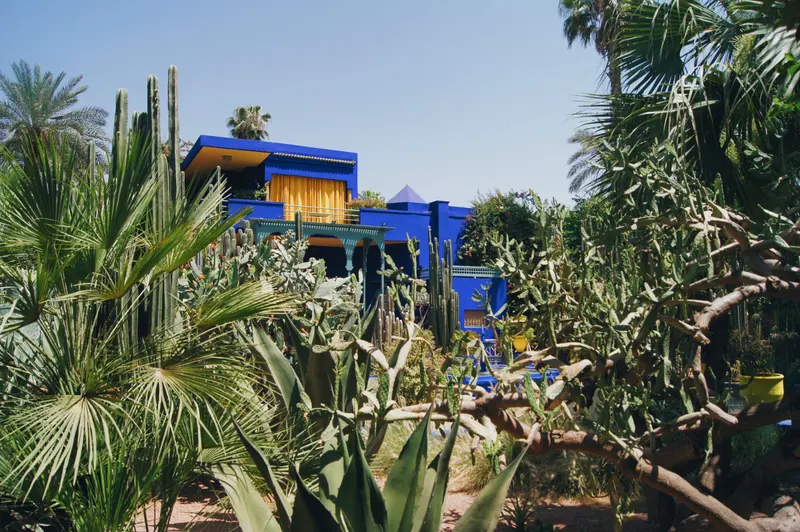
Majorelle & Semlalia
23 cafés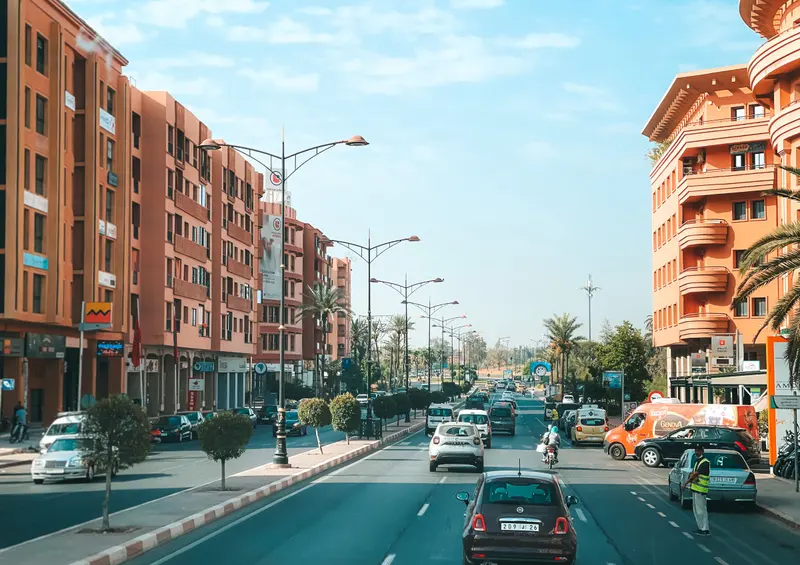
Guéliz
33 cafés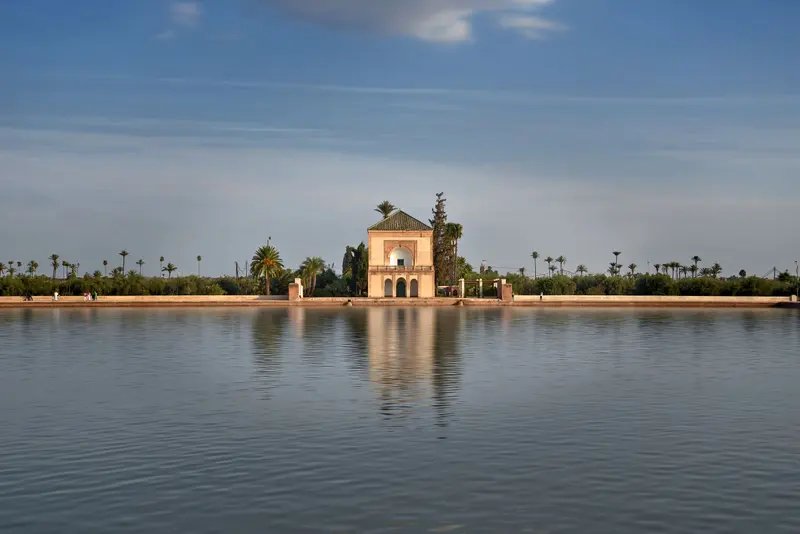
Hivernage & Menara
12 cafésMassira & Targa
11 cafésM'Hamid & Agdal
13 cafésIn Daoudiate & the north, also browse: Wi-Fi Open late Bakery cafés
FAQ
Daoudiate & the north cafés: questions
Which street in Daoudiate and northern Marrakech has the most cafés?
The route de Safi, officially Avenue Moulay Abdallah (the N7), has the clearest run of cafés in northern Marrakech, including Coin Mars at No. 203, Amine at No. 313 and Cafe Al Finjane in the Sakan Ennakhil residence.
What breakfast do cafés in Daoudiate, Marrakech serve?
Most Moroccan cafés offer a café complet: fresh orange juice, a hot drink, a savory and a sweet pastry, and baguette with butter and jam. A ftour beldi, the traditional breakfast, adds eggs, honey, cured meats and msemen flatbread.
Where is the university quarter in northern Marrakech, near Daoudiate?
Amerchich, next to Daoudiate, is Marrakech's university quarter. Cadi Ayyad University's Faculty of Letters and Human Sciences is on Rue Amarchich, and its law faculty opened nearby in 1979.
For café owners
Own a café in Daoudiate & the north?
Free listings are free for good. A featured page gives you photos, a menu and your own URL, in your café's own design, for less than a coffee a day.