Lili & Oli - Brunch Coffee
- Open late
- Outdoor seating
- Indoor seating
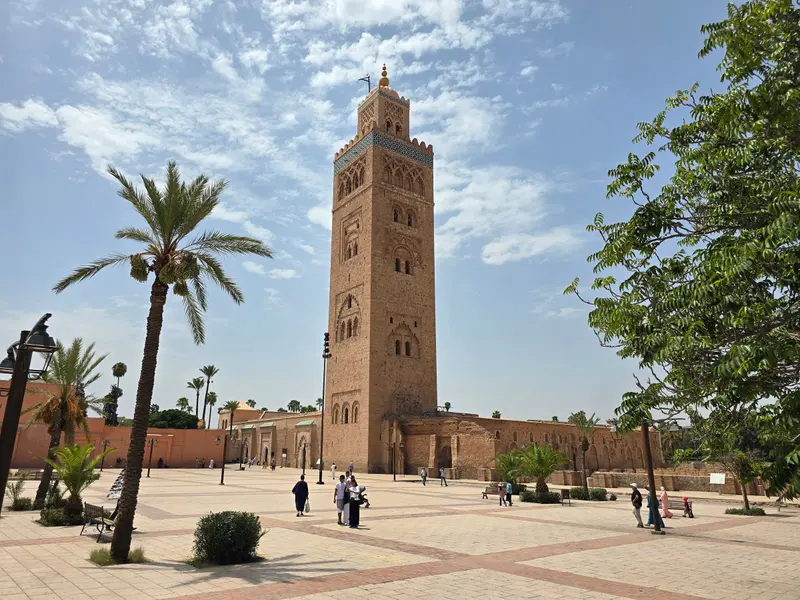
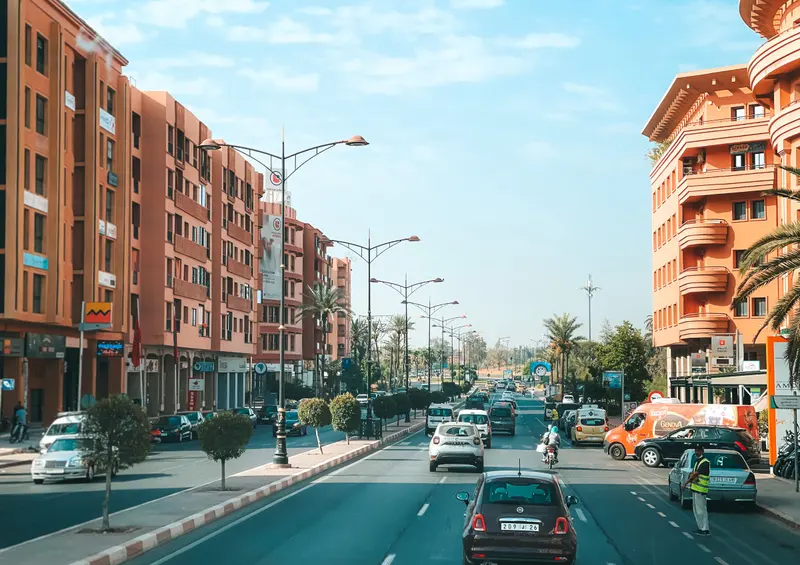
Brunch along Route de Targa, pastry on Rue Al Houda and neighborhood cafés in the planned 1980s Massira district.
Photo: Zak H, Pexels License
Massira and Targa are neighboring sectors of the Ménara arrondissement, on the west side of Marrakech.12 Massira runs from the railway in the east to the racecourse in the west, with the RN8, the road to Agadir and Essaouira, along its southern edge.1 Targa lies to its north and follows Route de Targa, which starts at Place Bir Anzarane in Guéliz and runs out to the edge of the city.2
Route de Targa and the streets just off it have the most cafés, among them Caramelio, mawazine and Lili & Oli - Brunch Coffee. In Massira the cafés sit on residential streets such as Avenue Al Amal (شارع الأمل, "hope") and Rue Al Houda (زنقة الهدى), with L'empreinte out on Avenue Essaouira, the RN8 itself.
Local tip: For a weekend brunch in Targa, Lili & Oli has a shaded terrace and parking close by, a few minutes from the center of Marrakech.5
Nothing matches those filters here. See all cafés in Marrakech.
Massira was born in the 1980s, when Marrakech set out to grow along two roads: the Agadir road and Avenue El Mouqaouama toward El Afak.1 Its three main quarters, Massira I, II and III, were planned, with wide avenues and diagonal streets that cut the housing into bevelled blocks, and the city aimed for a mix of housing types and incomes.1
Al Massira means "the march" and honors the Green March, which is why so many Moroccan towns have a district of that name; its street names recall the nationalist struggle, the Sahara and Palestine.1 The anniversary of the Green March, on 6 November, is a national holiday.3 Café Vice is in Massira 1.
Massira I is mostly single-family houses of the kind found in Morocco's working-class neighborhoods, while apartment blocks are concentrated in Massira II and in newer Abwab to the west; Massira III, to the north-west, has larger houses and villas.1 Most shops line Avenue Dakhla and Avenue Hassan II, not to be confused with the avenue of the same name in Guéliz.1
Mon Coin Marrakech is at No. 51 on Avenue Al Amal, and Café & pâtisserie le Gouthé, a pastry café, is at No. 92 on Rue Al Houda. Café Hexagone is in lot 292 at Sidi M'barek, one of the old douars (villages) absorbed into the sector.1
Targa is a Berber word, the equivalent of the Arabic saguia, an irrigation canal: before it was built over, the area was farmland watered by the saguia Targa, which linked the Nfis and Tensift rivers.2 In 1923 an agricultural subdivision was laid out here, with small plots of 3 to 10 hectares near the railway and estates of several dozen hectares further out, and the road was paved in the 1930s.2
After independence, several farms were sold as the settlers left, but the opening of the Lycée Victor-Hugo drew French families and Marrakech notables back, and Targa is now mainly well-off.2 Caramelio is at Lot 42 in the Lotissement El Ouasis on Route de Targa, and mawazine is in the Résidence Bahia on Avenue El Idrissi.
Lili & Oli - Brunch Coffee is at the Kickoff Academy in a quiet residential part of Targa. Its brunch runs from Moroccan to Mediterranean plates, with specialty coffee ground to order and juices pressed on the spot, served in a bright room or on a shaded terrace.5
In 2019 buses L3, L16 and L23 ran along Route de Targa and through its lotissements, while L6, L9, L10 and L13 ended at Massira 3.12 Line A of the electric bus rapid transit also served Massira then, but it stood still from late March 2022 after a fault in its power cables, and local critics called it mostly a showcase for the COP22 climate summit.14
In Massira & Targa, also browse: Wi-Fi Open late Outdoor seating Bakery cafés
Route de Targa and the streets just off it have the most, including Caramelio, mawazine and Lili & Oli. In Massira, cafés sit on residential streets such as Avenue Al Amal and Rue Al Houda, with L'empreinte on Avenue Essaouira, the RN8.
Targa is a Berber word equivalent to the Arabic saguia, an irrigation canal. Before it was built over, the area was farmland watered by the saguia Targa, which linked the Nfis and Tensift rivers.
Al Massira means "the march" and honors the Green March, whose anniversary on 6 November is a national holiday in Morocco. The district was planned in the 1980s, and its street names recall the nationalist struggle, the Sahara and Palestine.
Free listings are free for good. A featured page gives you photos, a menu and your own URL, in your café's own design, for less than a coffee a day.