Aromes
- Outdoor seating
- Card payment
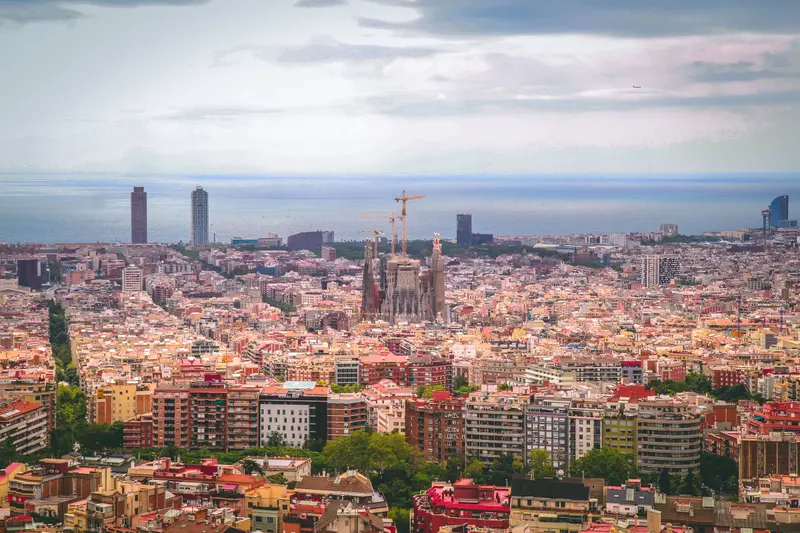
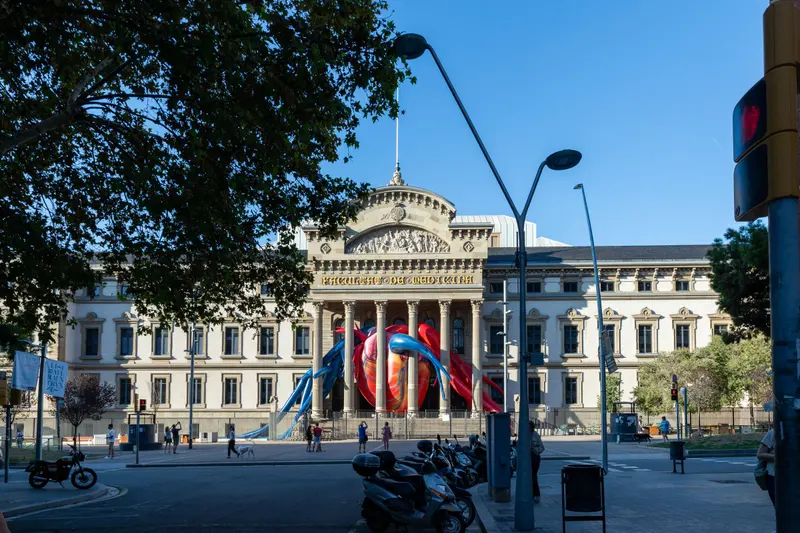
The 1906 market on Plaça del Mercadal, Fabra i Coats, Carrer Gran de la Sagrera and the bakeries of the Meridiana.
Photo: Enrico Perini, Pexels License
Sant Andreu de Palomar was a town of its own for more than a thousand years before Barcelona annexed it on 20 April 1897, and it still stages symbolic referendums on independence now and then.1 Under Franco part of its land was split off to build Nou Barris, whose name means "nine neighborhoods" in Catalan; the district has had thirteen since growing fast from the 1950s, and became one of the city's ten districts in 1984.13
Cafés on both sides of the line are bakery counters, granjas (milk bars) and corner cafeterias with a bar, spread along the old high streets of Sant Andreu and La Sagrera and up the Avinguda Meridiana.
Local tip: Plan around Mondays and Sundays: Kefir Coffee & Bakery on Carrer de Berenguer de Palou opens Tuesday to Sunday at 08:00, while Aromes on Carrer Gran de la Sagrera opens Monday to Saturday and closes on Sundays.
Nothing matches those filters here. See all cafés in Barcelona.
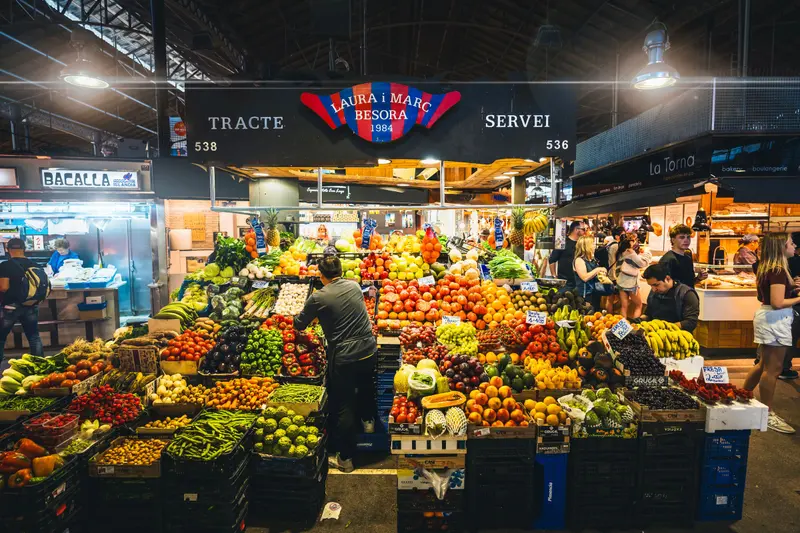
Plaça del Mercadal is the center of old Sant Andreu. Its layout was drawn in 1849 and the covered market went up in 1905–1906 under an iron roof by Joan Casadó Tisans.2 Rebuilding began in September 2019, with stallholders moved to a tent on Carrer de Sant Adrià, and the renovated market, a €9.5 million project, opened on 15 September 2022.2
Ca l'Albert is at number 87 of Carrer Gran de Sant Andreu, the old main street. A few blocks west, Kefir Coffee & Bakery on Carrer de Berenguer de Palou has outdoor tables, air conditioning, step-free access and a toilet, and El Cafe den Cuxart is at Carrer de Costa i Cuxart 15.
Sant Andreu was a mill town. Ferran Puig opened a sewing-thread factory here in 1843, a pioneer of Spain's cotton-thread industry; it merged into Fabra i Portabella in 1884 and became Fabra i Coats in 1903, when the British firm J. & P. Coats bought in.4 The company stopped production in Spain in November 2005.4
The city took over the main building that December and in 2008 decided to turn it into a fàbrica de creació (creation factory), a municipal center with workspace for artists and a music and visual-arts program.5 Granja La Lluna, on Plaça del Doctor Modrego, keeps the old milk-bar name, and Cal Enríc is on Carrer de Francesc Tàrrega.
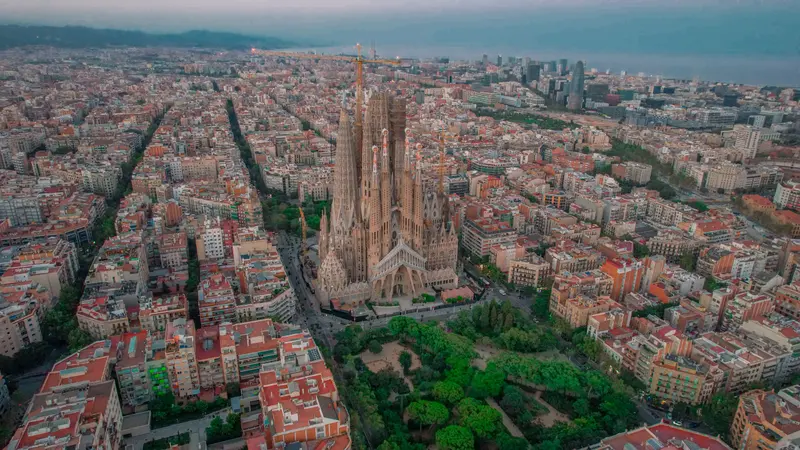
La Sagrera has been a building site for years. The first stone of its through station was laid in 2010; passengers are not expected inside before 2032, and the Camí Comtal park planned on the roof will run more than 4 km, stitching Sant Andreu to Sant Martí.6 The station has three levels, with Rodalies (commuter) trains below and eight high-speed tracks on top.7
Carrer Gran de la Sagrera, the barri's high street, has two cafés a few doors apart. Aromes, at number 84, has a terrace and opens Monday to Saturday 08:00–20:00. iaia'Nita, at 98, is a bakery chain with more than 70 years in the trade and bakes white, whole-wheat and pagès (country-style) loaves.8 Sucresalat is on Carrer de las Navas de Tolosa.
The Meridiana numbers between 274 and 318 hold a cluster: 52 Moments at 274, Sun Coffee & Bakery at 280, with step-free access and card payment, Friends at 298-300 and Xurreria La Sagrera, a xurreria (churro shop), at 318. Carrer de Biscaia has three more, with Forn Biscaia, a forn (bakery), Cafeteria Cerveceria Arias at 367 and El racó de Biscaia on Carrer d'Olesa.
Nou Barris has Barcelona's largest Romani community, and since 2000 many newcomers from Romania, Ukraine and Ecuador.3 Quechua Cafeteria - Bar Latino is on Carrer de Cubelles, and Venecia has two branches, on Carrer de Vèlia and Avinguda dels Quinze.
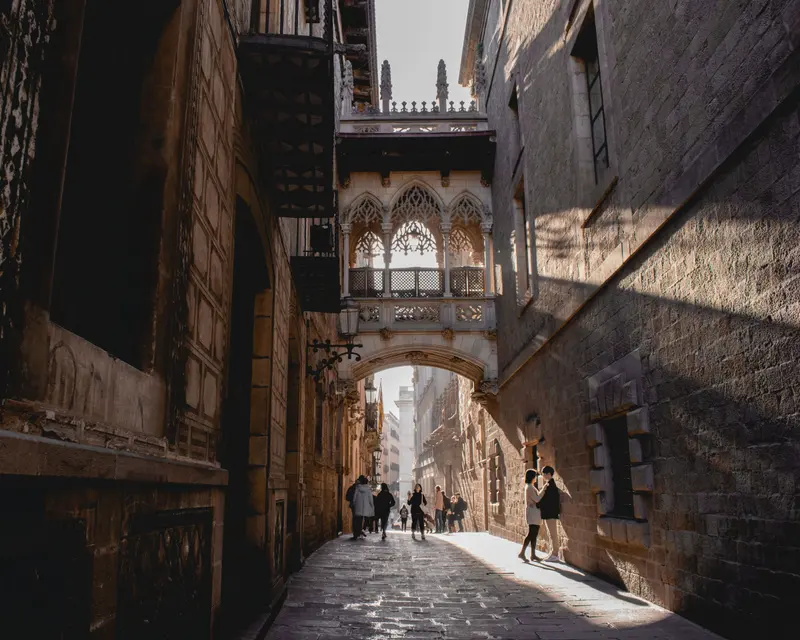
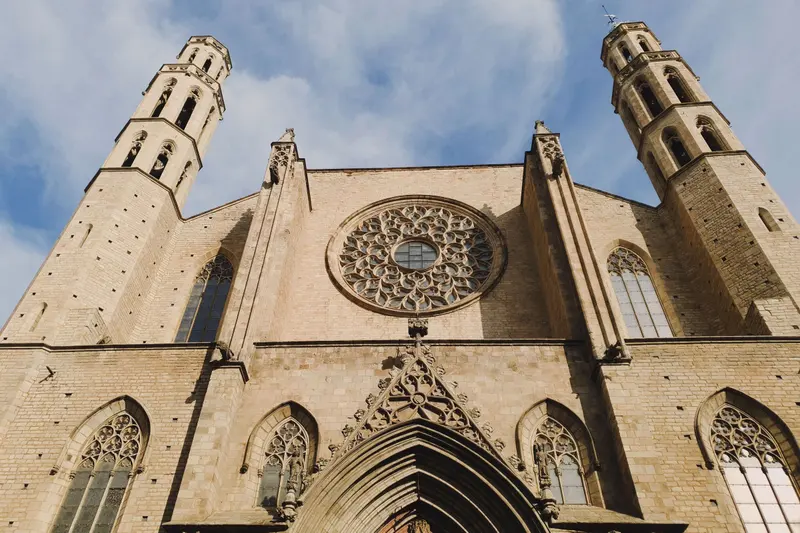
In Sant Andreu & Nou Barris, also browse: Terraces Bakery cafés Open late
Sant Andreu de Palomar was annexed to Barcelona on 20 April 1897, after more than a thousand years as a separate town. It still holds symbolic referendums on independence from time to time, and under Franco part of its territory became the Nou Barris district.
Passengers are not expected inside La Sagrera station before 2032, although its first stone was laid in 2010. The station has three levels, with commuter trains below and eight high-speed tracks above, and the Camí Comtal park planned on top will run for more than 4 km.
Fabra i Coats was a sewing-thread company whose Sant Andreu mill dates from 1843. It took the name in 1903, when J. & P. Coats bought in, and stopped production in Spain in November 2005. Barcelona took over the building that December and turned it into a creation factory for artists.
Free listings are free for good. A featured page gives you photos, a menu and your own URL, in your café's own design, for less than a coffee a day.