 By Yannick Schroth
City guides · 5 min read · October 2026
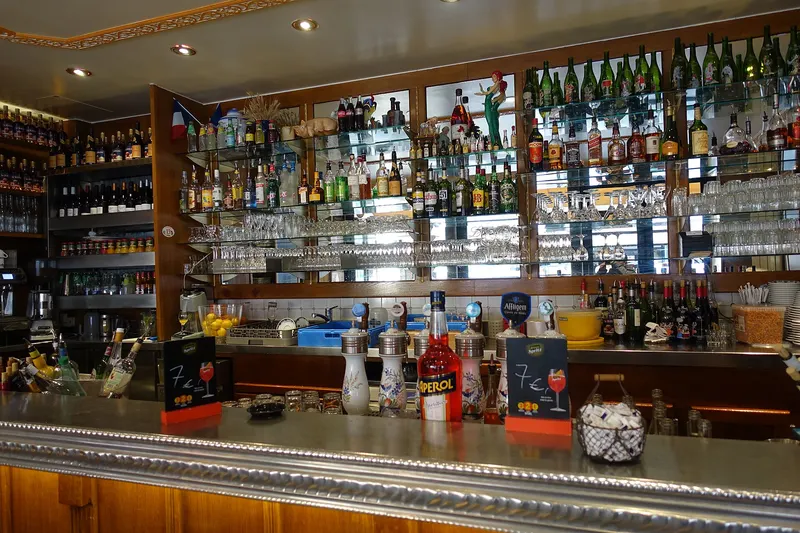
Paris drinks its coffee in two kinds of room. The older is the zinc, the neighborhood bar with a metal-topped counter, and it is in retreat: the number of zincs in Paris fell by 40% in 20 years, according to a 2026 analysis by the researcher Nathalie Louisgrand.1 The newer is the coffee shop. France had about 3,500 of them in 2025, 74% more than 15 years earlier, concentrated in Paris and the other big cities.1
The gap in price between rooms is wide. When Le Figaro compared 20 well-known Paris establishments in 2022, a small black coffee at a table ran from €1.50 to €8, with an average of about €3.20.7 A specialty bar in the 10e listed its espresso at €2.50 in October 2026, cheaper than many terraces, and its crème at €4.50.6
The zinc and who kept it
The counter gave the bar its nickname. One account, repeated by the City of Paris, dates the word to World War II: German troops pulled out tin counters for the metal, and Zinn, German for tin, turned into zinc in Paris slang.2 Marcel Nectoux opened a workshop making counters on Rue de Charonne, in the 11e, in 1930, and three generations of his family kept it going.2
Many of the people behind those counters came from the Massif Central. During the Industrial Revolution, migrants from the Auvergne, nicknamed bougnats, ran cafés-charbons in Paris that sold firewood, delivered coal and poured drinks, and they slowly added simple cooking.2 The dishes are still the bistrot canon: oeufs mayonnaise, steak tartare, bavette, blanquette de veau and the croque-monsieur, with île flottante or crème brûlée after.2
The city hands out its own honors to the survivors. During a week of events for its bistrots in March 2024, Paris gave its Vermeil medal to 62 of them.2
The coffee shop since 2010
Specialty coffee reached France around 2010, with single-origin beans, lighter roasts, hand brewing and baristas who explain the cup.1 It followed two earlier waves: the percolator, which spread coffee through the bistrots from the late 19th century, and chains built on milky drinks, which arrived with Columbus Café in 1994 and Starbucks in 2004.1 Chains such as these now hold nearly a third of the French coffee-shop market.1
Parisians still prefer to sit down. Takeaway makes up only 35% of coffee-shop business in France, against about 70% in English-speaking countries, and the rooms draw mostly 18-to-35-year-olds who come to work, study or meet.1 A latte can reach €6 in some of them.1
The boom is slowing. Nearly 80% of French people drink coffee regularly, but the market research firm Xerfi expects the weakest coffee shops to be squeezed out by 2028, as upmarket bakeries, fast food and dearer green coffee press on margins.1
Palais-Royal, the Marais and the canal
The Right Bank holds the oldest café history. Near the Palais-Royal in the 1er, the Café de la Régence opened in 1681 as the Café de la Place du Palais-Royal and became one of Europe's chess centers; Diderot and Rousseau met there in 1742, and Marx met Engels there on 28 August 1844.3 It moved to 161 Rue Saint-Honoré in 1854 and became a restaurant in 1910.3
Its chess players moved on to the Café de l’Univers in 1916, and in 1918 the Moroccan national tourist office took over the old café’s premises.3 The Finnish composer Jean Sibelius is said to have improvised the main theme of his Third Symphony’s finale there in January 1906.3
The Marais is where the specialty trade gathers in public. The 2026 Paris Café Festival took over the Carreau du Temple, at 2 Rue Perrée in the 3e, from 11 to 13 April, with tastings, latte-art lessons, V60 and AeroPress brewing, cupping sessions and iced coffees.4
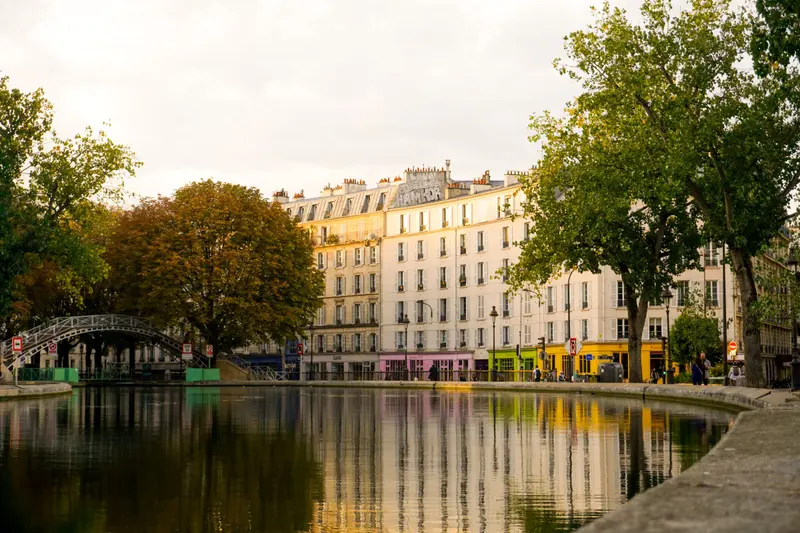
Along the Canal Saint-Martin, coffee comes with breakfast and lunch. HolyBelly, on Rue Lucien Sampaix in the 10e since 12 October 2013, seats 100, takes no reservations and is busiest on weekdays between 11:00 and 14:30.5 Its milky drinks are made with raw, unpasteurized cow's milk from Brittany.6
Montmartre and Belleville
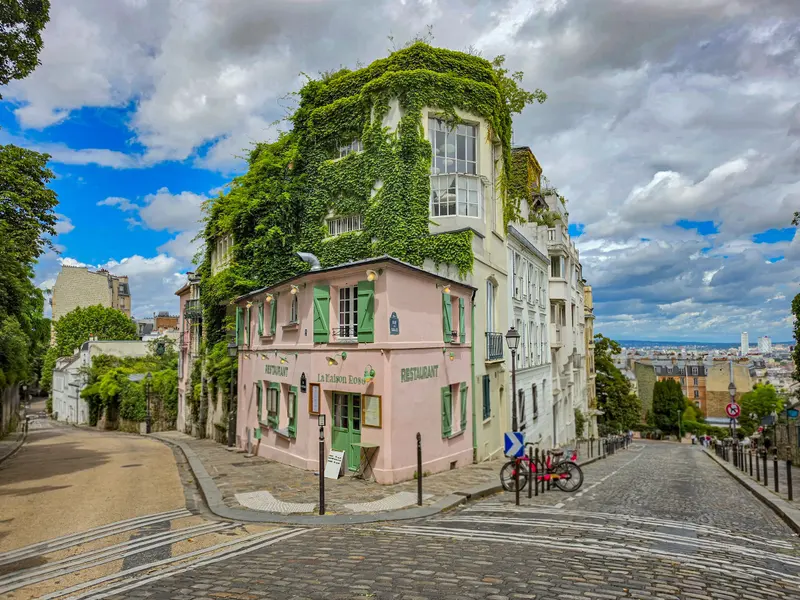
On top of Montmartre, La Mère Catherine on Place du Tertre dates from 1793, and Paris lore makes it the birthplace of the word bistrot. The writer Pierrick Bourgault calls that story fanciful: the word first appears in print in 1884, glossed as a wine seller.2
Belleville had the cheapest table in Le Figaro’s 2022 comparison: a small black cost €1.50 at the Folies de Belleville, in the 20e, while Fouquet’s on the Champs-Élysées charged €8, the highest of the 20.7 Depending on the arrondissement and the type of room, the survey found the price of the same cup could vary by a factor of five.7
What coffee costs, 2022 and 2026
Specialty menus price by milk. At HolyBelly, the menu dated October 2026 lists an espresso at €2.50 (a double adds €1), a noisette of espresso and 90 ml of hot milk at €3.50, a crème with 220 ml at €4.50 and a big mug of drip coffee at €4.6 Oat milk adds €0.50 to €1, a larger mug €1.50 and ice €1.6
Read the foot of the bill as well. On bills above €25, HolyBelly adds €0.20 for the Ernest foundation, a charity, and takes it off if you ask.6
| Order | Price | Where and when |
|---|---|---|
| Small black coffee, at a table | €1.50 | Folies de Belleville, 20e, 20227 |
| Small black coffee, at a table | about €3.20 (average) | 20 well-known Paris establishments, 20227 |
| Small black coffee, at a table | €8 | Fouquet's, Champs-Élysées, 20227 |
| Espresso | €2.50 | HolyBelly, 10e, October 20266 |
| Noisette (90 ml milk) | €3.50 | HolyBelly, 10e, October 20266 |
| Crème (220 ml milk) | €4.50 | HolyBelly, 10e, October 20266 |
| Drip coffee, big mug | €4 | HolyBelly, 10e, October 20266 |
| Latte | up to €6 | Some French coffee shops, 20261 |
The 2022 figures are table prices from Le Figaro's survey; the 2026 figures are menu prices.
Timing, cards and tips
Daytime rooms also close for the holidays. HolyBelly serves food until 16:00 and drinks and cake until 16:45, and in 2026 it shut from 13 to 21 April for Easter, from 3 to 19 August for summer and from 21 to 27 December.5 Check a café’s own page before planning a mid-August breakfast.
Cash always works. In principle a business may not refuse euros in cash and risks a €150 fine if it does, though you are expected to pay the exact amount, and a payment of more than 50 coins can be turned down.9 Cards are the café's choice: it may refuse them or set a minimum spend if it posts that in the shop, and each contactless payment is capped at €50.8
Tips stay small and voluntary. Tips left in cash, or added by card and passed on in full, are free of income tax and social charges for staff earning up to 1.6 times the minimum wage, a rule extended to 31 December 2028; an automatic service charge on the bill does not count.10