 By Yannick Schroth
City guides · 5 min read · October 2026
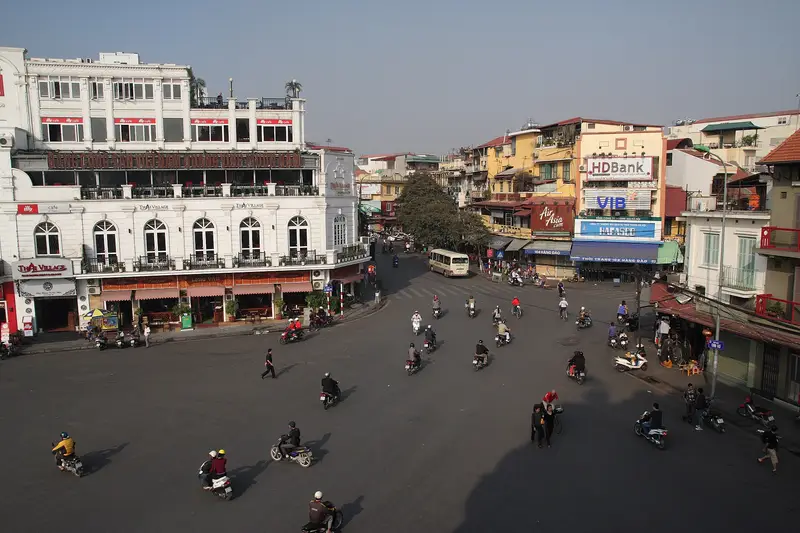
For Hanoians coffee is an everyday necessity, and most still prefer to drink it at a roadside café even as designed coffee shops have spread through the city.2 The classic room is tiny, often a single storefront with a beaded curtain between the tables and the street.1 Older regulars stay loyal to long-established cafés on old streets or deep in alleys, while younger drinkers pick loud, modern or pavement places.1
The pavement itself is under pressure. Since December 2025 police have issued more than 3,000 fines for blocking footpaths, and in June 2026 the city was weighing whether to double them while letting vendors rent back authorized kerb space.3 Where you can sit, what you pay and when a café fills up still depend on the street.
The pavement and the plastic stool
A Hanoi pavement café is built to move. On Nhà Thờ, the short street by the cathedral, the cafés are so small that their customers fill the sidewalk, on plastic chairs that double as tables and can be cleared quickly when police arrive.5 The street is known for trà chanh (lemon tea) as much as coffee, and its crowd of students peaks in the afternoon, the evening and at weekends.5
Enforcement tightened in 2026. Nearly 2,000 surveillance cameras went up over several months, businesses that block a walkway face fines of up to 6,000,000₫, and an illegal vendor 250,000₫.3 The manager of a three-storey café told AFP that about a third of his customers want a pavement seat, especially on cooler days, mornings and evenings, and that he had lost some business.3 Earlier clearance campaigns in Hanoi were often short-lived.3
Triệu Việt Vương and the lakes to its west
Triệu Việt Vương, in Hai Bà Trưng, became a café street in the 1990s, with phin (drip-filter) coffee drunk on quiet corners by regulars who read the paper, smoked and talked business on the sidewalk.4 By 2013 its roughly 700 meters held about a hundred cafés, from traditional family cafés to modern ones.5 Office workers from the surrounding blocks set the rhythm: the busiest hours were 06:30 to 09:00, lunchtime and late afternoon.5
At the Hoàn Kiếm end, Cà phê Thái, at number 27, dates from 1926, and in 2021 it was one of the few cafés in Hanoi still roasting its beans over charcoal.6 It kept its low plastic stools on the pavement and charged 18,000–40,000₫ that year.6
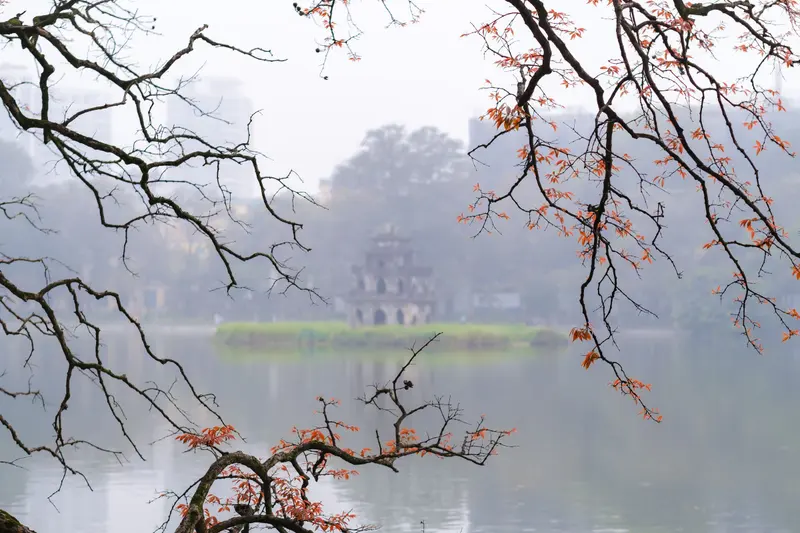
A few blocks west, more than ten cafés on Nguyễn Du face Thiền Quang lake under old trees, with drinks from 15,000₫ in 2013.5 Customers there range from retirees and office workers to students and couples, and the street is busiest in the evening rather than the morning.5
The Old Quarter, West Lake and the office west
In the Old Quarter, Hàng Hành had more than 20 cafés by 2005, all competing with the long-established Cà phê Nhân.4 On Nguyễn Hữu Huân, east of the trade streets, intellectuals and artists drank at Cà phê Lâm, number 60, which brewed with the phin, kept the coffee warm in porcelain bowls of boiling water and hung paintings by Bùi Xuân Phái on its walls.4
On the second floor of 13 Đinh Tiên Hoàng, a café was a student refuge in the 1980s and 1990s, where people drew, played guitar and listened to rock.4 Tạ Hiện, a pedestrian street, is where the Old Quarter stays up: on the night of the 2026 World Cup final, its cafés, beer bars and restaurants, and those on Lương Ngọc Quyến and Đào Duy Từ, were full by just after 01:00.11
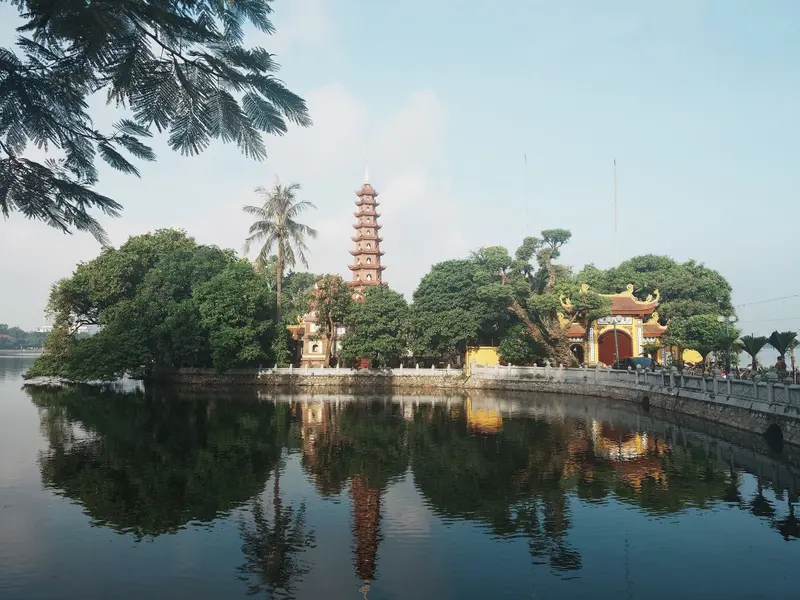
Around West Lake, a 2025 VinWonders roundup of lakeside cafés put most of them on Nguyễn Đình Thi, followed by Trích Sài, Vệ Hồ and Nhật Chiêu.15 Cầu Giấy, to the west, tried a format of its own: in 2012 coffee carts parked near its office buildings sold a cup for 13,000–15,000₫ and delivered phone orders to desks in 5 to 10 minutes.14
Music cafés, from 1940 to the 1990s
Hanoi's cafés have long doubled as stages. In 1940 the violinist Nguyễn Văn Diệp and others rented 53 Đinh Tiên Hoàng and opened Nghệ sĩ, a café with live music.7 Others followed in the early 1940s, among them Thăng Long on Hàng Bông and Thiên Thai on Hàng Gai, named after a song popularized by the singer Kim Tiêu.7
In 1952 Thủy Tạ, on the shore of Hoàn Kiếm lake, held dancing and singing at weekends with the Lúa Vàng band.7 During the subsidy era, when state-run coffee shops were the only option, there was no live music; music cafés came back in the 1990s with places such as Hollywood on Hồ Xuân Hương and Hồ Gươm Xanh on Lê Thái Tổ.7 Hanoi still has cafés with live bands, where guests sometimes take the microphone.7
What a cup costs in 2026
Prices have climbed steeply over two decades. In 2005 a basic black or milk coffee cost 3,500–10,000₫ depending on the café.4 By October 2026 a sidewalk coffee in Vietnam ran 15,000–25,000₫, and budget cafés and mass-market chains charged a few tens of thousands.8
At the top, a specialty café on Phố Huế charged 50,000–85,000₫ for most drinks and about 170,000₫ for a V60 of specialty beans, and the Starbucks by Hanoi's central post office 90,000–125,000₫ for most drinks.8 Cups of 70,000–100,000₫ were becoming common in city cafés but were not yet the market norm.8 For scale, a bowl of phở or bún cost 40,000–55,000₫ in Hanoi at the time.8
| Year | What and where | Price |
|---|---|---|
| 2005 | Black or milk coffee, Hanoi cafés | 3,500–10,000₫4 |
| 2013 | Coffee or lemon tea on Nhà Thờ | 15,000₫5 |
| 2013 | A drink on Triệu Việt Vương | from 20,000₫5 |
| 2026 | Sidewalk coffee, Vietnam-wide | 15,000–25,000₫8 |
| 2026 | Most drinks, specialty café on Phố Huế | 50,000–85,000₫8 |
| 2026 | V60 with specialty beans, Phố Huế | about 170,000₫8 |
| 2026 | Most drinks, Starbucks by the central post office | 90,000–125,000₫8 |
2026 prices as of October 2026.8
Tết hours and paying by QR
Tết (Lunar New Year) is the one stretch when hours change across the city. In February 2026 many Hanoi cafés stayed open through the holiday, some opened on the first day of the year and a few stayed open past midnight on New Year's Eve, until 01:00 or 02:00.9 Some added a surcharge: one charged 20% over the holiday, another a 5% service fee from 16 to 18 February, while others kept their usual prices.9
On mùng 4, the fourth day of Tết (20 February 2026), central cafés reopened to queues and full tables, and drinks took 10 to 20 minutes to arrive.10 Outside the holidays, a 2010 government portal feature singled out the afternoon, when traffic noise drops, as Hanoi's café hour.1
Paying has moved to the phone. In 2022 a tea seller on Quán Thánh accepted cash, bank transfer or a QR scan, and a customer paid by QR for a 3,000₫ glass of tea.12 NAPAS figures show VietQR transactions up 52% by volume and 85% by value in the first ten months of 2025.13
Tip. Over Tết, check the menu for a holiday surcharge before ordering: in 2026 one Old Quarter café added 20% and another a 5% service fee.9