Forest Coffee Roasters
- Specialty
- Wi-Fi
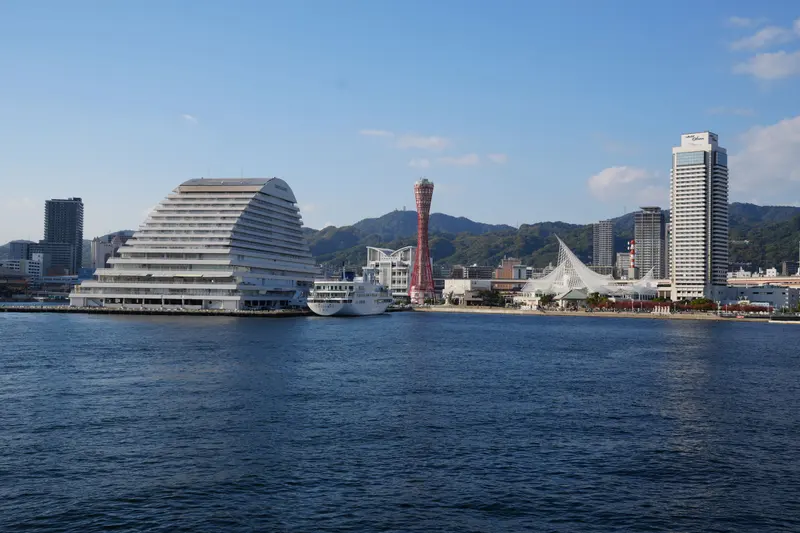
A Shōwa room by Hanshin Mikage, butter-blend coffee near Hankyu, sake museums in Sumiyoshi and roasters uphill.
Photo: Dmitry Romanoff, Pexels License
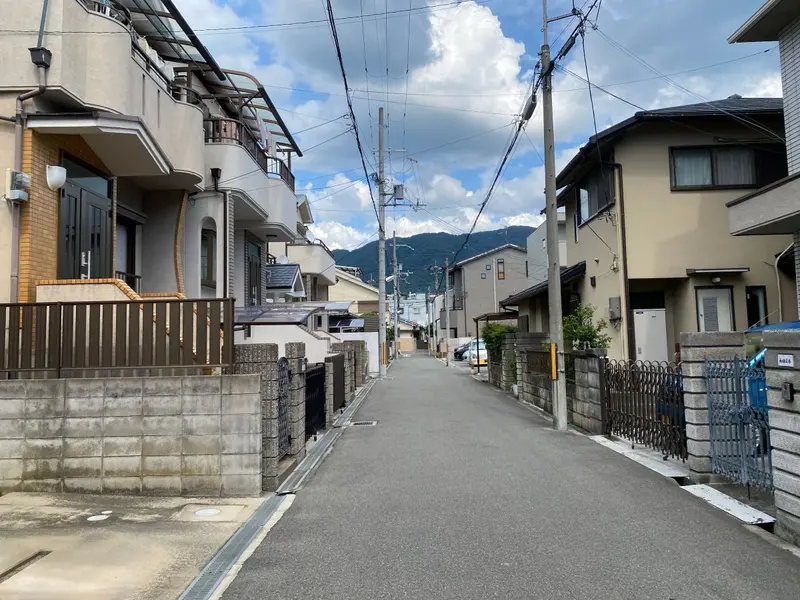
Mikage and Sumiyoshi make up the western side of Higashinada Ward. Mikage town was formed in 1889 from five villages, among them Mikage, Gunge and Ishiya, grew its trade around sake brewing and joined Kobe in 1950.1 Sumiyoshi, its neighbor on the Sumiyoshi River below Mount Rokkō, stayed a separate village until the same year and was once called the richest village in Japan.2
Sumiyoshi-honmachi, around JR Sumiyoshi, and Mikage-honmachi, south of Hanshin Mikage, have the most cafés, followed by Mikage 1- and 2-chōme. A cluster of small coffee rooms sits in Sumiyoshi-minamimachi near the breweries, and a few roasters climb into Mikage-yamate.
Local tip: Pair a coffee in Sumiyoshi-minamimachi with the Hakutsuru Sake Brewery Museum at 4-5-5: entry is free, it opens 09:30–16:30 with last admission at 16:00, and it is about five minutes on foot from Hanshin Sumiyoshi.8
Irodori Cafe
Nishimura Coffee Shop
Fanīku Coffee
Kissa Okajima
Coffee N
Nothing matches those filters here. See all cafés in Kobe.
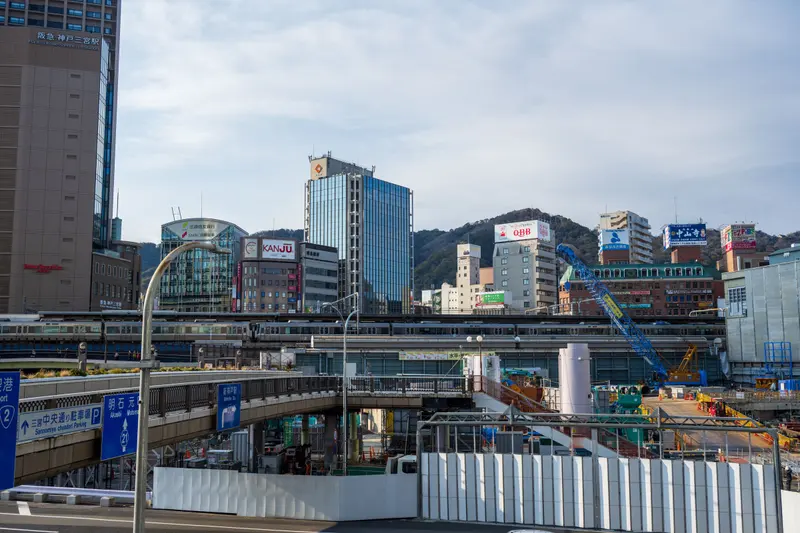
Hanshin Mikage opened with the Hanshin main line on 12 April 1905 as a street-level stop and moved onto its viaduct on 27 July 1929.3 The platforms lie on so tight a curve that the long Kintetsu cars of the rapid express would leave dangerous gaps, so those trains roll through slowly without stopping.3 The square on the south side is Valentine Plaza, after the claim that Morozoff, a confectioner based nearby, started Japan's Valentine's chocolate habit with a newspaper ad on 12 February 1936.3
One minute from the ticket gate, 珈琲ん (Coffee N) is a kissaten (喫茶店, traditional coffee shop) in a second-floor room crowded with a violin, an octagonal clock and old film posters; in 2018 it was run by Ebihara Masaki, a former regular.6 Kissa Okajima is a few blocks away at Mikage-nakamachi 1-9-1. Nishimura Coffee's Mikage shop is on Mikage 2-chōme, and its third floor holds Mikage-kan, a stone-grill steak restaurant serving Tajima beef.11
Granite is still sold in Japan as mikage-ishi (御影石, Mikage stone). Stone cut on Kōjinyama, on Rokkō's southern slopes, was carried down to Mikage and shipped from its harbor around the country, until quarrying ended in 1956 when the mountain became part of Setonaikai National Park.4 Sake drove the town: brewing had a long history here, and local workshops turned out barrels, tabi socks, geta and cut stone.1
Kiku-Masamune's museum keeps a brewhouse built in 1659 inside the Hon-Kanō family residence in Mikage and moved in 1960. It collapsed in the 1995 earthquake and reopened on 25 January 1999, reusing beams more than 400 years old.7 Hakutsuru shows the old brewing process in a Taishō-era brewery at Sumiyoshi-minamimachi 4-5-5.8 Nearby in 5-chōme, 六甲ハートフル珈琲 (Rokkō Heartful Coffee) and 家紋珈琲店 (Kamon Coffee) are at Nos. 5-6-16 and 5-7-29.
Sumitomo Tomoito, head of the Sumitomo family, Takeda Chōbei of Takeda Pharmaceutical and Murayama Ryōhei, founder of the Asahi Shimbun, all kept houses in Sumiyoshi. The novelist Tanizaki Jun'ichirō lived here from 1936 to 1943 and wrote Sasameyuki (細雪, The Makioka Sisters) in the village.2 In the Hanshin flood of 5 July 1938, the railway embankment trapped the water in the lower districts, about 4,000 homes went under and 33 people died.2
JR Sumiyoshi opened on 1 June 1874 and moved south in 1912, after sake brewers petitioned for a site handier for loading freight.5 It is also the first stop of the Rokkō Liner to Rokkō Island, opened in 1990.5 Its own block, Sumiyoshi-honmachi 1-chōme, holds eggstand and Fanīku Coffee, with Neutral at 2-1-17, while Ashiya月兎 ぷらす, a rabbit specialty shop with a rabbit café, is at Sumiyoshi-miyamachi 2-15-16.9
Hankyu's Mikage station is about 1.2 km north of the Hanshin one, roughly 15 minutes on foot.3 One minute south of it, 御影ダンケ (Mikage Danke) at Mikage-gunge 2-19-16 is known for its butter blend coffee; from December 2025 a cup cost ¥750, a Vienna coffee ¥850 and Käsekuchen (German cheesecake) ¥650.10 Kawamoto Yūji's book on the shop, Kōhī to Hon to Kōbe to: Mikage Danke Monogatari, came out as a Kindle edition.10
Higher up, Forest Coffee Roasters at Mikage-yamate 5-2-16 roasts in-house, offers Wi-Fi and took in a washed El Salvador from the Malacara farm on 31 October 2026.12 MAMEHICO, a café company with shops in Tokyo's Sangenjaya and Ginza and in Kiryū, bakes muffins at its Mikage shop and ships them boxed with coffee and homemade strawberry jam.13 East on Sumiyoshi-yamate, the Hakutsuru Fine Art Museum at 6-1-1 shows East Asian metal and stone crafts until 13 December 2026, 10:00–16:30, closed Mondays.14
In Mikage & Sumiyoshi, also browse: Specialty coffee Bakery cafés
Sumiyoshi-honmachi around JR Sumiyoshi and Mikage-honmachi south of Hanshin Mikage have the most, followed by Mikage 1- and 2-chōme. Smaller groups sit in Sumiyoshi-minamimachi near the sake breweries and uphill in Mikage-yamate.
Coffee N (珈琲ん) is one minute from the Hanshin Mikage ticket gate, in a second-floor room filled with a violin, an octagonal clock and old film posters. Kissa Okajima is a few blocks away in Mikage-nakamachi, and Mikage Danke near Hankyu Mikage serves its butter blend coffee.
The Hakutsuru Sake Brewery Museum is in a Taishō-era brewery in Sumiyoshi-minamimachi, about five minutes from Hanshin Sumiyoshi, and entry is free. The Kiku-Masamune museum keeps a brewhouse from 1659 that once stood in the Kanō family residence in Mikage.
Free listings are free for good. A featured page gives you photos, a menu and your own URL, in your café's own design, for less than a coffee a day.