Harajuku & Omotesandō
217 Greek Yogurt
ニイチナナ
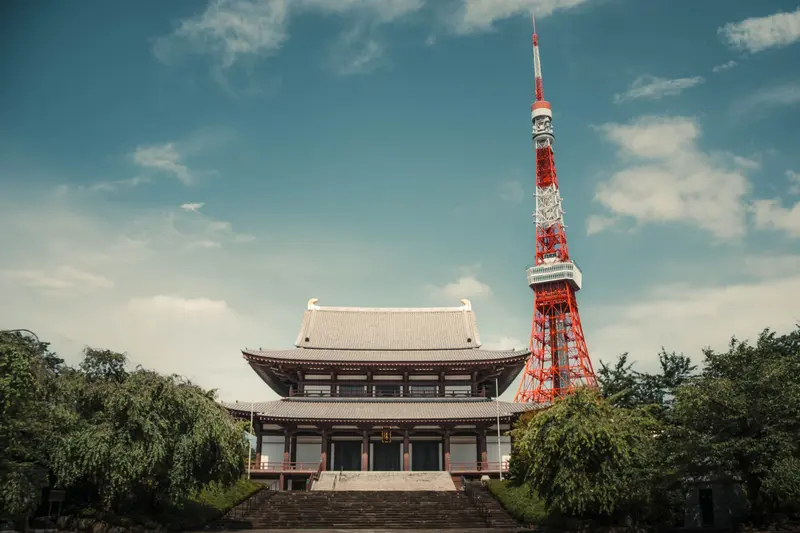
Plant-based bakeries, brown-rice lunches in Kōenji and temple-style wheat gluten in Minami-Aoyama.
Photo: Lorenzo Castellino, Pexels License
Tokyo's meat-free cooking is far older than its cafés. Shōjin ryōri (精進料理, Buddhist temple cooking) reached Japan with Buddhism more than a thousand years ago, and the word first meant ascetic practice, including abstinence from meat and alcohol.2 Temples still serve it, and so do restaurants in the city's commercial centers.1
Kōenji and Nakano have the most cafés with vegan or vegetarian food, ahead of Harajuku and Omotesandō and then Asakusa and Kuramae. The rest are single addresses spread from Shimokitazawa to Ryōgoku, so plan a day by train line rather than by neighborhood.
Local tip: Universal Bakes and Akha Ama both close on Monday and Tuesday; on those days, Brooks Greenlit Cafe in Minami-Aoyama still opens at 08:00.
Where these cafés are: Kōenji & Nakano (5), Harajuku & Omotesandō (4), Asakusa & Kuramae (3), Nihonbashi & Tokyo Station (2), Shimokitazawa (2), Takadanobaba & Waseda (2), Akasaka (1), Kagurazaka & Iidabashi (1), Oshiage & Ryōgoku (1), Roppongi & Azabu (1), Nerima & Egota (1), Kanda & Jimbōchō (1), Nakameguro & Daikanyama (1), Ueno & Yanaka (1).
ニイチナナ
Akha Ama Coffee Roasters
Rekutosando Cafe
Shochiku-en Café
Sarutoriibara
Momo no Ajito!
Natsumezaka Coffee
Hodaka
Yasai Cafe KuKuri
Nothing matches those filters here. See all cafés in Tokyo.
Shōjin ryōri is cooked without meat or fish, around seasonal vegetables and mountain plants, and it leaves out strong flavors such as garlic and onion.1 Monastic rules also bar other strong-smelling plants, shallot and Chinese onion among them, while tofu, wheat gluten and konnyaku (a firm jelly made from konjac) supply much of the body.3 Dōgen, founder of the Sōtō school of Zen, told the cook in his Tenzo kyōkun (Instructions for the Zen Cook) to respect every ingredient, coarse or fine.3
Wheat gluten turns up on a café menu in Minami-Aoyama. Brooks Greenlit Cafe, open daily 08:00–18:00, describes its food and drinks as plant-based and puts kuruma-fu (車麩, wheel-shaped dried gluten) into a bulgogi-style sandwich at ¥1,540, the same price as its teriyaki tempeh sandwich, as of 2026.4 Lattes there come with soy, almond, oat or brown-rice milk for ¥730.4
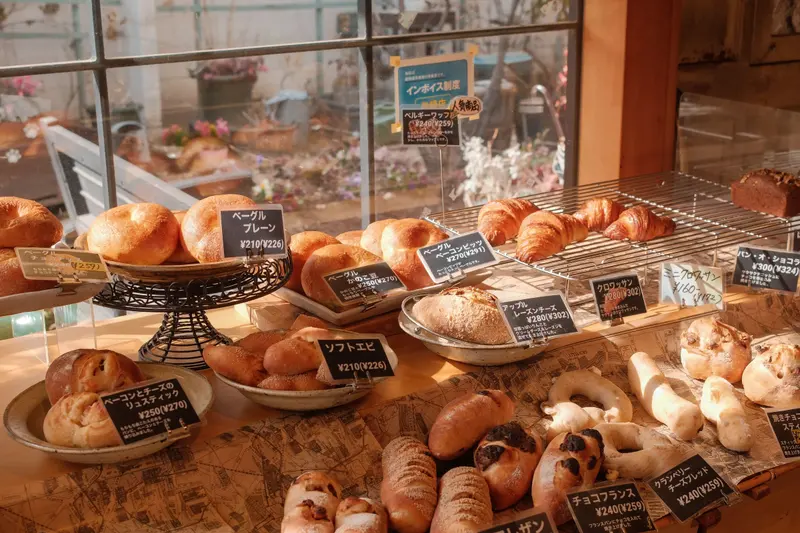
Universal Bakes and Cafe at Daita 9-1 calls itself a 100% plant-based bakery and makes its bread, doughnuts and muffins without dairy or eggs.5 A vegan muffin costs ¥680 as of 2026.5 It opens Wednesday to Sunday, 08:30–18:00, so a Monday or Tuesday trip to Setagaya-Daita finds it shut.
Ovgo Baker makes its cookies without eggs or butter, entirely from plant ingredients, and warns that its kitchen also handles wheat and almonds.6 An Impossible Chocolate Chip cookie costs ¥480 as of 2026.6 Its Edo St. shop in Nihonbashi-Kodenmachō opens at 08:00 on weekdays and 10:00 on weekends. In Jingūmae, the hair salon whyte runs a counter called VENUTS that sells 100% vegan doughnuts, baked instead of fried.7
South of Kōenji Station, three addresses sit within a few blocks of Kōenji-minami 3-chōme: meu nota at 45-11, Sarutoriibara, a kissashitsu (喫茶室, tea room), at 46-2, and Rect Sand Cafe at 54-14. North of the tracks, Cafe Garage Dogberry is in Kōenji-kita 3-chōme.
Rect Sand Cafe describes itself as a shop for kōso genmai (酵素玄米, "enzyme" brown rice), vegetables and snacks, and says it aims for vegan meals you would want to eat every day.9 It takes reservations through LINE and by phone, and it also sells for delivery and online.9
Akha Ama began in 2010 as a small shop in Chiang Mai, opened by a young man from an Akha hill village of about 300 people in northern Thailand, who sold his mother's coffee; the name means "Akha mother".8 The family farm grows its coffee among fruit and nut trees without pesticides.8 The Tokyo café opened in 2020 and stands at Waseda-Tsurumakichō 110-17, open Wednesday to Sunday, 08:00–17:00.8
In the same district, Natsumezaka Coffee opens every day from 08:00 to 18:00. Across town in Asakusa, feb's coffee & scone at Asakusa 3-1-1 serves daily from 09:30, and Shochiku-en Café at Nishi-Asakusa 7-7-6 opens at the same hour, closing at 16:30 on weekdays and 17:00 on weekends.

By area: Shimokitazawa Nakameguro & Daikanyama Harajuku & Omotesandō Takadanobaba & Waseda Nerima & Egota Kagurazaka & Iidabashi Nihonbashi & Tokyo Station Kanda & Jimbōchō Ueno & Yanaka Oshiage & Ryōgoku Asakusa & Kuramae Akasaka Roppongi & Azabu Kōenji & Nakano
Shōjin ryōri (精進料理) is Buddhist temple cooking made without meat or fish, built on seasonal vegetables and mountain plants, and it leaves out garlic, onion and other strong-smelling plants. It reached Japan with Buddhism more than a thousand years ago, and Tokyo's temples and central restaurants still serve it.
Universal Bakes and Cafe in Setagaya-Daita is a 100% plant-based bakery that uses no dairy or eggs and opens Wednesday to Sunday. Ovgo Baker makes its cookies without eggs or butter and has a shop in Nihonbashi-Kodenmachō. In Jingūmae, whyte sells 100% vegan doughnuts that are baked, not fried.
Kōenji and Nakano have the most, ahead of Harajuku and Omotesandō, then Asakusa and Kuramae. South of Kōenji Station, Rect Sand Cafe cooks vegan meals around enzyme brown rice, a few blocks from meu nota and the Sarutoriibara tea room.
Free listings are free for good. A featured page gives you photos, a menu and your own URL, in your café's own design, for less than a coffee a day.