Årsta konditori
- Outdoor seating
- Indoor seating
- Bakery café
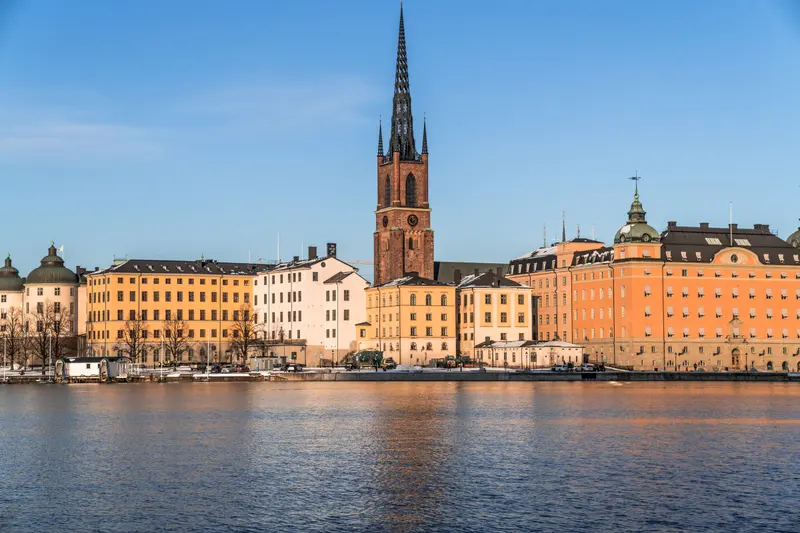
Årstabo on Årsta torg, an Italian bakery by Gullmarsplan and plant-based food at Cornershop.
Photo: Hakan Tas, Pexels License
Johanneshov, Årsta and Hammarbyhöjden fill the high ground directly south of Skanstull. Johanneshov has its center at Gullmarsplan, whose metro station was called Johanneshov until 1958, and the Globen area sits on the Stockholm esker that runs down its middle.1 It borders both Årsta and Hammarbyhöjden, and the last of the three had 10,701 residents at the end of 2025.19
Finn Malmgrens plan, the shopping square of northern Hammarbyhöjden, has the most cafés. Årsta torg and Årstavägen come next, and the rest are spread between Gullmarsplan, the arena quarter and Blåsut. Bakeries open first, at 07:00 on weekdays, while only a couple of places serve into the evening.
Local tip: On event nights at Avicii Arena, Globen station gets crowded: Gullmarsplan, Skärmarbrink, Blåsut, Sandsborg and Enskede gård stations are all within a few minutes' walk of the arena.8
Nothing matches those filters here. See all cafés in Stockholm.
Årsta centrum, finished in 1953, was the first suburban center built in Sweden, planned so that a new district would have its own services instead of becoming a dormitory town.2 Riksbyggen hired the architects Erik and Tore Ahlsén, and when ordinary painters refused to paint the facade murals, the architects and their staff did it themselves.2 The Forum cinema opened on 19 October 1951, and Årsta Folkets hus on the square included a 250-seat theater, a library and a youth café.2
Årstabo, at Årsta torg 5, shares its premises with the culture house: a café with lunches and home baking by day, then a restaurant and wine bar centered on biodynamic, organic and natural wines, with a garden for the evening sun.3 It also hosts wine tastings and DJ nights.3 On Årstavägen, Årsta konditori at No. 51 opens at 07:00 on weekdays and 08:00 on Saturdays, has tables outside, and stays closed on Sundays.
The buildings around Gullmarsplan were designed by Sven Backström and Leif Reinius, except the post office, which is by Erik Lallerstedt.1 Skanskvarn, about 200 meters north of the square, is a Dutch-style windmill from 1850 that was moved here in 1859 and stopped milling in 1882.6 The city decided in 1930 to protect it and turn it into a restaurant, with Holger Blom drawing the conversion, and in 1996 the Tvärbanan light rail was routed around its north side so it could stay.6
Spigamadre, at Gullmarsvägen 42 F, is about five minutes on foot from Gullmarsplan metro, on a quiet square a few steps from the woods of Årsta's nature reserve.5 The name means "wheat-ear mother"; Barbara Caracciolo, who grew up in Rome and came to Sweden in 2004 to research the epidemiology of aging, started it in 2017 as a micro-bakery.4 The counter mixes Swedish and Italian traditions: sourdough and kanelbullar (cinnamon buns) beside cornetti, pasticciotti and pizza al taglio.11
Building on the Globen area began in 1986, and Globen itself is the world's largest spherical building.1 Opened in 1989, it was renamed Avicii Arena on 19 May 2021 and, after a modernization through 2024, reopened on 1 February 2025.7 Green-line trains 17, 18 and 19 reach Globen station a few minutes from T-Centralen, and the bus terminal at Gullmarsplan is a five-minute walk from the arena.8
Enskede slakthus, the slaughterhouse complex, was built in 1906–1912 to designs by Gustaf Wickman; slaughtering stopped in 1990, but many charcuterie firms still work in the area.1 Coffe & Baker's is at Arenaslingan 1, and Stockholm Roast, a specialty coffee bar, is at Hallvägen 9.
Hammarbyhöjden was built from 1935 as narrow three-story blocks set straight into rocky ground; the first families moved in on 1 November 1936, and the pale facades earned it the name Den vita staden (the white city).9 Streets north of the metro are named after explorers and travel writers, Finn Malmgren among them.9 Shops opened around Finn Malmgrens plan from 1937, and by 1954 most of the district's 28 shop premises were at or near it.9
The square still does that job. Bonne Femme Stenugnsbageri, a stone-oven bakery at No. 12, opens at 07:00 on weekdays and 08:00 at weekends, and Fraterno cafe is at No. 8. Cornershop, at Finn Malmgrens väg 112, serves only plant-based food from a menu that changes every week, using local, seasonal and organic produce, and opens Friday to Sunday; it also runs pop-ups, dinners and cooking classes.10
Willy Brandt, who fled to Sweden in 1940, settled in Hammarbyhöjden in 1942 and lived for a time at Finn Malmgrens väg 23.9 Hammarbyhöjden station opened on 17 April 1958, and Blåsut, the southern part of the district, has a second Bonne Femme at Blåsutvägen 13.9 Kaffe-Kollektivet is at Sköntorpsvägen 27, and café DOUGH on Halmstadsvägen stays open to 21:00 on Fridays and Saturdays.
In Johanneshov, Årsta & Hammarbyhöjden, also browse: Outdoor seating Konditorier & bakeries Vegan options Wi-Fi Open late Specialty coffee
Finn Malmgrens plan in northern Hammarbyhöjden has the most, with Bonne Femme Stenugnsbageri and Fraterno cafe on the square and Cornershop on Finn Malmgrens väg. Årsta torg and Årstavägen come next, with Årstabo and Årsta konditori.
Spigamadre, at Gullmarsvägen 42 F in Årsta, is a bakery and café started in 2017 by Barbara Caracciolo from Rome. It bakes sourdough and kanelbullar alongside Italian cornetti and pasticciotti, and serves pizza al taglio, about five minutes' walk from Gullmarsplan metro.
Gullmarsplan and Globen, on green lines 17, 18 and 19, serve Johanneshov and the arena quarter, with Skärmarbrink and Blåsut close by. Hammarbyhöjden station, opened in 1958, is the stop for the district's own streets around Finn Malmgrens plan.
Free listings are free for good. A featured page gives you photos, a menu and your own URL, in your café's own design, for less than a coffee a day.