Dexter
- Open late
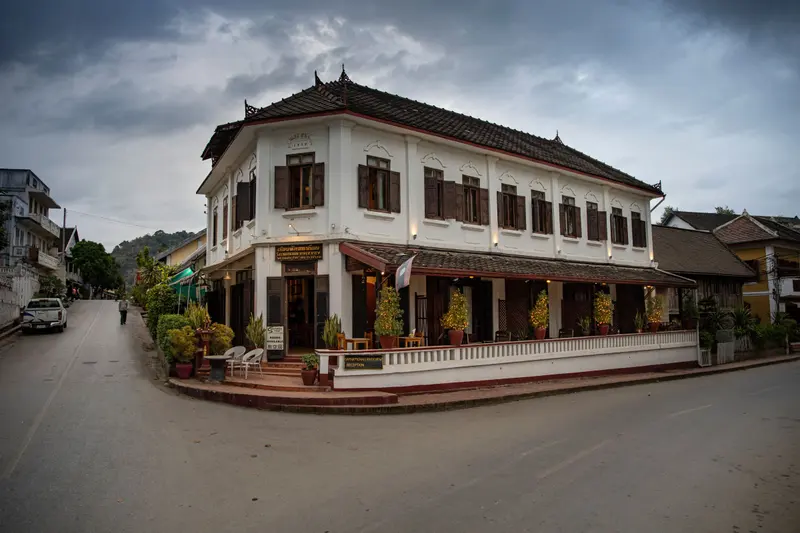
Northern Lao arabica roasted on the Mekong bank, croissants on Sakkaline Road after the morning alms, and condensed-milk coffee by the river from 05:00.
Photo: Stephen Leonardi, Pexels License
Luang Prabang stands where the Nam Khan runs into the Mekong, and the two rivers almost surround its Old Town, a strip about 1.5 km long and 500 m wide.2 The town became capital of the Lan Xang kingdom in 1353, takes its name from the Phra Bang, a Buddha image that stood for Lao sovereignty, and has been a UNESCO World Heritage Site since 1995. More than 30 Buddhist temples stand within it.1
Coffee came to Laos under French rule in the early 20th century, and most of it still grows in the south: Champasak province, home of the Bolaven Plateau, has over 50,000 of the country's roughly 97,400 hectares of coffee.3 The north is the smaller story. Saffron Coffee, founded in Luang Prabang in 2006 by David Dale and his wife Tou, works with about 800 smallholders in some 80 Hmong, Yao, Gasak and Khmu villages at 800–1,300 m.4
In many northern villages, coffee replaced opium as a cash crop after the ban.6 Cafés in town pour beans from all three regions: LuLaLao serves single origins from southern and central Laos, and aromdee, a social enterprise on the Mekong, roasts coffee grown by the Keoset community in the northern hills.6 In October 2025 Luang Prabang hosted International Coffee and Tea Day for the first time, and more than 6,400 people came to over 40 booths.5
The center is flat and compact, easy on foot or by bicycle.2 Since March 2026, vans, cars and tuk-tuks have been kept off the central stretch of Sisavangvong Road between the Honsae and Pak Khan intersections, and bicycles and motorbikes park along the river roads.12
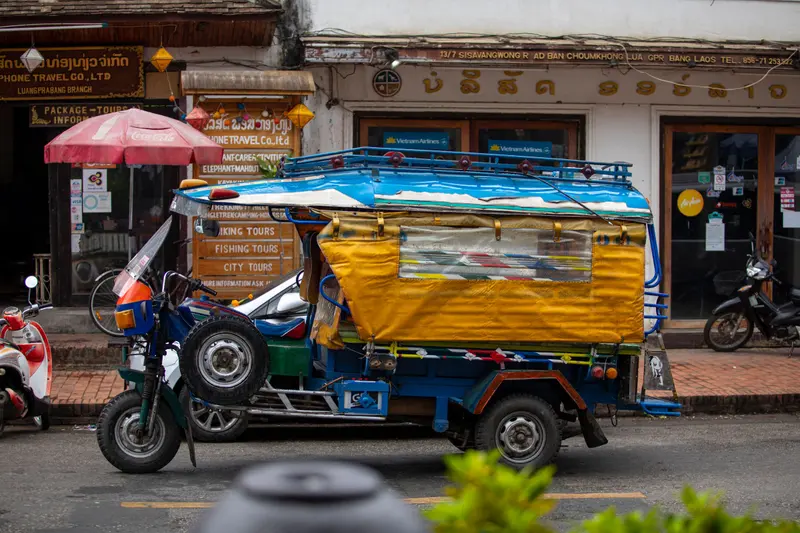
The temple-lined tip between the Mekong and the Nam Khan: Saffron's roastery, croissants on Sakkaline Road and river terraces.
24 cafés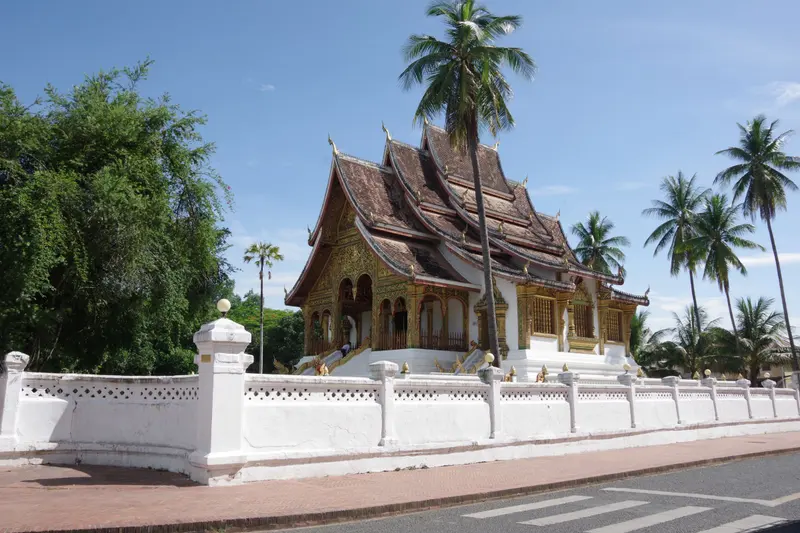
The former Royal Palace, the 328 steps up Phou Si and the night market, with riverside Lao coffee from 05:00.
11 cafés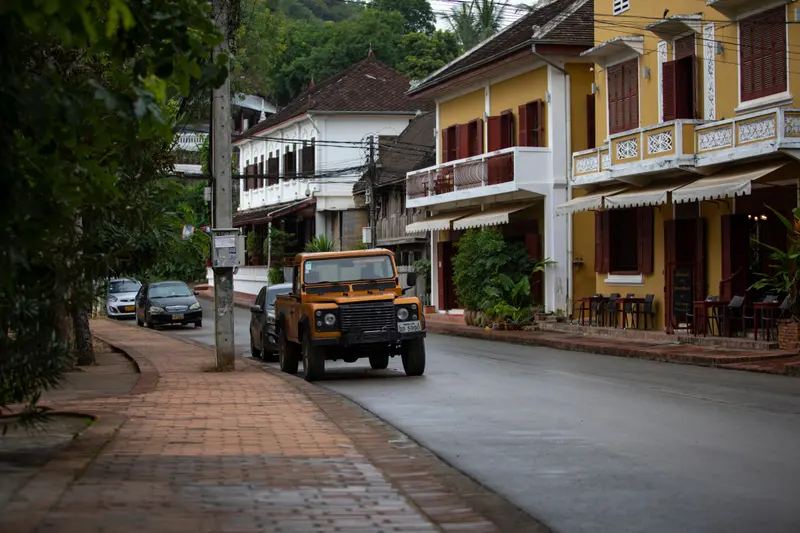
Wat Visoun's Watermelon Stupa, Dara Market and Kingkitsarath Road, with pour-over bars, a book-and-tea house and small bakeries.
18 cafés
Rooms with a connection, from Sisavangvong Road to Kingkitsarath Road and the Mekong at Ban Saylom.
17 cafés
Vegan bowls, falafel wraps and meat-free breakfasts, mostly on the peninsula and around Wat Visoun.
10 cafés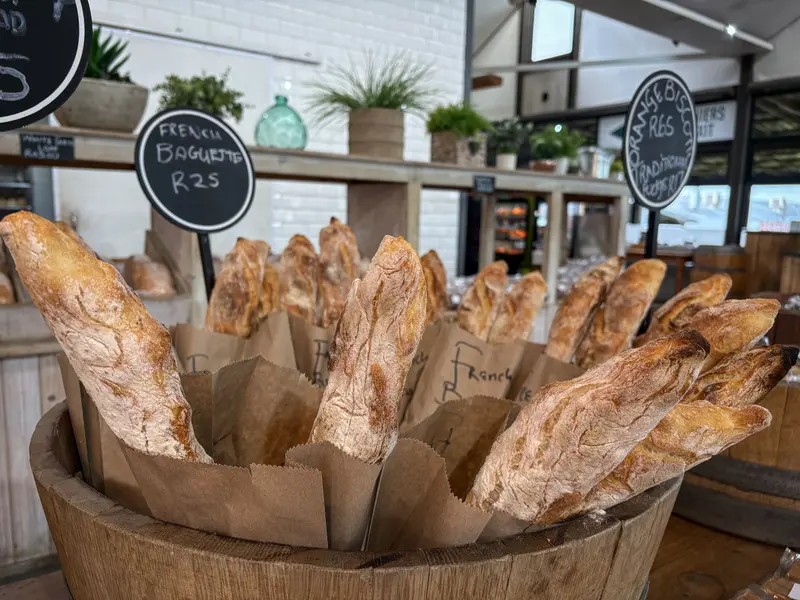
Croissants, baguettes and cakes, from Sakkaline Road on the peninsula to the small bakeries around Dara Market.
8 cafésMore about cafés in Peninsula & Wat Xieng Thong
Zurich Bread Factory and Café
Big Tree Cafe & Gallery
More about cafés in Royal Palace & Night Market
Pasaneyom
Indigo House
More about cafés in Wat Visoun & Dara Market
No café matches all of those filters. Try removing one, or tell us about a café we're missing.
Branches by area
Coffee is ກາເຟ (ka fe). Iced coffee is ກາເຟເຢັນ (kafe yen), black coffee ກາເຟດໍາ (ka fe dam) and coffee with milk ກາເຟນ້ຳນົມ (ka fe nam nom).8 At simpler shops the default is kaafeh lao, with sugar and condensed milk; ask for kaafeh thung if you want to avoid instant Nescafé, and expect the milk in kaafeh nom to be non-dairy creamer more often than not.7
Mornings start early. Monks collect alms, sai bat, from about 05:30 to 06:30 between March and October and from 06:00 to 07:00 from November to February, mainly in front of Wat Xieng Thong, the primary school and the National Museum.9 Watch in silence from at least 5 m away, cover shoulders and legs, and leave the flash off.9 ປະຊານິຍົມ (Pasaneyom) and Zurich Bread Factory both open at 05:00.
Carry kip in cash. The currency is not convertible, ATMs and card payments can fail, and in October 2026 one US dollar bought about 22,000 kip.7 Bars wind down at 23:00 and shut at 23:30, and the late cafés follow suit: Dexter on Sisavangvong Road serves until 23:00, Indigo Cafe until 22:00.2
Rain peaks in August, with about 329 mm, and April is the hottest month, with an average daily high of 35.2 °C.1 From late February to April, smoke from slash-and-burn farming hazes the hills and can sting the eyes, which makes an indoor table the better choice in those weeks.2
| Drink | Typical price |
|---|---|
| Iced latte Latte over ice | 37,000₭ The Journey Cafe menu, October 2026 |
| Iced americano Espresso and water over ice | 31,000₭ The Journey Cafe menu, October 2026 |
| Bagel Plain bagel; each spread 10,000₭ more | 10,000₭ Indigo House, January 2024 |
Coffee prices are from The Journey Cafe's own menu as published in October 2026; the bagel price is Indigo House's, as reported in January 2024.1011
Peninsula & Wat Xieng Thong and Wat Visoun & Dara Market have the most cafés, followed by Phou Vao Road & Phosy Market. The peninsula also has the most cafés with Wi-Fi and with vegan options, while the Wat Visoun side has the most bakery counters.
At simpler shops, kaafeh lao comes with sugar and condensed milk unless you ask otherwise. Ka fe dam is black coffee, kafe yen is iced coffee and ka fe nam nom is coffee with milk, often non-dairy creamer. Asking for kaafeh thung avoids getting instant Nescafé.
Most Lao coffee grows in the south, where Champasak province and the Bolaven Plateau hold over half the country's coffee land. Saffron Coffee buys from about 800 smallholders in some 80 northern villages at 800–1,300 m, and LuLaLao serves single origins from southern and central Laos.
Monks collect alms from about 05:30 to 06:30 between March and October and from 06:00 to 07:00 from November to February. Pasaneyom, a riverside Lao coffee shop, and Zurich Bread Factory on Sakkaline Road both open at 05:00.
At The Journey Cafe, an iced latte cost 37,000 kip and an iced americano 31,000 kip on its menu as published in October 2026.
Your free listing is probably already on this page. Claim it in two minutes, or turn it into a featured page in your own design, with photos, a menu and your own link.