gato cafe
- 24 hours
- Open by 6am
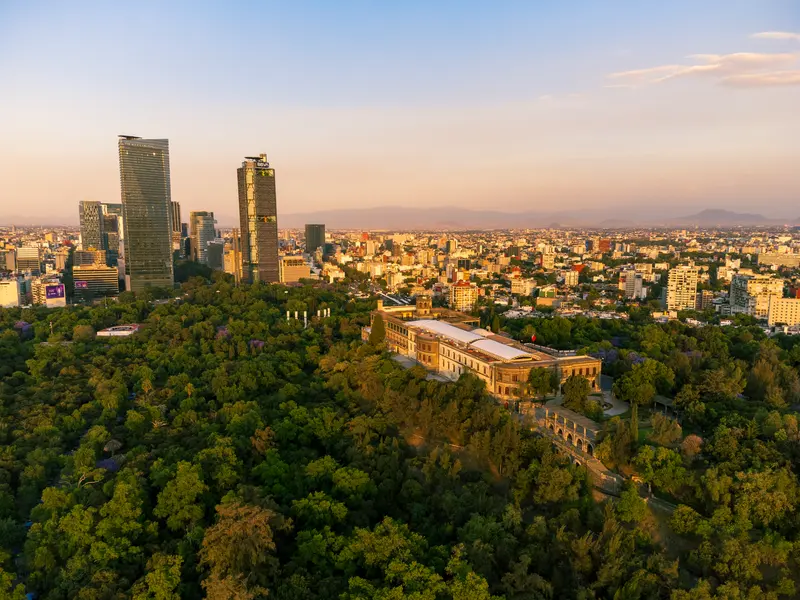
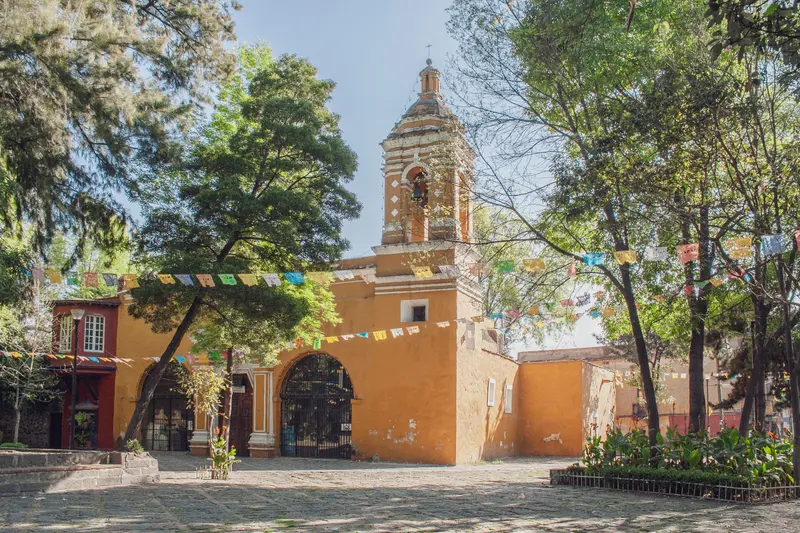
Lava streets by UNAM: cafés on Rey Nezahualcóyotl, a 24-hour gato cafe and brew bars on Avenida del Imán.
Photo: Israel Torres, Pexels License
Pedregal de Santo Domingo is one of Coyoacán's nine pueblos originarios (original villages), pressed against Ciudad Universitaria between Eje 10 Sur, Avenida del Imán, Avenida Aztecas and Delfín Madrigal, with about 100,000 residents.1 The ground is lava. The Xitle volcano, whose Nahuatl name means "little navel", erupted around the year 280 and buried some 80 km² of the southern basin, from the slopes of the Ajusco to today's Avenida Miguel Ángel de Quevedo.5
Calle Rey Nezahualcóyotl has the most cafés, ahead of Avenida Santa Úrsula on the eastern side. San Alejandro and Zapotecas each have a pair, and the specialty bars sit toward the edges, on Avenida del Imán and Calle Mixtecas.
Local tip: Note the manzana (block) and lote (lot) before you set out: here many addresses, such as Terraza Luna's at Zapotecas Mz. 67 Lt. 7, give no house number, because the streets were laid out by lots.3
Nothing matches those filters here. See all cafés in Mexico City.
The lava fields here belonged to 1,048 comuneros (communal landholders) of the old village of Los Reyes. In 1971 about five thousand families from across the city occupied them, an invasion considered the largest in Latin America; the comuneros were later compensated with money and two 250 m² plots each.2 It came months after the Corpus Christi massacre of 10 June 1971, and the settlement went on to take in nearby Santa Úrsula.3
Word went round on the night of 3 September: "¡hay tierra!" ("there's land!"). The first homes were black cardboard, with no water or power, and residents leveled the rock with sledgehammers, wedges and dynamite.1 Some houses went up before the streets were leveled, which is why many ground floors still sit below the pavement.1
Santo Domingo is a neighborhood of bakeries, tortillerías and hair salons, and residents shop at roofed markets and at tianguis (street markets, here also called sobre ruedas).1 Los Reyes' own market is at Huitzitzilin 6, inside Pedregal de Santo Domingo.2
On Calle Rey Nezahualcóyotl, Caffe Tacuba is at No. 5 and Ocelotl Café at No. 17, with Cerezo el Café between them. Further along, gato cafe at No. 270 is open around the clock. The streets here are divided into lots, so addresses often carry a lot number instead of a house number.3
Colonia Ajusco, the eastern neighbor, grew on the same lava from the same wave of settlers.13 Pedro Meyer photographed it mostly in 1974, and 205 of his black-and-white pictures came out in 2025 as the book Colonia Ajusco: lava streets, cardboard roofs, power lines and water pipes.4 Jesuits moved into a cardboard house there in June 1972 to run a popular-education project for children turned away by the school system.4
Stella Cafetería is at Zapotecas 455 and Terraza Luna a few blocks along the same street, while Cafetería Express and Casa de Asbaje. Horno y Café share Calle San Alejandro.
At the southeastern corner, Estadio Banorte, still widely called the Estadio Azteca, stands at Calzada de Tlalpan 3465 in Santa Úrsula Coapa. Pedro Ramírez Vázquez and Rafael Mijares designed it to echo the volcanoes around the valley, it opened in 1966, and its rebuild for the 2026 World Cup made it the only stadium to host matches at three World Cups.7 Alexander Calder's sculpture El Sol Rojo, made for the 1968 Olympics, guards the plaza, and the light-rail station Estadio Azteca is about 330 m away.7
On Avenida Santa Úrsula itself, A Mover el Bigote Café, El Club de la Serpiente Cafe and the Fuente de Sodas Fresh at No. 242 sit within a few blocks of each other.
Universidad, the southern terminus of Metro Line 3, opened on 30 August 1983; both its exits lead onto Avenida Delfín Madrigal in Santo Domingo, and in 2021 it averaged 25,858 passengers a day.6 It also connects with UNAM's free campus buses.6 Copilco, on the same line along Eje 10, is the other way in.1
El Patio Brew Bar, at Avenida del Imán 707, and Tyulmal Barra de Café de especialidad, on Calle Mixtecas, are the specialty addresses; Tyulmal also sells for takeaway. Caminante Barra de Café is at Avenida Rey Moctezuma 221. On the campus next door, UNAM protects part of the original lava scrub as an ecological reserve.5
In Santo Domingo & Santa Úrsula, also browse: Open by 6am Specialty coffee
Calle Rey Nezahualcóyotl has the most, with Caffe Tacuba, Ocelotl Café, Cerezo el Café and the 24-hour gato cafe. Avenida Santa Úrsula comes next, and the specialty bars are on Avenida del Imán and Calle Mixtecas.
Universidad, the southern terminus of Line 3, has both exits on Avenida Delfín Madrigal in Santo Domingo. Copilco, on the same line along Eje 10, is the other option.
In 1971 about five thousand families occupied lava fields owned by the communal landholders of Los Reyes, a takeover considered the largest in Latin America. The first homes were cardboard, and residents leveled the volcanic rock themselves with sledgehammers and dynamite.
Free listings are free for good. A featured page gives you photos, a menu and your own URL, in your café's own design, for less than a coffee a day.