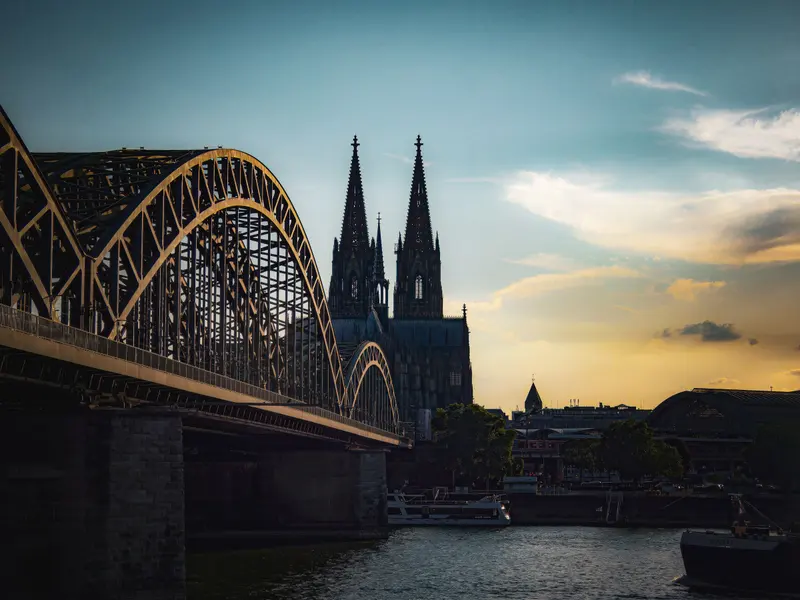
Cologne · Mülheim
Cafés in Mülheim
Pastry shops on Keupstraße, Van Dyck's roastery in the old Carlswerk cable works and breakfast by the Rhine on Hafenstraße.
Photo: Jimmyk photos, Pexels License
Mülheim (Müllem in Kölsch, the local dialect) faces the Rhine on its right bank, between Deutz to the south and Stammheim to the north, and with 43,055 residents at the end of 2019 it is the most populous district of Cologne.1 The name comes from the mills that once stood on the Strunder brook.1
Keupstraße has the most cafés, from pastry shops to small coffee houses, followed by Frankfurter Straße, Berliner Straße and Schanzenstraße, where the old Carlswerk site holds a roastery and a theater restaurant. Down by the river, Hafenstraße has a café and a beer garden a few doors apart.
At a glance
31Cafés listed
6With opening hours
07:30Earliest opening
22:00Latest closing
- Opens earliest: Bau, from 07:30 (Mon 07:30–19:30 · Wed–Fri 07:30–19:30 · Sat 08:00–17:00 · Sun 09:00–18:00).
- Closes latest: Eiscafé Dolomiti, until 22:00 (Daily 10:00–22:00).
- Most common features: outdoor seating (16%), vegetarian options (10%), bakery café (6%).
Café Rheinspaziert
Eiscafé Dolomiti
- Indoor seating
- Vegetarian options
- Partial wheelchair access
- Open late
moxxa café
Radix & Anima
Van Dyck Rösterei und Café
Anker7
- Outdoor seating
- Takeaway
- Wheelchair access
Café Jakubowski
Cafe Paradies
Café Vreiheit
Caffe Kiosk
Damla Baklava
Eiscafé Galleria
Eisdiele
Hasret Pastanesi
Mütze
Offenbach am CARLsGARTEN
Café BAU
Cafe Beyoglu
Café Camlica
Cafe Deluxe
Café Duman
Cafe Magig Play
Café Sahân
Dostlar
Istanbul
Istanbul Bistro
Körfez
Siyar 72
Yoop. Frozen Yogurt
Café Sabine
Nothing matches those filters here. See all cafés in Cologne.
A town that held out against Cologne
Count Adolf of Berg granted Mülheim the rights of a Freiheit (a chartered market town) on 7 March 1322, and the name survives in the street called Mülheimer Freiheit.1 Religious freedom in the Duchy of Berg from 1609 drew Protestant merchants who were barred from settling in Catholic Cologne, and Mülheim received town rights in 1785.1 It was absorbed into Cologne on 1 April 1914 against the will of its residents; a protest committee had gathered 4,000 signatures.1
Café Jakubowski, at Mülheimer Freiheit 54, counts as an institution in the district, and its breakfast runs from open sandwiches, eggs and porridge to American pancakes, with a vegan option; later in the day there are salads, soups and burgers.5
Keupstraße
The street was built in the late 19th century as Wolfsstraße and renamed on 9 April 1913 after Sibylle Keup, who ran a grain business with her husband at the start of the street.2 The Carlswerk cable works put up the workers' tenements that still stand at Nos. 97 to 117, between 1874 and 1900, and a tram ran down the street from 1911 until the late 1920s.2 Today most of its shops and restaurants are run by entrepreneurs of Turkish and Kurdish origin.2
On 9 June 2004 a nail bomb planted by the far-right terrorist group NSU injured 22 people here.2 The cafés are spread along the whole length of the street: Hasret Pastanesi at No. 50, Cafe Paradies at No. 64, Café Duman at No. 75, Siyar 72 at No. 87 and Istanbul at No. 106, with an ice-cream counter at No. 9.
Schanzenstraße and the Carlswerk
Schanzenstraße was once the Schänzchesweg, the track where Mülheim's residents went for their firewood bundles.2 Franz Carl Guilleaume opened the Carlswerk here in summer 1874; it made the first transatlantic telephone cable in 1904 and employed 23,560 people in the 1960s.3 Since September 2013 its halls have served as the interim stage of the Schauspiel Köln, and Offenbach am Carlsgarten, next to the Depot theater, serves coffee from moxxa.caffè.37
Van Dyck opened its Mülheim café in 2016 and moved its roaster here from Ehrenfeld; beans spend up to 20 minutes in a Probat drum, and the company's imports have grown from about two tonnes in 2010 to sixty.45 Radix & Anima turned a former gatehouse at Deutz-Mülheimer Straße 183 into a café that is entirely plant-based, with Oatly oat milk in every coffee and studios around its courtyard.56
Hafenstraße and the bridge
A pontoon bridge replaced the Rhine ferry in 1888, the first fixed suspension bridge followed in 1929, and today's Mülheimer Brücke opened in 1951.1 The carrying cables of the 1929 bridge came from the Carlswerk.3 Anker7, a beer garden on the riverbank at Hafenstraße 7, pours Päffgen Kölsch on draft.9
At No. 16, Café Rheinspaziert serves Reibekuchen (potato fritters), sandwiches, soups, homemade crêpes and cakes, and its owner, Tatjana, buys regional produce.5 Café Vreiheit at Wallstraße 91 cooks its lunch fresh every day with seasonal ingredients, and the daily menu always includes a vegan and a vegetarian dish.5 Its coffee is organic.8
Sources
- Mülheim (Köln), Wikipedia (German), accessed November 2026
- Keupstraße, Wikipedia (German), accessed November 2026
- Carlswerk, Wikipedia (German), accessed November 2026
- Die Rösterei, VAN DYCK Rösterei, accessed November 2026
- 21 Cafés in Deutz, Kalk und Mülheim, die ihr kennen solltet, Mit Vergnügen Köln, 2025, accessed November 2026
- Radix & Anima: speciality coffee & more, Radix & Anima, accessed November 2026
- Offenbach am Carlsgarten, Offenbach am Carlsgarten, accessed November 2026
- Willkommen in der Vreiheit, Café Vreiheit, accessed November 2026
- Biergarten Anker7: Genuss direkt am Rhein, Anker7, accessed November 2026
- Standorte, VAN DYCK Rösterei, accessed November 2026
Keep exploring
More of Cologne
Agnesviertel & Eigelstein
32 cafés
Altstadt
115 cafés
Belgisches Viertel
43 cafés
Zülpicher Viertel
45 cafés
Südstadt
71 cafés
Ehrenfeld
76 cafés
Nippes
31 cafés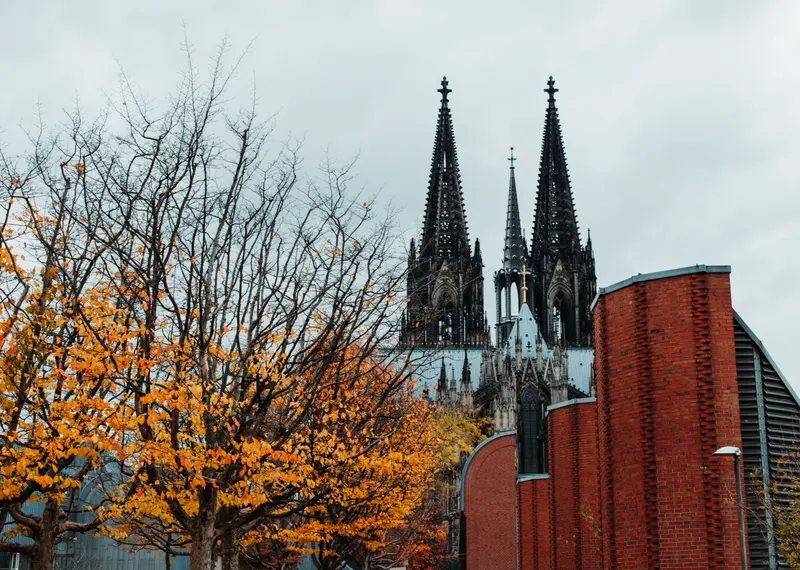
Sülz & Klettenberg
43 cafésLindenthal
20 cafésDeutz & Poll
17 cafésKalk
26 cafésZollstock & Bayenthal
15 cafésIn Mülheim, also browse: Specialty coffee Outdoor seating Bakery cafés & Konditoreien Vegan & vegetarian Breakfast & brunch Wi-Fi Open late
FAQ
Mülheim cafés: questions
Where is the Van Dyck roastery café in Mülheim, Cologne?
Van Dyck's café and roastery is on the old Carlswerk site at Schanzenstraße 36, in building 31b. It opened in 2016, when the roasting moved from Ehrenfeld, and the beans are roasted slowly in a Probat drum.
Which street in Mülheim, Cologne has the most cafés?
Keupstraße has the most, with pastry shops and coffee houses such as Hasret Pastanesi, Cafe Paradies and Café Duman. Frankfurter Straße, Berliner Straße and Schanzenstraße come next.
Can you have a coffee by the Rhine in Mülheim, Cologne?
Yes. Café Rheinspaziert at Hafenstraße 16 serves breakfast, Reibekuchen, crêpes and cakes, and the Anker7 beer garden at Hafenstraße 7 sits right on the riverbank.
For café owners
Own a café in Mülheim?
Free listings are free for good. A featured page gives you photos, a menu and your own URL, in your café's own design, for less than a coffee a day.