Busan · Gamcheon & Seo-gu
Cafés in Gamcheon & Seo-gu
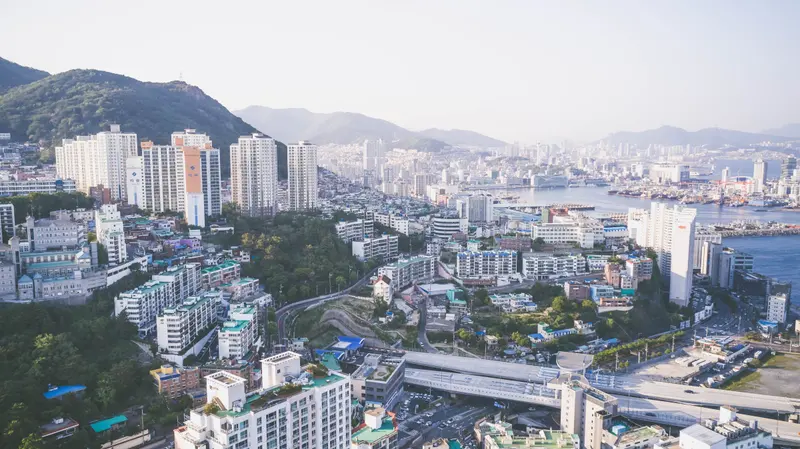
Cafés on Gamnae-ro above the painted village, the tombstone houses of Ami-dong, and dessert counters on Gudeok-ro.
Photo: Анна Шаталова, Pexels License
Seo-gu's Ami-dong and Gamcheon-dong, just across the boundary in Saha-gu, share the slopes of Cheonmasan.34 Both hillside villages grew from Korean War refugee settlement, and Gamcheon's houses step up the mountain in terraces.1 Gamcheon's old name was Gamnae (甘內): gam comes from geom, an old word for a deity, and nae means stream.1
Most of the cafés sit in Gamcheon itself, on Gamnae 1-ro, Gamnae 2-ro and Gamcheon-ro. A second, smaller group lies on the Seo-gu side, in the Gudeok-ro lanes and the Daesin-dong blocks near the old provincial offices.
Local tip: Ride Line 1 to Toseong and take the village bus up to Gamcheon, walk down through the painted lanes and over to Ami-dong's tombstone houses, then finish in the Gudeok-ro lanes near the Temporary Government Complex museum at No. 225.
At a glance
22Cafés listed
1With opening hours
10:00Earliest opening
19:30Latest closing
- Opens earliest: The Plate (Traditional British Homemade Young Cook Cafe), from 10:00 (Daily 10:00–19:30).
- Most common features: wi-fi (9%).
Avant Garde Cafe
benning
Cafe Mandi
Duf Coffee
Feelax Coffee
Post Cafe
Voda vom
계단 위 푸른집
Blue House on the Stairs
마이반
Maiban
오르다가
Oreudaga
우인
Café Wooin
제이레브 J reve
젬스톤 사하점
Jemseuton Saha Branch
카페 리온
Cafe Rion
카페심플
Cafe Simpeul
코티조아
Kotijoa
파로커피
Paro Coffee
페이버릿
Peibeorit
펠어커피 부산점
Peleo Coffee Busan Branch
Cafe Prince Poundcake
Princ's Milk Gamcheon Village
Nothing matches those filters here. See all cafés in Busan.
Coffee chains in Gamcheon & Seo-gu
Chain
Mega MGC Coffee
Show 4 locations
Chain
Starbucks
Chain
A Twosome Place
Chain
Hollys Coffee
Chain
Caffe Bene
Chain
Tom N Toms
Gamcheon Culture Village and Gamnae-ro
The present shape of the village dates from the 1950s, when a community of the Taegeukdo religion settled the slope; the terraced rows were laid out so that no house blocks the sunlight or view of the one behind it.1 About 800 families moved in around 1955, and in 2009 the culture ministry began a public-art program that brought artists and students in to repair and paint the houses.3
That program is traced in the small museum, which shows residents' old photos and household goods, and the souvenir shop called B612, opened in 2018 in two renovated empty houses below the Little Prince and desert fox sculpture.2 The village bakery sells 달빵 (dalppang, "moon bread").2 Cafés line the main roads: 계단 위 푸른집 (Blue House on the Stairs) at Gamnae 1-ro 3, Post Cafe at Gamnae 2-ro 122, and The Plate, which bills itself as a young cook's traditional British kitchen, at No. 113.
Gamcheon-ro and the lower village
Below the painted lanes, Gamcheon-ro carries the buses. Feelax Coffee is at No. 65 and 펠어커피 (Peleo Coffee) at No. 49, while 파로커피 (Paro Coffee), 보다봄 (Voda vom) and 우인 (Café Wooin) sit in the numbered lots of Gamcheon-dong further up.
The village is still a residential neighborhood, and the residents' council that runs its information center at Gamnae 2-ro 203 asks visitors to respect the daily lives of the people who live there.1
Ami-dong, the tombstone village
Over the ridge in Seo-gu, Ami-dong was laid out in 1906 as a public cemetery for Japanese residents.4 After liberation in 1945 many Japanese families took their relatives' ashes home and left the stones behind; refugees who reached Busan during the Korean War built shelters on the site.4 Tombstones engraved in kanji and kana still show up in foundations, walls and stairs.7
The site, on the slope of Cheonmasan around Ami-ro 38beon-gil, became a Busan registered heritage site on 5 January 2022, and eight wartime houses are kept as a museum of refugee life.4 페이버릿 (Favoreat) is in Ami-dong 2-ga.
Toseong, Gudeok-ro and the wartime capital
Toseong station on Line 1 opened on 19 May 1988; its even-numbered exits come up on the Ami-dong side, near Pusan National University Hospital, and village buses run from here up to Gamcheon.8 On Gudeok-ro, the red-brick provincial office of 1925 served as the Temporary Government Complex during the war and is now a museum run by Dong-A University, at No. 225.6
The provincial governor's residence of 1926, at Imsisudoginyeom-ro 45, housed the president's residence and office during the war and is now a memorial hall.5 Back on the Gudeok-ro side, benning in the 199beon-gil lane makes all its desserts on site, in an open kitchen.9 카페 리온 (Cafe Rion) is in the 185beon-gil lane.
Sources
- Gamcheon Culture Village (village introduction), Gamcheon Culture Village Residents' Council, accessed November 2026
- 시설소개 (facilities), Gamcheon Culture Village Residents' Council, accessed November 2026
- Gamcheon Culture Village, Wikipedia, accessed November 2026
- Ami-dong Tombstone Village, Busan Metropolitan City, Wartime Capital Heritage, accessed November 2026
- Temporary Presidential Residence, Busan Metropolitan City, Wartime Capital Heritage, accessed November 2026
- Temporary Government Complex, Busan Metropolitan City, Wartime Capital Heritage, accessed November 2026
- The 'tombstone village' built by Korean refugees on a Japanese cemetery, CNN (via LocalNews8), 3 October 2022, accessed November 2026
- 토성역, Wikipedia (Korean), accessed November 2026
- 카페 베닝 (@benning_dessert), benning (Instagram), accessed November 2026
Keep exploring
More of Busan
Jeonpo Café Street
98 cafés
Seomyeon
39 cafés
Nampo-dong & Jungang-dong
52 cafés
Yeongdo
27 cafésSongdo Beach & Amnam
5 cafésBusan Station & Choryang
15 cafésBeomil & Munhyeon
13 cafésDaeyeon-dong & Kyungsung University
21 cafés
Gwangalli & Namcheon-dong
59 cafésYongho-dong & Igidae
10 cafésMillak-dong
9 cafés
Suyeong & Mangmi-dong
25 cafésCentum City
9 cafésMarine City
9 cafés
Haeundae Beach & Haeridan-gil
30 cafésDalmaji-gil & Mipo
13 cafésJwa-dong & Jangsan
12 cafés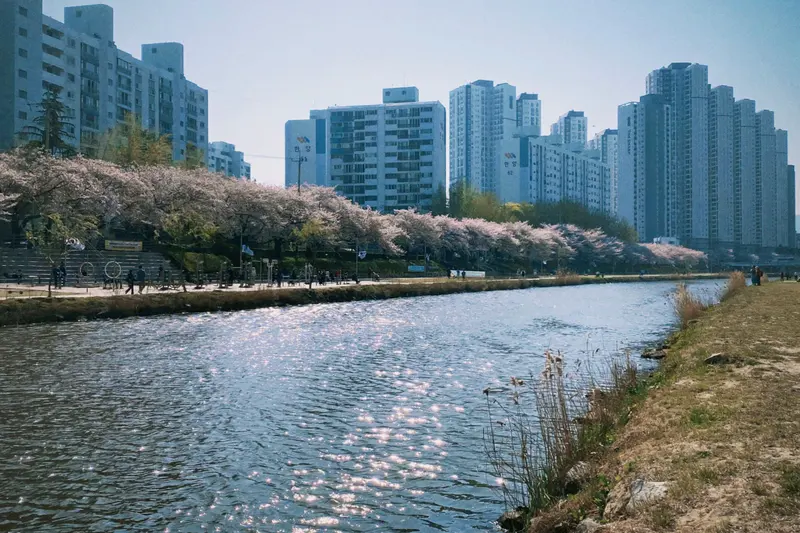
Oncheoncheon Café Street
18 cafésYeonsan-dong & Dongnae
35 cafésGaya & Dangam-dong
9 cafésSasang & Deokcheon
10 cafésIn Gamcheon & Seo-gu, also browse: Wi-Fi
FAQ
Gamcheon & Seo-gu cafés: questions
Where are the cafés in Gamcheon Culture Village, Busan?
Most are on the main roads through the village: Blue House on the Stairs at Gamnae 1-ro 3, Post Cafe and The Plate on Gamnae 2-ro, and Feelax Coffee and Peleo Coffee lower down on Gamcheon-ro.
How do you get to Gamcheon Culture Village in Busan by subway?
Take Line 1 to Toseong station, near Pusan National University Hospital, and change to the village bus that runs up to Gamcheon. Its even-numbered exits come up on the Ami-dong side, in Seo-gu.
What is the tombstone village in Ami-dong, Busan?
Ami-dong in Seo-gu was a public cemetery for Japanese residents from 1906. Korean War refugees built homes on it, reusing gravestones in walls and stairs. It became a Busan registered heritage site in January 2022, and eight wartime houses are kept as a museum.
For café owners
Own a café in Gamcheon & Seo-gu?
Free listings are free for good. A featured page gives you photos, a menu and your own URL, in your café's own design, for less than a coffee a day.