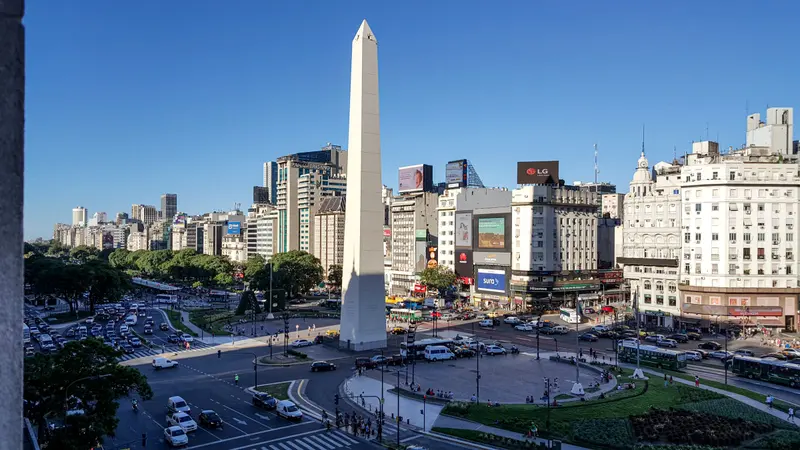
Buenos Aires · Congreso, Once & Abasto
Cafés in Congreso, Once & Abasto
Gardel's Café de los Angelitos on Rivadavia, Roma del Abasto's 1927 corner and cafés on Corrientes and Tucumán.
Photo: Jose Luis Vanasco, Pexels License
Congreso, Once and Abasto are three nicknames inside one official barrio, Balvanera, which takes its name from the parish of Nuestra Señora de Balvanera, built in 1831.1 Once is the area around Avenida Rivadavia and Pueyrredón, named after the Once de Septiembre railway station; Congreso is the eastern side, around the National Congress; Abasto is the northwest, after the old wholesale market.1 About 139,000 people lived on its 4.34 km² at the 2010 census.1
Avenida Corrientes has the most cafés, followed by Avenida Rivadavia and Calle Tucumán. Pairs sit on Callao, Córdoba, Viamonte and Teniente General Juan Domingo Perón, where Cafetería DUE is at No. 2202.
Local tip: Museo Casa Carlos Gardel, at Jean Jaurès 735, is closed on Tuesdays and opens 11:00–19:00 on other weekdays and 11:00–20:00 at weekends; entry was AR$10,000 for foreign visitors and AR$2,000 for residents with a DNI as of 2026, and free for Argentine residents on Wednesdays.7
At a glance
29Cafés listed
3With opening hours
08:00Earliest opening
01:00Latest closing
- Opens earliest: Aroma Amor Café, from 08:00 (Mon–Fri 08:00–20:00 · Sat 10:00–20:00 · Sun Closed).
- Closes latest: Roma del Abasto, until 01:00 (Mon–Fri 09:00–01:00 · Sat–Sun 12:00–01:00).
- Most listed streets: Avenida Rivadavia (2).
- Most common features: card payment (10%), wi-fi (7%), outdoor seating (7%).
Café de los Angelitos
- Card payment
Roma del Abasto
ADA
Aries café de especialidad
Bricco
Café de la Casona
Cafetería DUE
En Terapia
Faro de Ons
Gunama
Harvard
La Exposición
La Gran Via
Le Chic
Le Petit Cafe
Los Arcos
MARAL
monserratecafe
Paluchino
Puro Café
- Wi-Fi
- Outdoor seating
- Card payment
- Wheelchair access
Rochy's Cafe
Tarzan
Zman
Big Bang
Comedy
Posta
- Card payment
Tuo Tempo
- Outdoor seating
- Indoor seating
- Partial wheelchair access
Café PuntaCuore
Nothing matches those filters here. See all cafés in Buenos Aires.
Coffee chains in Congreso, Once & Abasto
Chain
Café Martínez
Show 7 locations
- Congreso, Once & Abasto
- Av. Rivadavia 2300
- Avenida Callao 858Mon–Fri 07:00–21:00 · Sat 08:30–21:00 · Sun 09:30–21:00
- Avenida Córdoba 2001
- Avenida Corrientes 2096Mon–Sat 07:00–21:00
- Avenida Corrientes 3301Daily 08:00–21:30
- Presidente José Evaristo Uriburu
Chain
Starbucks
Show 4 locations
- Avenida Córdoba 2348Mon–Fri 07:00–21:00
- Avenida Corrientes 3100
- Avenida Corrientes 3247Mon–Thu 09:00–00:00 · Fri–Sat 09:00–02:00 · Sun 09:00–00:00
- Avenida Rivadavia 2179Mon–Fri 07:00–21:00 · Sat–Sun 09:00–20:00
Chain
Havanna
Chain
Bonafide
Chain
The Coffee Store
Chain
Tostado Café Club
Chain
Whoopies
Chain
Alma Café
Café de los Angelitos and Gardel's table
The corner of Rivadavia and Rincón opened around 1890 as Bar Rivadavia, run by an Italian, Batista Fazio.3 Its regulars were rough enough that Balvanera's police commissioner called them "verdaderos angelitos" (real little angels), and the joke became the café's name.3 One night in 1917, Mauricio Goddart of the Odeón label signed the Gardel-Razzano duo there; their first record paired "Cantar eterno" with "El sol del 25".3
The café closed in January 1992 after a century, was left to decay until demolition was ordered, then was rebuilt in 2006 and reopened in 2007.2 Café de los Angelitos, at Avenida Rivadavia 2100, is on the city's 2025 catalog of bares notables and opens daily 09:00–19:00.4 Gardel himself lived just over a block away, at Rincón 135, where a plaque marks the 1925 building.3
Abasto: the market, the subte and Roma
The Mercado de Abasto building, opened in 1934, sealed the barrio's role as a trading district; at the end of 1998 it reopened as the Abasto shopping center.1 Line B's Carlos Gardel station, under Corrientes at Agüero, opened on 17 October 1930 as Agüero, took the singer's name in December 1984 and gained a tunnel into the Abasto building on 12 June 1993.5 Gardel lived at Jean Jaurès 735 from 1927 until he left Argentina on 7 November 1933.6
Roma del Abasto, at Anchorena 806, was founded in 1927 as a bar, almacén (grocery) and fiambrería (deli); its owners were always Spanish, despite the name.8 The coffee comes from La Motofeca, made with Brazilian beans and roasted in Buenos Aires, and the vermouth is La Fuerza, served on tap.8 Roma del Abasto is also one of the barrio's two entries in the 2025 bares notables catalog.4
Once: the station and the rag trade
Once de Septiembre station opened on 20 December 1882 as one of the city's three main rail terminals, and its neo-Renaissance building went up between 1895 and 1907 to plans by the Dutch architect John Doyer.1 In 1909, 25.6% of Balvanera's residents were Italian, and Russian Jewish families settled close to Plaza Miserere.1 From the late 1970s the area added imported electronics to its textile trade, and Korean and Chinese arrivals opened businesses of their own.1
Near the station, Le Chic is at Avenida Pueyrredón 110 and Rochy's Cafe at Avenida Jujuy 364, with Bricco and La Gran Via on Rivadavia. Aroma Amor Café, at Saavedra 436, has Wi-Fi and a bakery counter and is closed on Sundays.
Congreso, Corrientes and Avenida Córdoba
Balvanera's electoral section was long tied to the caudillo Adolfo Alsina, then to the Radical leaders Leandro Alem and Hipólito Yrigoyen.1 The Radicals drank at Los Angelitos too, arguing with their Socialist rivals.3 Avenida Hipólito Yrigoyen still crosses the barrio, with Harvard at No. 2500 and En Terapia at No. 3235.
On Corrientes, Paluchino is at No. 1902, while Aries café de especialidad, a specialty bar, is at No. 2019. Further north on Avenida Córdoba, Puro Café at No. 2039 has Wi-Fi and outdoor tables, and Gunama is at No. 2084. On Avenida Callao, the eastern edge, Posta is at No. 776 and Los Arcos at No. 856.
Sources
- Balvanera, Wikipedia (Spanish), accessed November 2026
- Café de los Angelitos, Wikipedia (Spanish), accessed November 2026
- Café de los Angelitos, Turismo Buenos Aires, Gobierno de la Ciudad, accessed November 2026
- Bares Notables de la Ciudad de Buenos Aires, consolidado 2025 (anexo, Resolución 1225/MCGC/26), Ministerio de Cultura, Ciudad de Buenos Aires (February 26, 2026), accessed November 2026
- Carlos Gardel (subte de Buenos Aires), Wikipedia (Spanish), accessed November 2026
- Museo Casa Carlos Gardel, Turismo Buenos Aires, Gobierno de la Ciudad, accessed November 2026
- Museo Casa Carlos Gardel: información general, Gobierno de la Ciudad de Buenos Aires, accessed November 2026
- Roma del Abasto: nuestra historia y menú, Roma del Abasto, accessed November 2026
Keep exploring
More of Buenos Aires
Puerto Madero
12 cafés
San Telmo & La Boca
41 cafés
Microcentro & Monserrat
119 cafés
Villa Crespo
45 cafés
Palermo Soho
91 cafés
Palermo Hollywood
50 cafésBarracas, Constitución & the south
25 cafésAlto Palermo & Botánico
86 cafésRetiro
59 cafés
Recoleta
140 cafés
Colegiales & Chacarita
63 cafés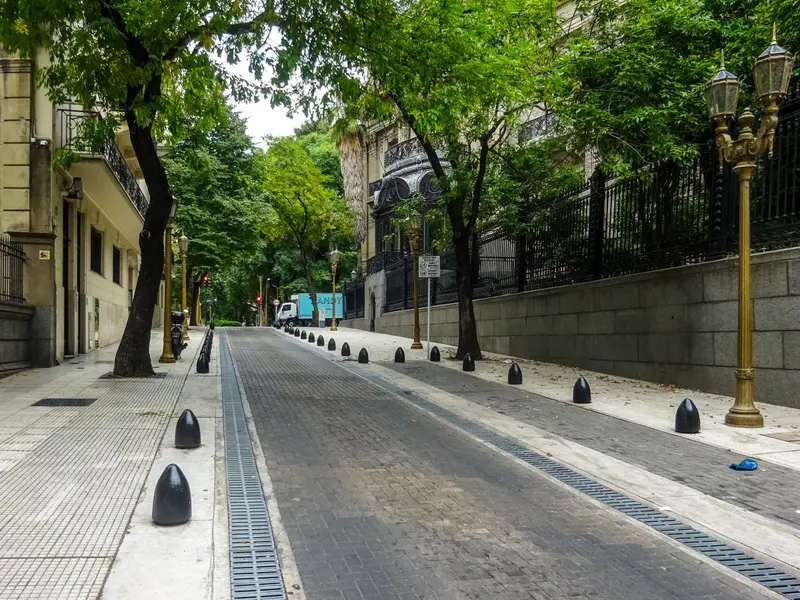
Belgrano
92 cafésNúñez, Saavedra & Villa Urquiza
61 cafésLas Cañitas
34 cafésAlmagro, Caballito & Flores
128 cafésIn Congreso, Once & Abasto, also browse: Outdoor seating Wi-Fi Open late Bakery cafés Specialty coffee
FAQ
Congreso, Once & Abasto cafés: questions
Why is Café de los Angelitos in Balvanera, Buenos Aires famous?
It opened around 1890 as Bar Rivadavia and became Carlos Gardel's café: the Gardel-Razzano duo signed with the Odeón label there in 1917. It closed in 1992, reopened in 2007 after a rebuild, and is a bar notable at Avenida Rivadavia 2100.
Which bares notables are in Congreso, Once and Abasto, Buenos Aires?
The 2025 catalog lists two in Balvanera: Café de los Angelitos at Avenida Rivadavia 2100 and Roma del Abasto at Anchorena 806, a corner bar founded in 1927 that serves La Motofeca coffee and La Fuerza vermouth on tap.
Which subte station serves the cafés in Abasto, Buenos Aires?
Carlos Gardel station on Line B, under Avenida Corrientes at Agüero, opened in 1930 as Agüero and has a tunnel into the Abasto shopping center. Roma del Abasto and the Museo Casa Carlos Gardel are a short walk away.
For café owners
Own a café in Congreso, Once & Abasto?
Free listings are free for good. A featured page gives you photos, a menu and your own URL, in your café's own design, for less than a coffee a day.