Kaffee Bohne
- Outdoor seating
- Wheelchair access
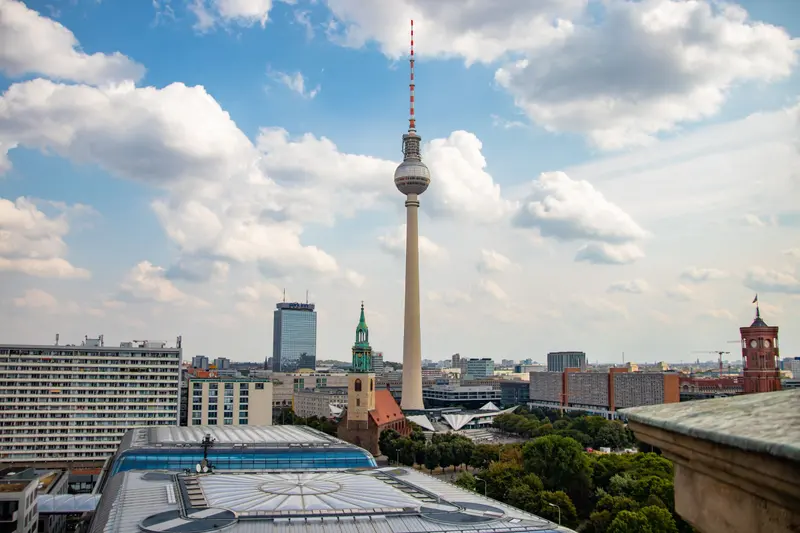
Coffee on Rubensstraße, a cash-only café in the Südgelände nature park and an 1873 villa on Grabertstraße.
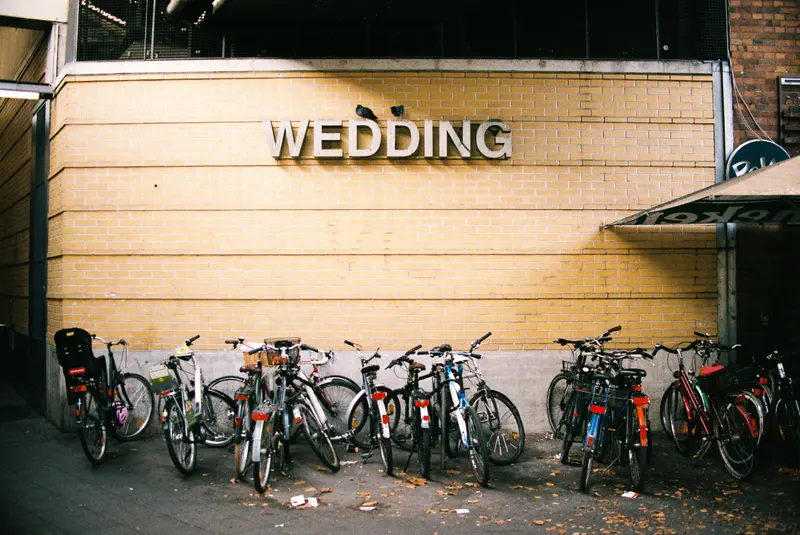
Photo: Viesturs Davidčuks, Pexels License
Südende is a Steglitz neighborhood that began as a planned villa colony. A bank-and-railway consortium, the Terrain-Gesellschaft Südende, was founded on 26 August 1872 to buy the land from two Mariendorf farmers, and from 1873 it laid out almost 88 hectares in 427 plots.1 It belonged to the rural municipality of Mariendorf until Greater Berlin was formed in 1920, when it went to the Steglitz district.1
North of it, past the Insulaner hill, lies the southern tip of Schöneberg. The cafés split between the two: a pair side by side on Rubensstraße, single ones on Karl-Stieler-Straße, Albrechtstraße and Grabertstraße, and one inside the nature park on Prellerweg.
Nothing matches those filters here. See all cafés in Berlin.
In 1892 and 1893 the aviation pioneer Otto Lilienthal used the Südende sandpit at the foot of the Rauhe Berge as a test ground for his gliders.1 In 1921 Ernst Lubitsch shot desert scenes for his film Das Weib des Pharao in the same sandpits, on a set with a 29-meter sphinx and a palace 78 meters high.1
Allied raids destroyed almost all of Südende, most of it in a few hours on the night of 23 to 24 August 1943, when a British bomber force that had lost its bearings dropped nearly 2,000 tonnes meant for the government quarter in Mitte.1 As late as 1957 the Berliner Morgenpost called the area a desolate field of rubble, and most of it was rebuilt only in the 1960s, as three- and four-story blocks set in green space.1
Of the 17 houses standing in Südende by 1883, only one survived the war: the late-classicist villa that the banker Eduard Mamroth built at Grabertstraße 4 in 1873.1 It housed the Steglitz-Zehlendorf music school from 1963 to 2005 and again from July 2008, and it is the oldest building in the neighborhood.1 Villa Limone has the same address.
The colony drew artists and radicals: Rosa Luxemburg, the composer Arnold Schönberg and the painters Wassily Kandinsky and George Grosz all lived in Südende.1 On Albrechtstraße, Café Palu at No. 74 is open every day from 09:00 to 19:00.
The Auguste-Viktoria-Klinikum at Rubensstraße 125 was built in 1903–06 as the municipal hospital of Schöneberg, then still an independent city, and named after the last German empress; it opened on 1 October 1906.2 Its first chief surgeon, Walther Kausch, performed the world's first duodenopancreatectomy, the operation now called Kausch-Whipple, there in 1909.2 It had 642 beds in January 2025.2
Two cafés are a few doors along. Kaffee Bohne, at No. 122, opens at 07:00 on weekdays and has outdoor tables. Canova, at No. 124, has been open since 2024 with 50 seats inside and 70 in its beer garden, plus billiard rooms and two dartboards; its pizzas and Flammkuchen are made with spelt dough.3 Bei Mutti is on Karl-Stieler-Straße.
The Insulaner, about 78 m high, is Berlin's oldest rubble hill, piled up from 1946 to 1951 out of some 1.8 million cubic meters of war debris.4 It was named on 11 August 1951 after the RIAS radio cabaret Die Insulaner, though Berliners already called it Mont Klamott; the Wilhelm-Foerster observatory opened on its summit in 1963 and a planetarium at its foot in 1965.4
Also by Priesterweg station, the Tempelhof marshalling yard opened in 1889 and was shut by the East German-run Reichsbahn in 1952, after which nature took over the tracks.5 The 18-hectare Natur-Park Schöneberger Südgelände opened on 28 May 2000, with paths laid on the old rails.56 The turntable, the water tower and the 4,000 m² locomotive hall still stand.7 Its main entrance is at Priesterweg S-Bahn station (S2, S25), Prellerweg exit.8 Café Paresüd, inside, takes cash only and serves coffee and cake, quiche, empanadas and ice cream.9
In Südende & south Schöneberg, also browse: Breakfast & brunch Outdoor seating Bakery cafés & Konditoreien
Kaffee Bohne and Canova sit side by side on Rubensstraße near the Auguste-Viktoria-Klinikum, Bei Mutti is on Karl-Stieler-Straße, Café Palu on Albrechtstraße, Villa Limone on Grabertstraße, and Café Paresüd is inside the Natur-Park Schöneberger Südgelände.
Yes. Café Paresüd is inside the park, which you enter from Priesterweg S-Bahn station on the S2 and S25. It takes cash only and serves coffee and cake, quiche, empanadas and ice cream. The park charges €1 per person over 14.
The late-classicist villa at Grabertstraße 4, built in 1873 for the banker Eduard Mamroth. It was the only one of Südende's early houses to survive the Second World War and houses the Steglitz-Zehlendorf music school.
Free listings are free for good. A featured page gives you photos, a menu and your own URL, in your café's own design, for less than a coffee a day.