Jakarta · Gambir & Pasar Baru
Cafés in Gambir & Pasar Baru
A bakery inside POS Bloc's old post office, gelato on Jalan Veteran, and kopi stalls on the old Kemayoran airfield.
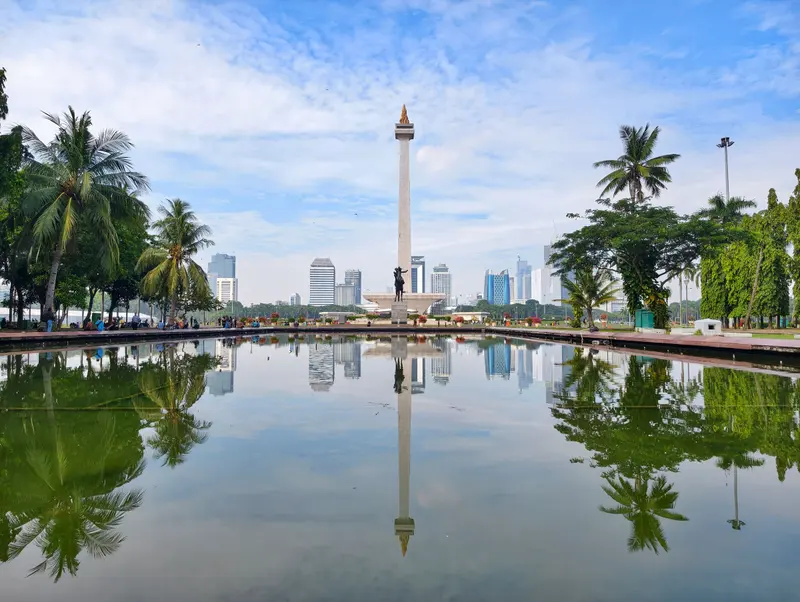
Photo: Karta S Atmaja, Pexels License
Pasar Baru, Malay for "new market", dates from the early 1820s and was named to set it apart from Pasar Senen and Pasar Tanah Abang, both founded in 1735.1 Its southern gate and bridge cross a canal to Jalan Pos, a section of Java's Great Post Road, and it is still called Jakarta's Little India after the Sikh and Sindhi families who opened textile shops here.1
The cafés spread well beyond the market. Petojo and Cideng, on the western side, have the most, around Jalan KH Hasyim Ashari, Jalan AM Sangaji and Jalan Kesehatan. Kemayoran, to the east, comes second, ahead of Pasar Baru itself and the government streets along Jalan Juanda and Jalan Veteran.
Local tip: Look down and up as you walk into POS Bloc: the restoration kept the Philatelic Building's original marble floors and the stained-glass panels in its facade.3
At a glance
38Cafés listed
3With opening hours
10:00Earliest opening
00:00Latest closing
- Opens earliest: Warkop Titik Tembaga, from 10:00 (Daily 10:00–00:00).
- Most common features: wi-fi (5%), 24 hours (5%), open by 6am (5%).
Inspiring Koffie Place
- Wi-Fi
- 24 hours
- Open by 6am
Ropang Kebut Harapan Mulya
- 24 hours
- Open by 6am
21 Factory
9 GRAMS
Canggu Bakehouse
CO3 Coffee Cozy Comfort
Covare Cafe and Workspace
D'Angkringan Jogja Gaule
D2 bakery
Gaea Coffee and Flower Shop
Kafe Kartika RSPAD Gatot Soebroto
Kay's Cafe
Ketan Susu Kemayoran
Koetaradja
Kopi Gang Stasiun Kemayoran
Kopi Krampoel
Kopi KurangLebih Kesehatan
Loko Cafe
Magnet Coffee
Malacca Toast
Mame Cafe
MAUI Coffee
Mili Cafe
Moving Mountains Coffee Club
Nidiye Coffee
OHO Càfé
Picazzo
Pondok Kali Cagak
Pos Kopi Datuk
Roast Coffee Ketapang
Snabb Coffee Mart
Tomo Board Game Cafe
Venice Cafe and Resto
Warkop Serigala Terakhir
Waroeng Entjiem Lauw'Tan
Nothing matches those filters here. See all cafés in Jakarta.
Coffee chains in Gambir & Pasar Baru
Chain
Starbucks
Show 8 locations
Chain
Kopi Kenangan
Chain
Fore Coffee
Chain
Tomoro Coffee
Chain
Flash Coffee
Chain
Maxx Coffee
Chain
Kopi Luwak
Chain
Kopi Nako
Chain
Filosofi Kopi
Chain
Kopi Dari Hati
Chain
Tentang Kopi
Chain
Wake Cup Coffee
Chain
Kopi Reman
Little India and the Toko Bombay
In the 1950s Pasar Baru was the city's busiest shopping street for middle- and upper-class buyers; a 1956 guidebook listed fashions from Europe, America and Asia, jewelers, tailors and "tea- and lunch-rooms".1 Traffic got so bad that parking on the street was banned from 1 August 1957.1 Chinese merchants ran most stores, and the Indian textile shops, known as Toko Bombay, carried names such as Kissoomall and Chotirmall.1
The mix shows in the neighborhood's religions: in 2024, of 14,099 residents in the Pasar Baru ward, 47.3% were Muslim, 33.5% Christian, 14.9% Buddhist and 3.9% Hindu, and the ward holds both the Istiqlal Mosque and Jakarta Cathedral.2 Malacca Toast is on Jalan Samanhudi, and Kay's Cafe is in Jalan Pintu Air V.
POS Bloc, in the old post office
The Gedung Filateli (Philatelic Building) at Jalan Pos No. 2 was a post office in the Dutch colonial era, and its art deco form dates from a restoration carried out from 1912 to 1929 under the Dutch architect John van Hoytema.3 The team behind M Bloc in South Jakarta, working with Pos Indonesia's property arm, turned it into POS Bloc, which soft-opened in October 2021 and kept the original marble floors and the stained glass of the facade.3
Its operators saw it as the first of many disused post offices and old buildings to be revived as creative compounds across the country, and Canggu Bakehouse is one of the local businesses that moved into the old halls.4 The building now houses local brands, food stalls, music and art programs and community events.5 A short walk away on Jalan Veteran I, 21 Factory is a gelato parlor whose team trained with Italian gelato masters.6
Petojo and Cideng
In Petojo and Cideng the cafés are spread across residential streets rather than one strip. On Jalan KH Hasyim Ashari, Tomo Board Game Cafe and D2 bakery are two doors apart, and on Jalan Kesehatan, Snabb Coffee Mart and Kopi KurangLebih share a short block. Roast Coffee Ketapang, on Jalan KH Zainul Arifin, focuses on specialty coffee, and Moving Mountains Coffee Club is on Jalan Cideng Barat.
Pondok Kali Cagak, on Jalan Hanura I, takes its name from the river across the road, whose current splits into branches; it serves home-style dishes and cheap street food under what was once a car garage roof.7 9 GRAMS, at Jalan AM Sangaji No. 15A, is the main stop on that road.
Kemayoran, on the old airfield
Kemayoran is named after Isaac de l'Ostal de Saint-Martin, a Dutch East India Company commander whom locals knew as the Major.8 The airport built on its swamps and rice fields opened on 8 July 1940, the first in the Dutch East Indies with scheduled international flights, and served as Jakarta's main airport until 31 March 1985.8 Its runways became a wide boulevard, and the Jakarta International Exposition Center (JIExpo) took over the land around them.8
Picazzo trades on the ground floor of the Pusat Niaga building at JIExpo. Around Jalan Bungur Besar, Kopi Gang Stasiun Kemayoran is named for the nearby station, and Ketan Susu Kemayoran serves ketan susu (sticky rice with sweetened milk). Pos Kopi Datuk is on Jalan Kepu Utara, and Warkop Serigala Terakhir, "the last wolf", is a warkop (coffee stall) on Jalan Angkasa.
Sources
- Pasar Baru, Wikipedia, accessed November 2026
- Pasar Baru, Sawah Besar, Jakarta Pusat, Wikipedia (Indonesian), accessed November 2026
- Pos Bloc Jakarta combines arts, culture, and entertainment at historic Philatelic Building, Coconuts Jakarta (5 October 2021), accessed November 2026
- Pos Bloc, Manual Jakarta, accessed November 2026
- POS BLOC Jakarta: Creative Space, Culture & Community, POS BLOC, accessed November 2026
- 21 Factory Premium Gelato, 21 Factory, accessed November 2026
- About Pondok Kali Cagak, Pondok Kali Cagak, accessed November 2026
- Kemayoran Airport, Wikipedia, accessed November 2026
Keep exploring
More of Jakarta
Kota Tua & Glodok
43 cafés
Menteng & Cikini
62 cafésSudirman & Thamrin
39 cafésTanjung Duren & Kemanggisan
87 cafésSenayan
28 cafés
SCBD & Senopati
43 cafés
Kuningan & Setiabudi
75 cafés
Tebet
93 cafés
Kemang
70 cafés
Blok M & Kebayoran Baru
96 cafés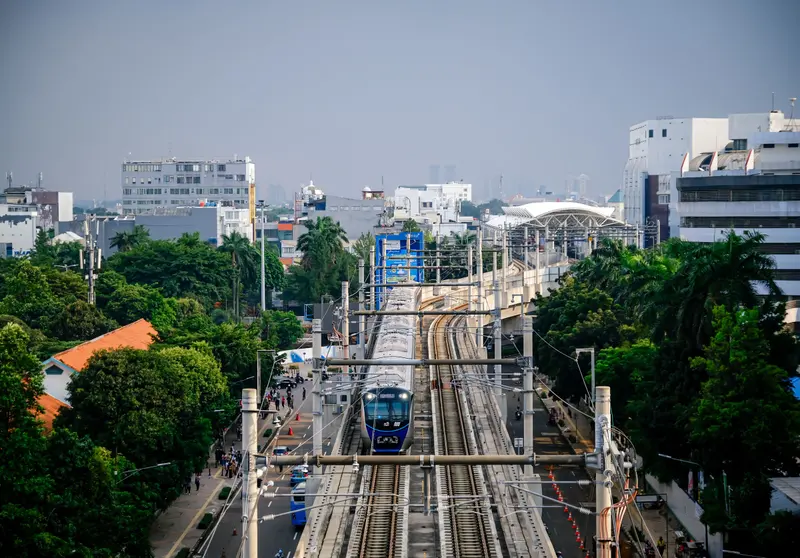
Cipete & Cilandak
58 cafésPondok Indah & Gandaria
46 cafésAmpera & Pejaten
48 cafésIn Gambir & Pasar Baru, also browse: Specialty coffee Wi-Fi Open late Open by 6am Bakery cafés
FAQ
Gambir & Pasar Baru cafés: questions
Where are the cafés in Gambir and Pasar Baru, Jakarta?
Petojo and Cideng, on the western side of Gambir, have the most, around Jalan KH Hasyim Ashari, Jalan AM Sangaji and Jalan Kesehatan. Kemayoran comes second, followed by Pasar Baru and the streets along Jalan Juanda and Jalan Veteran.
What is POS Bloc in Pasar Baru, Jakarta?
POS Bloc is a creative space in the Gedung Filateli, a colonial-era post office at Jalan Pos No. 2 in Pasar Baru, Jakarta. Run by the team behind M Bloc, it soft-opened in October 2021 with local brands, food and events, and Canggu Bakehouse is among its tenants.
Why is Pasar Baru in Jakarta called Little India?
Pasar Baru, founded in the early 1820s, is known as Jakarta's Little India because Sikh and Sindhi families settled there and opened textile shops, the Toko Bombay. In the 1950s it was the city's busiest shopping street, with Chinese and Indian merchants side by side.
For café owners
Own a café in Gambir & Pasar Baru?
Free listings are free for good. A featured page gives you photos, a menu and your own URL, in your café's own design, for less than a coffee a day.