Chude Ciacho
- Indoor seating
- Wheelchair access
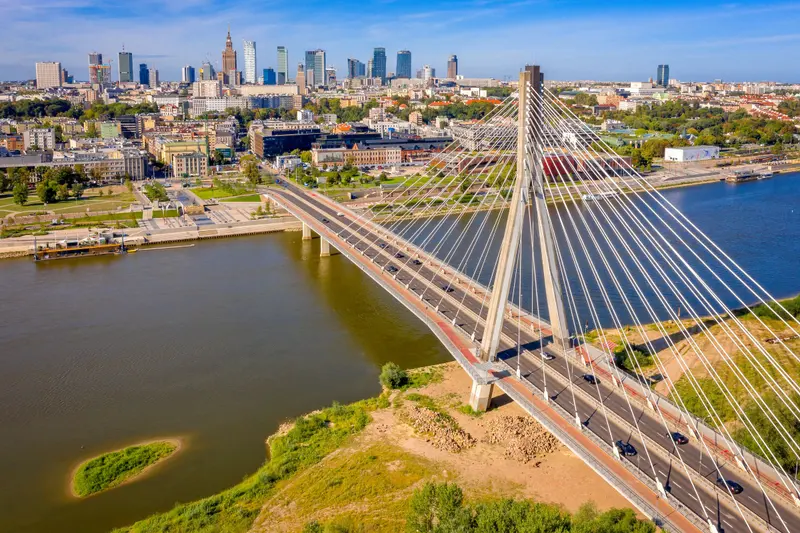
Music-named coffees and a book café on Andersa, Swedish fika on Nowolipki and an intergenerational club café on Anielewicza.
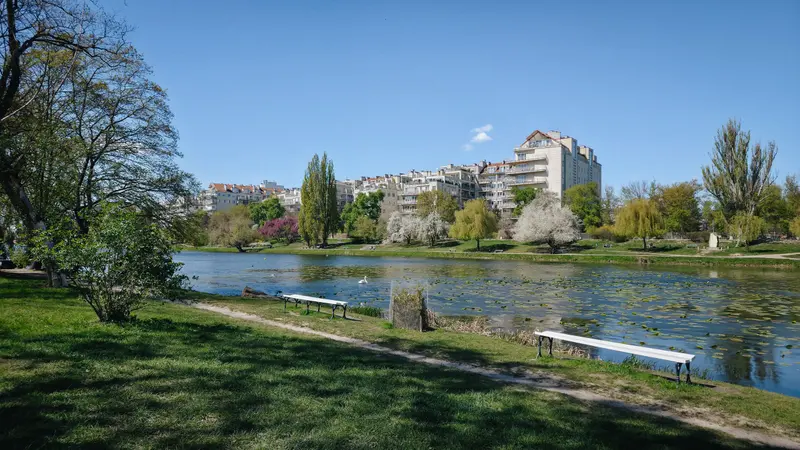
Photo: Wojciech Wyszkowski, Pexels License
Muranów takes its name from a palace that Simone Giuseppe Belotti, an architect to King John III Sobieski, built in the countryside north of Warsaw in 1686 and called Murano, after his native island near Venice.1 Today it runs from Aleja Solidarności and Leszno in the south to the railway in the north, between Okopowa and Bonifraterska, and is split between Śródmieście and Wola; the city's street signs call the Wola half Nowolipki.2
Generała Andersa and Nowolipki have the most cafés, followed by Anielewicza, with single places on Franciszkańska, Pokorna, Smocza and Aleja Jana Pawła II. Most open between 08:00 and 10:00, and two keep serving until midnight or later.
Local tip: Trams 4, 13, 15, 18, 20, 23, 26 and 35 stop at Metro Ratusz Arsenał, by Kino Muranów at the southern end of Andersa; from there Tekla is a short walk north and opens at 09:00 from Tuesday to Friday, closing on Mondays.4
Nothing matches those filters here. See all cafés in Warsaw.
In the interwar years about 90% of Muranów's residents were Jewish, which is why the Germans placed the ghetto here and walled it off in November 1940.1 After the 1943 uprising, led by Mordechaj Anielewicz, the district was razed; St. Augustine's Church was one of the few buildings left standing.1
Rebuilding began by leveling 3 to 4 million cubic meters of rubble spread over about 200 hectares.2 The architect Bohdan Lachert built with blocks of rubble concrete and meant the estate as a city-monument, raised on and from the ghetto's ruins; the first houses, left unplastered, were rendered later because new residents disliked the look.2 Where buildings stand on the rubble, the ground beside the streets is still raised.2 The POLIN Museum of the History of Polish Jews opened at Anielewicza 6 in April 2013.1
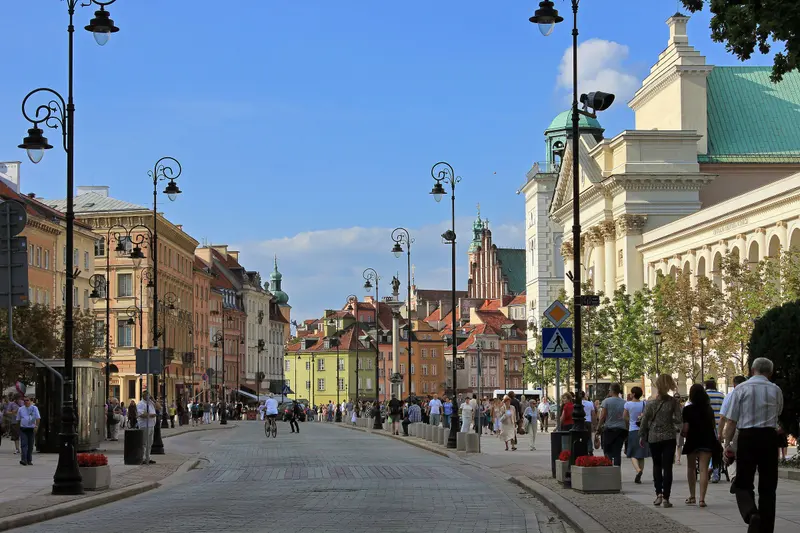
Andersa was cut through the ghetto in 1948–1949 as ulica Marcelego Nowotki, a single carriageway beside a tram track, lined with classicist blocks whose planned decoration was dropped when socialist realism fell from favor.2 The second carriageway was never built, and neither was a planned metro station, A16 Muranów.2 Kino Muranów, at No. 5, opened in 1951 as part of the estate and was Poland's first two-screen cinema; its screens were named Zbyszek and Gerard in the 1960s after the actors Zbigniew Cybulski and Gérard Philipe.3
Tekla, at No. 13, names its house coffees after music: John Cofftrane Blue Train is a Rwandan coffee with notes of currant, cranberry and plum, meant for pour-over.7 Radio Telewizja, at No. 31, is a kluboksięgarnia (club-bookshop) run by the M20 public-space foundation, with board games, a children's playroom, a workshop room offered on a pay-what-you-want basis and a book-swap box outside.5 At No. 33, Chude Ciacho, which started in Łódź, makes cakes without lactose, gluten or sugar and labels each item with its allergens.9
Nowolipki keeps the name of Nowolipie, one of the jurydyki, self-governing private towns that grew up around Belotti's estate; the street plan and a few names are all that survive of them.1 Between Andersa, Anielewicza, Zamenhofa and Nowolipki stands Muranów II, one huge block shaped like a rectangle, a circle and a trapezoid joined together.2 Its three courtyards have nicknames: Milicyjniak, for the police headquarters in the Mostowski Palace next door, and Okrąglak, for the round one, while the third never got a name.2
Kaffe Bageri Stockholm, at Nowolipki 13, is the Warsaw branch of a Swedish café with other shops in Kraków and Wrocław; it works with local suppliers where it can and runs on a no-waste principle.10 dobra materia, also at No. 13, opens at 07:30 on weekdays and has Wi-Fi and tables outside, and Oyun Cafe stays open until midnight every day.
Międzypokoleniowa Klubokawiarnia, the intergenerational club café at Anielewicza 3/5, belongs to Dom Kultury Śródmieście, the district culture center; its November 2026 calendar includes a crochet evening and drop-in hours with the Śródmieście seniors' council.6 Paradox Cafe is across the street at Anielewicza 2.
On Franciszkańska, toward the Old Town, WakeCup Cafe at No. 14 has a pillar painted with blackboard paint and a box of colored chalk for anyone who wants to draw.8 On the western edge, Jaś i Małgosia is a klubokawiarnia on Aleja Jana Pawła II that advises booking a table by phone before you come.11 Zaklątek is on Smocza, and Purr Purr on Pokorna opens from 10:00 at weekends.
In Muranów, also browse: Specialty coffee Outdoor seating Bakery cafés & cukiernie Vegan & vegetarian Open late Wi-Fi
Generała Andersa has the most, with Tekla, Radio Telewizja, Chude Ciacho and Fat White, followed by Nowolipki, where Kaffe Bageri Stockholm, dobra materia and Oyun Cafe share No. 13. Anielewicza has the intergenerational club café run by Dom Kultury Śródmieście and Paradox Cafe.
Radio Telewizja, at Andersa 31, is a club-bookshop run by the M20 public-space foundation. It serves coffee alongside books for sale, board games and a children's playroom, rents its workshop room on a pay-what-you-want basis and keeps a book-swap box outside.
Muranów has no metro station of its own, since the planned A16 Muranów stop was never built. Trams run along Andersa, and trams 4, 13, 15, 18, 20, 23, 26 and 35 stop at Metro Ratusz Arsenał by Kino Muranów, at the southern end of the street.
Free listings are free for good. A featured page gives you photos, a menu and your own URL, in your café's own design, for less than a coffee a day.