Café Barいーぐる
Café Bar Eagle
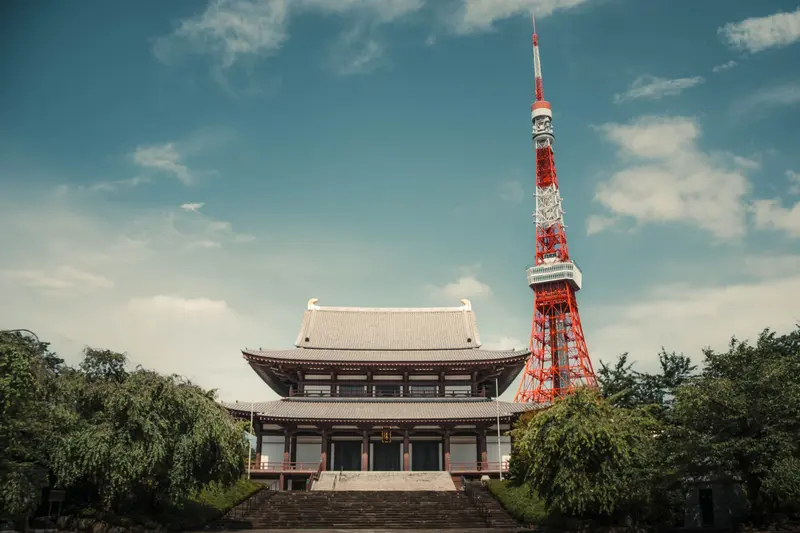
Eagle playing jazz loud since 1967, a maid-uniform curry and tea house near Arakichō, a bakery café on Banchō Gakuen-dōri and beans on Yotsuya 2-chōme.
Photo: Lorenzo Castellino, Pexels License
Yotsuya and Kōjimachi straddle the line between Shinjuku and Chiyoda wards.1 Banchō, on the Chiyoda side, was lined with the residences of hatamoto (the shogun's direct retainers) in the Edo period and remains an upscale residential district.1
Yotsuya's best-known room is a jazz kissa near the station. Kōjimachi and Banchō lean on bakery counters and weekday stands, and the back lanes of Arakichō, an old geisha quarter, sit apart from both.
Local tip: Save conversation for the evening at Eagle: the 2017 rule allowed talk only after 18:00, when the room turns into a bar.2
Café Bar Eagle
Cafe No
Ipanema
Cafe Mikunizu
Cafe Ohana
Cafe Nonīno
Kingstone
Green Grass
Jorī
Mibashou
Nothing matches those filters here. See all cafés in Tokyo.
Café Barいーぐる (Eagle) opened in 1967, when owner Masahiro Gotō was still a Keio University student, and moved to its present spot near Yotsuya Station in 1972; apart from the audio gear, the room has barely changed.2 Gotō later became a jazz critic, and in the early 1970s he also ran a rock café, Disc Chart.2 The system is tuned to treat recordings from labels such as Blue Note and ECM evenly, and the uneven floor and ceiling were designed to manage reflections.3
It is a jazz kissa (a coffee shop built around listening to records), long known for refusing conversation; as of 2017, talk was allowed only after 18:00.2 Tracks are planned in advance so that each leads into the next.2 From then on it runs as a bar, and Time Out singles out its Napolitan.3 A lecture series, held most Saturdays and covering jazz, rock, Latin and classical, had passed 600 sessions by 2017.2
Arakichō was the upper residence of the Takasu domain's Matsudaira family, whose garden pond, 策の池 (Muchi no Ike), was said to be where Tokugawa Ieyasu washed his riding whip.4 The garden opened to the public in 1872 and the area later became a hanamachi (geisha district), whose trade association dissolved in 1983.4 Today it is a dining district that keeps its old atmosphere.4
The curry & tea house BIRTHDAY MORE, three minutes from Yotsuya-Sanchōme Station, opened in June 2021.5 Owner Momoyama chose the antique-style furnishings and tableware, and staff wear maid outfits with frilled white headbands.5 As of 2022 it opened only on Sundays and Mondays, by reservation, and its afternoon tea cost ¥4,800, with scones, chiffon cake and a small serving of the spiced curry.5
No.4 stands on a corner of Banchō Gakuen-dōri, four minutes from Kōjimachi Station, and belongs to Tysons & Company, the group behind T.Y.Harbor and Ivy Place.6 Bread sells at the entrance, and the 48 seats run to a counter and a terrace.6 As of 2024 a café latte was ¥630, and the pale ale comes from T.Y.Harbor's own brewery.6
COMFORT STAND FIRST opened in Ichibanchō on 23 January 2025 as the brand's seventh shop, with 60 seats and weekday hours of 08:00–17:00.7
For beans, Tiphareth Coffee Roastery on Yotsuya 2-chōme sells about 25 items, among them Yirgacheffe, Colombia and Blue Mountain No. 1, alongside its own Western-style pastries.8
In Yotsuya & Kōjimachi, also browse: Specialty coffee Open late Bakery cafés
Eagle has long been known for refusing conversation; as of 2017, talk was allowed only after 18:00, when the room turns into a bar. It opened in 1967 under owner Masahiro Gotō, then a Keio student, and moved to its present spot near Yotsuya Station in 1972. Saturday lectures had passed 600 sessions by 2017.
No.4 stands on a corner of Banchō Gakuen-dōri, four minutes from Kōjimachi Station, with bread at the entrance and 48 seats including a counter and a terrace. It belongs to Tysons & Company, the group behind T.Y.Harbor, and opens at 08:00. As of 2024 a café latte cost ¥630.
Arakichō was the upper residence of the Takasu domain's Matsudaira family, with a garden pond called Muchi no Ike, said to be where Tokugawa Ieyasu washed his riding whip. The garden opened to the public in 1872, and the area later became a geisha district whose trade association dissolved in 1983.
Free listings are free for good. A featured page gives you photos, a menu and your own URL, in your café's own design, for less than a coffee a day.