디저트아카데미
Dessert Akademi
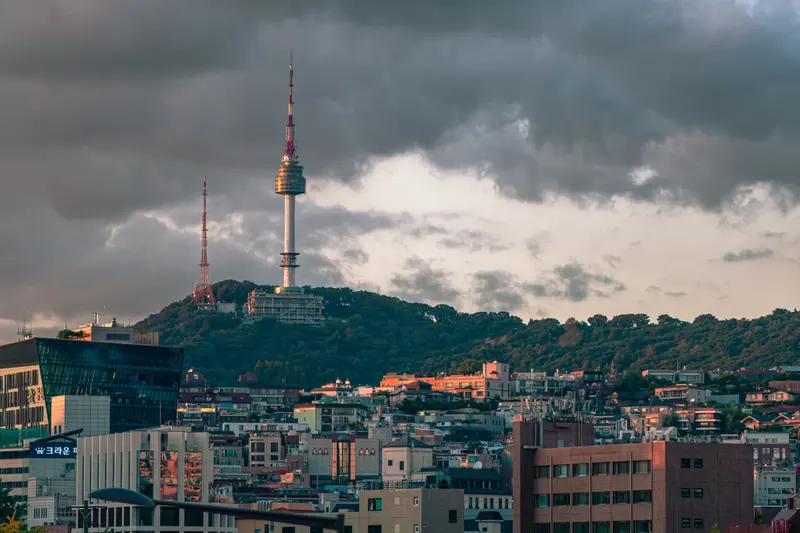
Dessert cafés by Jungnang station, Jungnangcheon-ro under the rose tunnel, and a roaster on Myeonmok-ro.
Photo: Constantine Kim, Pexels License
Junghwa-dong (중화동) and Myeonmok-dong (면목동) are neighbors in Jungnang-gu, in northeast Seoul. Junghwa's name is a small act of diplomacy: the villages below Bonghwasan were Jungni (中里, "middle village") and Hari (下里, "lower village"), merged in 1914 as Junghari.1 When the area joined Seoul's Dongdaemun-gu on 1 January 1963, residents asked the city to replace 下, "lower", with 和, "harmony".1
Myeonmok (面牧) had been part of Seoul for 14 years by then. It was Myeonmok-ri in Yangju county from 1466, passed to Hanseong in 1895 and to Goyang county in 1914, and came into the city on 15 August 1949.2 It grew fast enough to be split in 1970, 1973 and 1977, and today it is spread over six administrative dongs.2 Jungnangcheon-ro has the most cafés, ahead of the Dongil-ro lanes and Myeonmok-ro.
Dessert Akademi
Jinseubaba Roastery
Coffee Maket
Kkomisie
Daemanbingsu
Reobeuitreobeuet
Seldeobin
Cafe Ireuda
Cafe Seuteeoseu
Coffee Hyanggi
Teba Coffee
Peullorian
Nothing matches those filters here. See all cafés in Seoul.
The Jungnang Seoul Rose Festival (중랑 서울장미축제) has been held beside the Jungnangcheon stream since 2009, under a rose tunnel that runs 5.45 km along the water with about 320,000 rose plants.3 The 18th edition ran from 15 to 23 May 2026, and the district counted 3.07 million visitors over its nine days.4 After dark the tunnel is lit, and sculptures that go unnoticed by day glow along the paths.5
Jungnangcheon-ro, the road named for the stream, holds the area's largest group of cafés. 대만빙수 (Daemanbingsu, "Taiwan bingsu", the shaved-ice dessert) and 플로리안 (Florian) share No. 72, 셀더빈 (Seldeobin) is at No. 111-1, and 테바커피 (Teba Coffee) sits up the 12-gil lane at No. 83. Varieties from around the world are planted along the festival paths, each labeled, with maps showing where every rose grows.5
Two lines serve Junghwa-dong: Line 7 stops at Junghwa station, and the Gyeongui–Jungang Line at Jungnang station.1 danzo describes itself on Instagram as a dessert café by Jungnang station.6 Close by, 디저트아카데미 (Dessert Akademi) is on Mangu-ro 36-gil at No. 38, and 꼬미시에 (Kkomisie) is at Bongujae-ro 52.
This is dense housing. Junghwa 1-dong covers just 0.68 km² and had 18,023 residents in July 2025, about 27,000 people per square kilometer.1 Junghwa 2-dong, the larger of the two at 0.98 km², keeps its community center at Dongil-ro 129-gil 1.1
진스바바 로스터리 (Jinsbaba Roastery) roasts at Myeonmok-ro 186-136 and runs its Instagram account under the name Black Waves On Cup.7 커피마켓 (Coffee Market) is in Myeonmok-dong at lot 191-129, and 러브잇러브엣 faces Gyeomjae-ro at No. 74.
The Dongil-ro side lanes have two small cafés. 카페 이르다 (Cafe Ireuda) is at Dongil-ro 101-gil 20, in the same lane as the Myeonmok 2-dong community center at No. 20-15, and 카페스테어스 (Cafe Stairs) is at Dongil-ro 109-gil 28.2 Myeonmok 2-dong alone had 24,070 residents in February 2022.2
Line 7 serves Myeonmok-dong at Myeonmok, Sagajeong and Yongmasan stations, and Seoil University, Yongma Waterfall Park and Dongwon Market are all within the dong.2 A second line is planned: the Myeonmok light-rail line, which has passed its preliminary feasibility study, would run 9.05 km from Cheongnyangni to Sinnae with 12 stations.8 Construction is scheduled to start in 2028, with opening expected around 2034.8
One café sits over the district line: 커피향기 (Coffee Hyanggi), at Hancheon-ro 46-gil 85-1 in Hwigyeong-dong, Dongdaemun-gu. Back in Myeonmok-dong, Myeonmok Bon-dong is the most populous of the six dongs, with 33,409 residents in February 2022.2
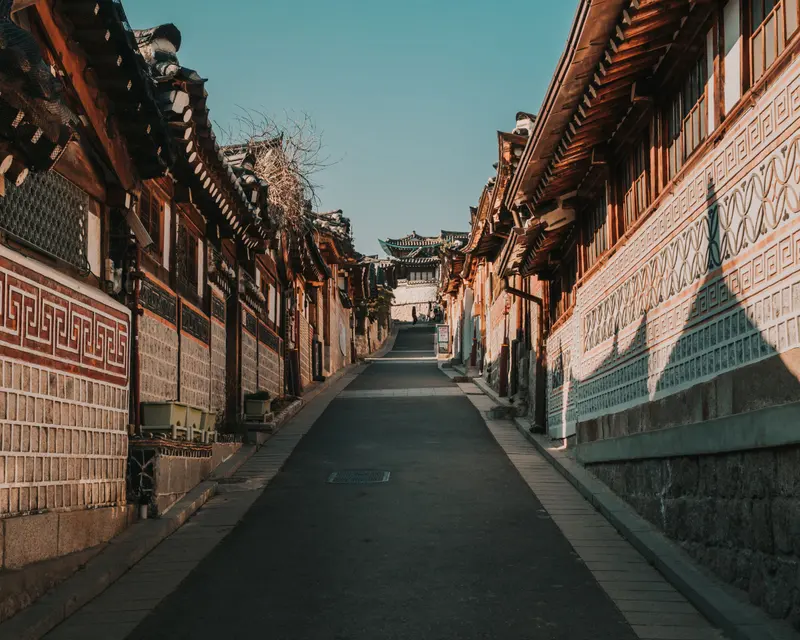
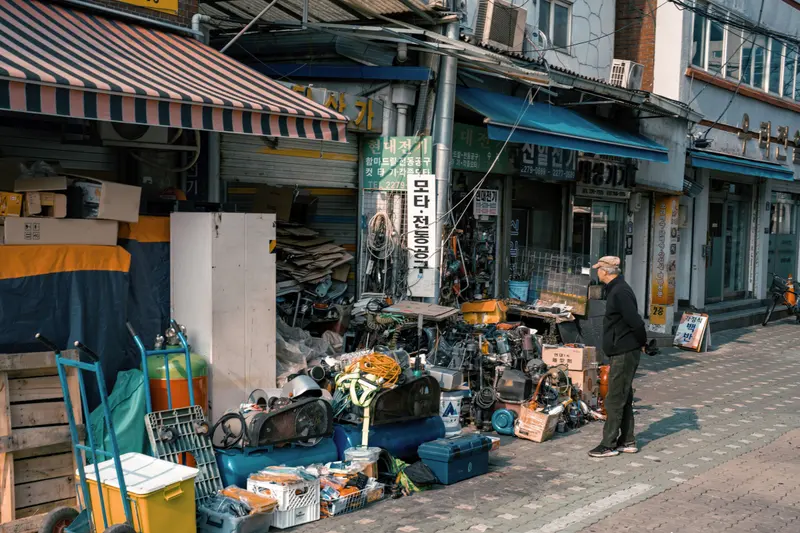
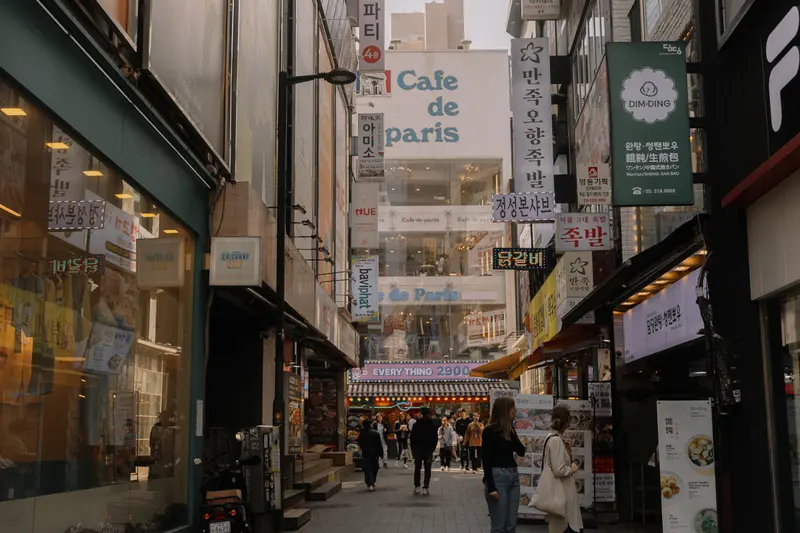
In Junghwa & Myeonmok-dong, also browse: Specialty coffee
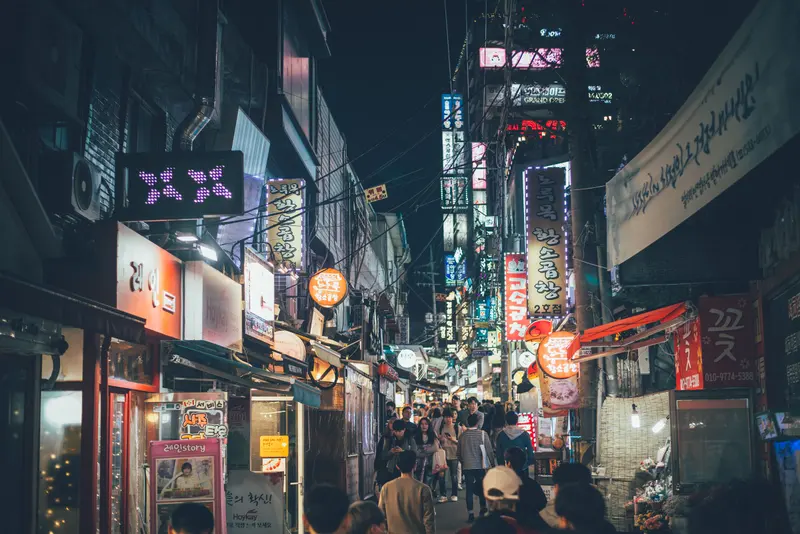
Jungnangcheon-ro, the road named for the stream, has the largest group, with Daemanbingsu, Florian and Seldeobin. The Dongil-ro lanes in Myeonmok 2-dong and Myeonmok-ro, home to Jinsbaba Roastery, come next.
The Jungnang Seoul Rose Festival is held in May along a 5.45 km rose tunnel beside the Jungnangcheon stream. It began in 2009, and its 18th edition ran from 15 to 23 May 2026, drawing 3.07 million visitors.
The area was called Junghari, from the villages Jungni (middle village) and Hari (lower village). When it joined Seoul in 1963, residents asked to replace the character for lower with the one for harmony, giving Junghwa.
Free listings are free for good. A featured page gives you photos, a menu and your own URL, in your café's own design, for less than a coffee a day.