카페252
Cafe 252
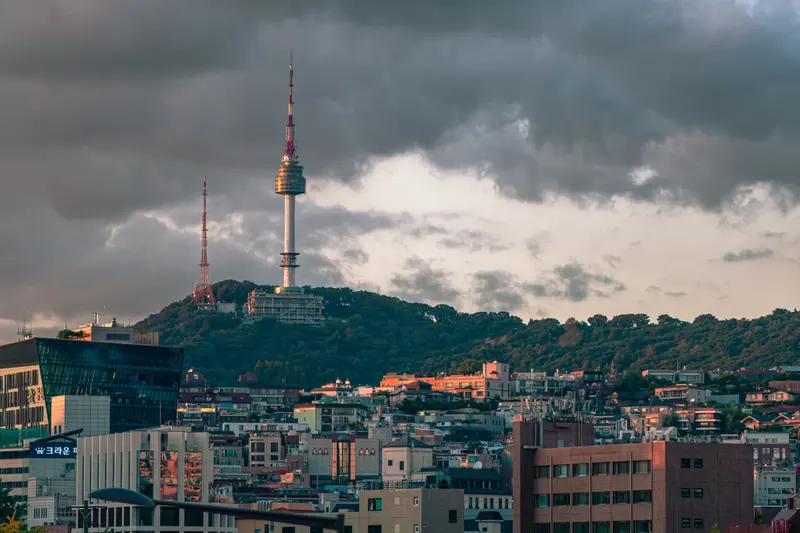
Mangu-ro brunch and dessert cafés, Yongmasan-ro side lanes, Sangbong station's rail lines and forest-path coffee.
Photo: Constantine Kim, Pexels License
Sangbong and Mangu are neighborhoods of Jungnang-gu (중랑구), a district that split from Dongdaemun-gu on 1 January 1988 and had 380,353 residents in September 2024. Its two hills, Yongmasan and Bonghwasan, have yielded Paleolithic and Bronze Age relics.1
Mangu (망우, 忘憂) means "forgetting worries". The story goes that Taejo, founder of the Joseon dynasty, stopped on the pass here after choosing his tomb site and said his worries were gone. The village moved from Yangju into Seoul in 1963. Its pear orchards left room for schools, and so many were built that students in the 1970s and 1980s nicknamed the area 망베리아 (Mangberia), Mangu plus Siberia.4
Local tip: For a late coffee, 굿럭투유커피 (Good Luck to You Coffee) on Nowon-ro 1-gil serves daily until 23:00 and has outdoor tables; 카페252 on Mangu-ro and 앙거트 on Yongmasan-ro 109-gil close at 22:00.
Cafe 252
Gutreoktuyu Coffee
Anggeoteu
Danmihwa Coffee
Daldalhan Cafe
Rogiseu Coffee
Moi Cafe (108-22)
Motungi
Baramgil
Beoteoreikeu
Binseurodeu
Samilchai Coffee Bar
Sangbong Coffee
Suriya
Sunjanedarakbang
Sinnaedong Cafe Sseoninoteu
Areukadia Coffee
Icheung Cafe
Cafe Gaeingonggan
Cafe &
Cafe Kkumbi
Cafe Beurik
Cafe Jigi
Coffee Seuteopeu
Kiweseuteu Coffee Hwarangdaeyeok Branch
Peurape
Hagi
Heomingbeodeu
22Beonga
Nothing matches those filters here. See all cafés in Seoul.
Sangbong station is the hub. Line 7 has stopped here since 11 October 1996, and the Gyeongui–Jungang and Gyeongchun lines since 21 December 2010; ITX-Cheongchun express trains call here too.2 The Gyeongchun Line also stops at Mangu and Sinnae, and Line 6 serves Bonghwasan and Sinnae.1
Sangbong-jungang-ro and its side lanes hold a cluster of small cafés: 카페지기 (Cafe Jigi) at 8na-gil 71, smoke-free and with Wi-Fi, 에그카페24 (Egg Cafe 24) at 8ga-gil 52, 컴피아지트 (Comfy Ajit) at 1-gil 74 and 무인공유카페Q, a 무인 (unstaffed) shared café at number 56. 카페 까미오 (Cafe Kkamio) is on 5ga-gil and 티그레514 (Tigre 514) on 10-gil.
The hill above Mangu was a public cemetery from 1933 to 1973. When it closed it held about 48,000 graves, and about 6,600 remain.4 Renamed 망우역사문화공원 (Mangu Historical and Cultural Park) in 2004, it is the resting place of about 50 figures from modern Korean history, among them Yu Gwan-sun, Han Yong-un, Bang Jeong-hwan and the painter Lee Jung-seop (1916–1956).3
The visitor center, 중랑망우공간 (Jungnang Mangu Space), has an exhibition hall, a café and an observation deck, and the 망우리 사잇길 (Mangu-ri Saitgil) trail follows the mountainside. Buses 201, 202 and 165 run from exit 1 of Mangu station to the 망우리공원 stop; on Line 7, the park points visitors to exit 5 of Sangbong station.3
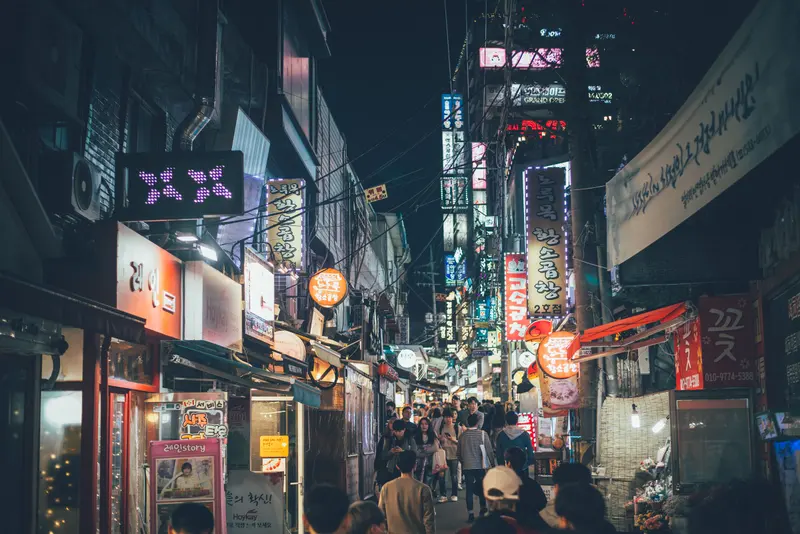
Mangu-ro carries the longest café run. 카페252 (Cafe 252) at number 252, a large brunch café open daily 09:30–22:00 with Wi-Fi, makes its own bingsu (빙수, shaved milk ice) and has a serving robot.6 Further along are 소르르 (Soreureu) at 412, 쿠미 카페 (Kumi Cafe) at 462, 순자네다락방 (Sunja's Attic) at 463 and 망우동카페& at 503. 커피스터프 (Coffee Stuff), on Mangu-ro 42-gil, builds its counter around soufflé pancakes and chiffon cake.7
On Myeonmok-ro, 진다방 (Jin Dabang) at 472 keeps the old word dabang (tearoom), with 골목카페 (Golmok Cafe, "alley café") at 478 and 제이식스 (J Six) at 487. In Mangu-dong, the tteokbokki (떡볶이, spicy rice cakes) pojangmacha (포장마차, street stalls) that grew up around students on their way home from school have dwindled to a few shops.4
Yongmasan-ro has its own string: 커피아이디아 (Coffee Idea) at 482, 이층카페 (Second-Floor Cafe) at 506, 바다커피숍 (Bada Coffee Shop, "sea coffee shop") at 521 and Africa Coffee at 623. Up its side lanes, 앙거트 (Anggeoteu) at 109-gil, 49 opens daily 10:00–22:00 with Wi-Fi, and 티하우스나니 (Tea House Nani) is at 117-gil, 26.
In Gongneung-dong, the old Gyeongchun Line tracks became the 경춘선숲길 (Gyeongchun Line Forest Path). About 6 km opened in 2018, an extension made it 6.8 km on 29 June 2026, and the cafés along both sides are nicknamed 공리단길 (Gongnidan-gil).5 버터레이크 (Butter Lake) and 마이브라더스 (My Brothers) are in Gongneung-dong, and the path ends at Hwarangdae Railway Park, around the old Hwarangdae station building, registered national heritage no. 300.5
In Sangbong & Mangu, also browse: Wi-Fi Open late Outdoor seating
Mangu (망우, 忘憂) means "forgetting worries". According to the story, King Taejo, founder of the Joseon dynasty, rested on the pass here after choosing his tomb site and said his worries were gone. The pass became Mangu Pass, and the village joined Seoul in 1963.
Take the Gyeongui–Jungang Line to Mangu station, exit 1, and buses 201, 202 or 165 to the 망우리공원 stop; Line 7 riders use exit 5 of Sangbong station. The park's visitor center has an exhibition hall, a café and an observation deck.
Sangbong station is served by Seoul Subway Line 7, which opened there on 11 October 1996, and by the Gyeongui–Jungang and Gyeongchun lines, which arrived on 21 December 2010. ITX-Cheongchun express trains also stop there.
Free listings are free for good. A featured page gives you photos, a menu and your own URL, in your café's own design, for less than a coffee a day.