Seoul · Yangpyeong & Seonyudo
Cafés in Yangpyeong & Seonyudo
Cafés in old factory blocks on the Seonyu-ro lanes, Picniq on Yangpyeong-ro 22-gil, and the water-plant park.
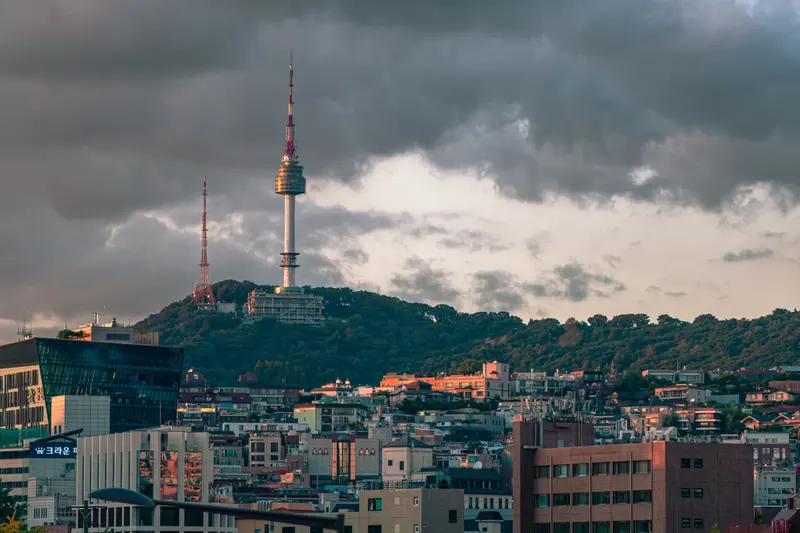
Photo: Constantine Kim, Pexels License
Yangpyeong-dong (양평동) takes "yang" from Yanghwado, an old Han River ferry landing, and "pyeong" from the open field beside it where the village grew.3 Off its riverbank lies Seonyudo (선유도), once Seonyubong, "the peak where immortals roamed": two hills about 40 m high, home to some 30 households and joined to Yangpyeong-dong by a sandbar that could be crossed on foot in dry weather.4
Yangpyeong-ro and its numbered lanes have the most cafés, with 22-gil and 24-gil the busiest, followed by the Seonyu-ro lanes in the 40s and 50s. A few more sit in the old numbered blocks of Yangpyeong-dong 4-ga to 6-ga.
At a glance
15Cafés listed
0With opening hours
–Earliest opening
–Latest closing
- Most common features: specialty (7%), bakery café (7%).
Fb Coffee Roasters
Prink & Drink
늘라운지
Neul Lounge
말론하우스
Mallon House
선유서가
Seonyuseoga
쏭카페
Ssong Cafe
이트웰 키친
Iteuwel Kichin
커피라이커스
Coffee Raikeoseu
커피볶는피루니
Coffee Bokneunpiruni
피크니크
Pikeunikeu
ieatco
선유소반
Seonyusoban
카페테리아나루
Cafe Naru
플레블리
Peullebeulli
Nothing matches those filters here. See all cafés in Seoul.
Coffee chains in Yangpyeong & Seonyudo
Chain
Mega MGC Coffee 메가커피
Chain
Starbucks
Chain
A Twosome Place 투썸플레이스
- 투썸플레이스, 10 Yangpyeong-ro 22-gil, 양평제2동Daily 09:30–22:00
Chain
Compose Coffee 컴포즈커피
Chain
Banapresso 바나프레소
Chain
Angel-in-us Coffee 엔제리너스
Chain
Artisée 아티제
From quarry to water plant to park
Seonyubong was quarried for flood dikes and roads under Japanese rule after the great flood of 1925, then cut down further for Yanghwa Bridge in 1962 and the Han River development of 1968, until only a flat island was left.4 From 1978 to 2000 it held a water-treatment plant that supplied about 700,000 households around Yeongdeungpo.4
The park that replaced it in 2002 kept the plant rather than clearing it: the landscape architect Jung Young-sun and the architect Jo Sung-yong turned the settling tanks, filter beds and pump house into gardens.4 In the Garden of Green Columns, ivy climbs the pillars left from a reservoir.1 Han River water still runs through the park along a channel of about 835 m, and the district calls it Korea's first environmental-regeneration ecological park.45
Seonyugyo and Seonyudo station
Seonyugyo, the arched footbridge from the riverside park to the island, was designed by the French architect Rudy Ricciotti for the centenary of Korean–French relations, and the district describes it as the only pedestrian-only bridge on the Han.5 After dark it is lit in rainbow colors.5
Seonyudo station on Line 9 takes its name from the park and sits under Yangpyeong-ro. It has four tracks but only two platforms: the middle pair is for express trains, which pass straight through, and a tunnel under the Anyangcheon links it to Sinmok-dong.2 Near that stream, under the dike by Omokgyo bridge in today's Yangpyeong 1-dong, a camp housed war refugees from the North after liberation.3
Seonyu-ro, the walkable street
When Line 9 opened in 2009, Yangpyeong-dong began to shed its industrial look: cafés and workshops moved into old buildings that kept their facades, and the district tidied the blocks into the Seonyu walkable street (선유 걷고 싶은 거리).5 Since 2015 a flea market called 시월의 선유 ("Seonyu in October") has run there every year, and in April 2019 the area held what the district calls Korea's first cat festival, a nod to Seonyudo's old nickname, Gwaengi-san ("cat mountain").5
In the Seonyu-ro lanes, Fb Coffee Roasters is on the ground floor at 54-gil 7, 늘라운지 (Neul Lounge) at 55-gil 11 and 쏭카페 (Ssong Cafe) at 47-gil 21-1, while 카페테리아나루 (Cafeteria Naru) faces Seonyu-ro itself at No. 343.
Yangpyeong-ro, a kids' café and a snack museum
피크니크 (Picniq), at Yangpyeong-ro 22-gil 2-1, calls itself "the most delicious break in the world" on Instagram.6 ieatco is in the same lane at No. 13, and the bakery 플레블리 (Peullebeulli) is one lane over, at 24-gil 9. On the main road, 말론하우스 (Malone House) at No. 148 runs as a kids' café, and 선유소반 (Seonyusoban) is at No. 143.7
Lotte Sweet Factory, the confectioner's snack museum at Yangpyeong-ro 21-gil 10, takes children from age five through elementary school for free, with online booking opening on the 1st of each month.5 Visitors leave with a gift box of snacks.5
Sources
- Seonyudo, Seoul, Wikipedia, accessed November 2026
- 선유도역, Wikipedia (Korean), accessed November 2026
- 동 명칭 유래, Yeongdeungpo-gu Office, accessed November 2026
- 신선이 놀던 봉우리에서 생태공원으로…'선유도공원'의 놀라운 이야기, Seoul Metropolitan Government, Inside Seoul (mediahub), 15 May 2026, accessed November 2026
- 선유도공원, Yeongdeungpo-gu Office, Culture and Tourism, accessed November 2026
- picniq (@pic_niq), Picniq (Instagram), accessed November 2026
- 말론하우스 I 키즈카페 (@malonehouse_), Malone House (Instagram), accessed November 2026
Keep exploring
More of Seoul
Seochon
113 cafésBuam-dong
19 cafésSeongbuk-dong
22 cafés
Bukchon & Samcheong-dong
114 cafésIkseon-dong & Insadong
109 cafésHyehwa & Daehak-ro
96 cafés
Euljiro & Chungmuro
120 cafésSeoul Station & Jungnim-dong
31 cafés
Myeong-dong & City Hall
173 cafésGwanghwamun
74 cafésHuam-dong & Haebangchon
84 cafésMangwon-dong
114 cafésYeonhui-dong
58 cafésSinchon & Ewha
113 cafés
Hongdae & Yeonnam-dong
587 cafésGongdeok & Mapo
73 cafés
Itaewon & Hannam-dong
135 cafésYongsan & Yongridan-gil
85 cafés
Seongsu-dong
213 cafésYeouido
53 cafés
Sinsa & Garosu-gil
117 cafés
Apgujeong & Cheongdam
150 cafésSeocho & Seorae Village
96 cafésGangnam & Yeoksam
289 cafésDongdaemun & Sindang-dong
100 cafésWangsimni & Hanyang University
36 cafésKonkuk University & Gunja
108 cafésJangan-dong & Dapsimni
52 cafésAnam & Jegi-dong
66 cafésYongdu-dong & Sinseol-dong
31 cafésHoegi & Imun-dong
67 cafésJunghwa & Myeonmok-dong
13 cafésYeongdeungpo & Dangsan
29 cafésNoryangjin & Sangdo-dong
43 cafésHongje & Hongeun-dong
12 cafésEungam & Gajwa
51 cafésYeonsinnae & Bulgwang
51 cafésPyeongchang-dong
18 cafésGireum & Mia
62 cafésWolgye & Gongneung
65 cafésSangbong & Mangu
79 cafésJunggok & Yongmasan
43 cafésGuui & Gwangnaru
57 cafésJamsil & Seokchon Lake
135 cafésYangjae & Dogok
100 cafésBangbae-dong & Sadang
105 cafésSillim & Nakseongdae
89 cafésGuro & Gasan Digital Complex
28 cafésMullae-dong & Sindorim
68 cafésMok-dong
34 cafésSangam & DMC
20 cafésIn Yangpyeong & Seonyudo, also browse: Specialty coffee Bakery cafés
FAQ
Yangpyeong & Seonyudo cafés: questions
Where are the cafés around Yangpyeong-dong and Seonyudo in Seoul?
Yangpyeong-ro and its lanes, especially 22-gil and 24-gil, have the most, including Picniq and ieatco. The Seonyu-ro lanes, part of the Seonyu walkable street, come next, with Fb Coffee Roasters and Neul Lounge.
Do express trains stop at Seonyudo station in Seoul?
No. Seonyudo station on Line 9 has four tracks but only two platforms, and express trains use the middle tracks without stopping. Take a local train, or walk to the park over Seonyugyo from the riverside park.
What was Seonyudo Park in Seoul before it became a park?
Seonyudo was a 40 m peak called Seonyubong, quarried away in the 20th century. From 1978 to 2000 the island held a water-treatment plant serving about 700,000 households, and the park that opened in 2002 kept its tanks and pillars as gardens.
For café owners
Own a café in Yangpyeong & Seonyudo?
Free listings are free for good. A featured page gives you photos, a menu and your own URL, in your café's own design, for less than a coffee a day.