당신의 나의 케이크
Your my cake
- Smoke-free indoors
- Bakery café
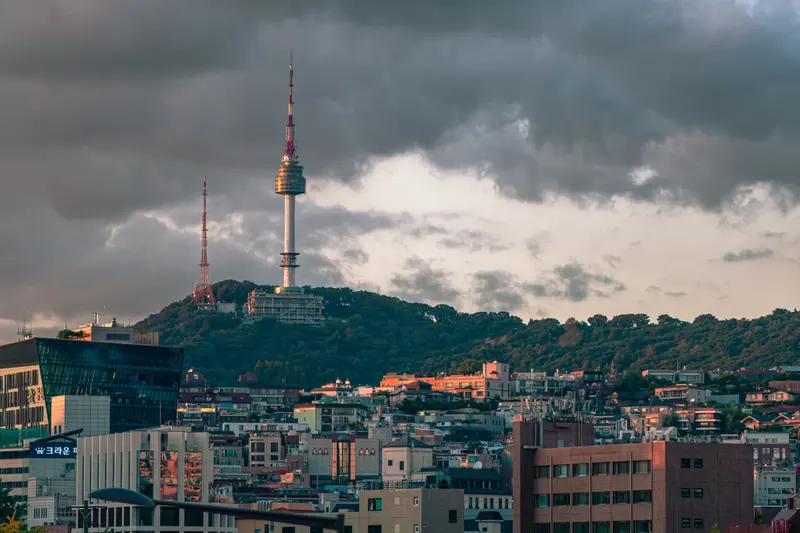
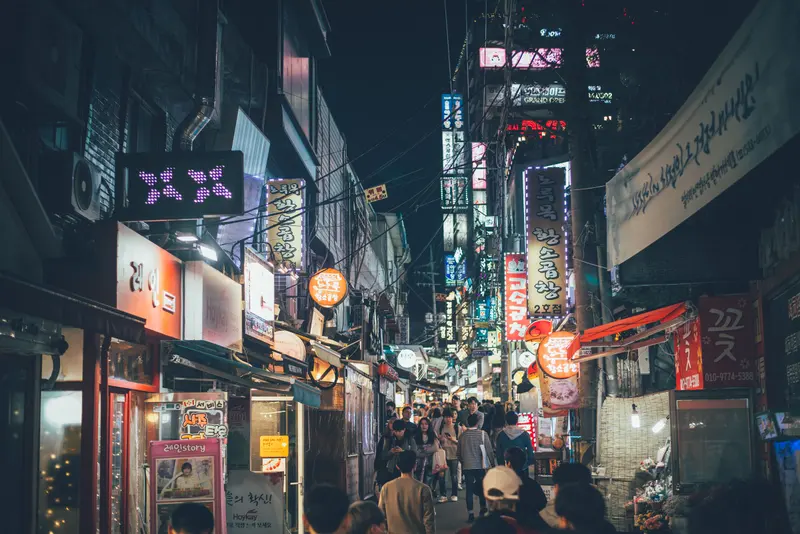
A roaster on Anam-ro by Korea University, cake shops up the Bomun-ro lanes, and cafés by Jegi-dong's herbal market.
Photo: Constantine Kim, Pexels License
Anam-dong (안암동) takes its name from a rock in today's Anam-dong 3-ga that about 20 people could sit on: locals called it 앉일바위 ("sitting rock"), written in Hanja as 安岩.2 The name appears in records from 1395.2 Korea University's campus is here, in Seongbuk-gu, and Jegi-dong (제기동), its neighbor to the east, is across the line in Dongdaemun-gu.3
Bomun-ro and its numbered lanes have the most cafés, ahead of Goryeodae-ro, the road that climbs to the university. Smaller clusters sit on Jegi-ro and Gosanja-ro on the Dongdaemun side and in Jongam-dong to the north.
Local tip: The Seonnongdan History and Culture Museum, by the altar at Muhak-ro 44-gil 38, is free and opens 10:00–17:00 from November to February (to 18:00 from March), closed Mondays and public holidays; walk from exit 1 of Jegi-dong station on Line 1 or exit 3 of Anam.7
Your my cake
Kadencha
Gimssi Coffee
Cafe Soil
Roseudiaseu
Maseuteobinseu Coffee
Maibeoteodeurim
Meibeun Coffee Seutoeo
Syongdiinohara
Seuwitribeo
Akiem Lounge
Ateullie Hamoni
Yeoksi Coffee
Unchi
Jeongijeong
Cherion Peullei Ground
Cafe Ainou
Cafe Udin
Cafe Iripseu
Nothing matches those filters here. See all cafés in Seoul.
Korea University began on 5 May 1905 as Bosung College, founded by Lee Yong-ik, treasurer of the royal household.1 Its six-story Gothic stone Main Building, designed by Park Dong-jin, was completed in Anam-dong on 31 August 1934 and is Historic Site No. 285; the university had 31,130 students in 2024.1
Anam station, on Line 6 under Goryeodae-ro, opened on 15 December 2000, carries the subtitle Korea Univ. Hospital, and averaged 27,722 passengers a day in 2017.4 Along Anam-ro on the Jegi-dong side, the blocks facing the campus hold a 하숙촌 (boarding-house village) and a 막걸리촌 (makgeolli, rice wine, village).3 HAMMER Coffee Roasters is at Anam-ro 148-1 and Cafe Cantata, with Wi-Fi, at No. 77.
Park Yi-chu, a Zainichi Korean coffee master (명장), opened 가배 보헤미안 (Gabe Bohemian) in Hyehwa-dong in 1988 and then moved it to Anam-dong, near Korea University, where he ran it for about ten years.5 In the 1990s, when instant mix was most people's idea of coffee, his hand-drip cups drew steady crowds by word of mouth; he settled in Gangneung in 2004.5
The slow-brew habit survives in smaller rooms. 핸섬로스팅커피 (Handsome Roasting Coffee) roasts on Gosanja-ro 56-gil, and 역시커피 (Yeoksi Coffee) at Hoegi-ro 28 calls itself 조금은 느린 커피집, "a slightly slow coffee house".10 On Goryeodae-ro, Calendar Coffee Stand is at No. 40, 마이버터드림 (My Butter Dream) at No. 43 and PIKA COFFEE in the 30-gil lane.
On Bomun-ro, most cafés are up the numbered side lanes rather than on the main road. 카덴차 (Cadenza), at Bomun-ro 34na-gil 3, opens daily 11:00–22:00 with Wi-Fi, and Cache and Routine are a few doors away in the 34-gil and 34ga-gil lanes.
Bomun-ro 32-gil has 까페소일 (Cafe Soil) at No. 40 and 당신의 나의 케이크 ("your my cake"), a cake shop open daily 12:00–20:00, at No. 86-5. KRACK COFFEE and naeemsung sit in the 23-gil and 25-gil lanes. Back on the main road, Shall We Jazz?, which describes itself as a small, plain café that doubles as a workroom, is at No. 62.9
Jegi (祭基) means "site of rites" and is thought to come from Seonnongdan (선농단), the altar where Joseon kings prayed to the gods of farming and grain, then plowed a furrow themselves.36 The story goes that the king fed everyone afterward with rice in soup called seonnongtang, a name that drifted into seolleongtang (설렁탕), the milky ox-bone soup.6 The rites stopped after 1910 and the colonial government turned the site into a park; it became Historic Site No. 436 in 2001.6
On the east side of Jegi-dong, Seoul Yangnyeongsi (서울약령시), the country's largest market for herbal medicine ingredients, shares the streets with Gyeongdong Market.38 카페얀 (Cafe Yan) is on Yangnyeongsi-ro itself, at No. 133, while 바이해니 and 카페뜨랑 sit side by side at Jegi-ro 126 and 130, and Caffè Buono is at Hoegi-ro 5-15.
In Anam & Jegi-dong, also browse: Specialty coffee Wi-Fi Open late Bakery cafés
Bomun-ro and its side lanes have the most, with Cadenza, Cafe Soil and Your My Cake in the 32-gil and 34-gil lanes. Goryeodae-ro, the road up to Korea University, comes next, followed by Jegi-ro and Gosanja-ro on the Dongdaemun side.
Anam station on Line 6, subtitled Korea Univ. Hospital, opened in December 2000 and sits on Goryeodae-ro. For the Jegi-dong side, the herbal market and Seonnongdan, Jegi-dong station on Line 1 is closer.
Jegi-dong is named after Seonnongdan, the altar where Joseon kings held farming rites and plowed a furrow. According to the Dongdaemun-gu account, the king then served rice in soup called seonnongtang, which became seolleongtang.
Free listings are free for good. A featured page gives you photos, a menu and your own URL, in your café's own design, for less than a coffee a day.