브라운체리
Brown Cheri
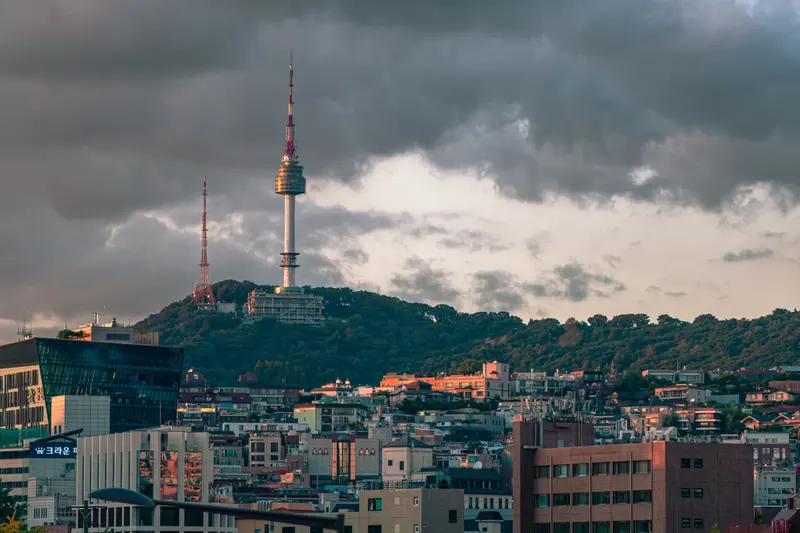
Roasters on Gajwa-ro, cafés along the Bulgwangcheon stream path, and coffee by Myongji University's Seoul campus.
Photo: Constantine Kim, Pexels License
Eungam-dong (응암동) is named after a boulder on Baengnyeonsan, the 228 m hill behind its housing, that looked like a perched hawk: 매바위 (maebawi, "hawk rock").1 Joseon royals are said to have flown hunting hawks around it; the rock was lost to urban growth, so the large rock on the summit now carries the name.1 To the south, in Seodaemun-gu, Bukgajwa-dong and Namgajwa-dong take their name from 가재울 (Gajaeul, "crayfish village"), a hill-ringed hollow where crayfish were plentiful.2
Seoul's 2004 plan for the Gajwa New Town redevelopment revived the old name as "Gajaeul e-park".10 Today Gajwa-ro and its numbered lanes have the most cafés, ahead of Geobukgol-ro past Myongji University and Bulgwangcheon-gil by the stream. Smaller groups sit in the Jeungsan-ro lanes and along Myongjidae-gil.
Local tip: Cross Haedamneun Bridge over Bulgwangcheon after a café stop at dusk: about 150 lights come on along its two arches, and on a clear day 11 Bukhansan peaks are visible from its deck, one of Seoul's designated viewpoints.3
Brown Cheri
Binseuaenwapeul
0125 Coffee Bar
Geunrin Coffee Brewing
Girinjakeopsil
Cafe Yeorm
Nabideu
Nema
Rojeudeumai
Modudagachi Cafe
Beneswi Coffee
Beurokeuntaempeo
Bipeulleoseu
Sajinjakgaui Cafe Sibet
Sanbokeulleop
Saejeol Dabang
Alkimiseuta
Owolui Iyu
Ondang
Jeunggaro Coffee 2 Branch
Cafe Asa
Kaepsyong Coffee Roasters
Coffee Gongwon
COFFEE RIN
Coffee Saenggak
Coffee Saenggak Jeungsan Branch
Tempeul
Paper Nuts
Nothing matches those filters here. See all cafés in Seoul.
Bulgwangcheon (불광천) runs 9.21 km from the Bukhansan foothills in Bulgwang-dong through Yeokchon, Eungam, Jeungsan and Bukgajwa to Seongsan-dong, where it joins the Hongjecheon.3 Its upper reaches are covered, and the water first shows at the Sinsa crossroads by Eungam station.3 The stream used to run dry outside rain; before the 2002 World Cup, groundwater was pumped in, the walking path was finished in May 2002, and in 2009 the cycle lane and footpath were split onto separate levels along 3.9 km.3
In summer, zinnias and sunflowers fill the beds beside the path, and murals cover bridge piers, with scenes of old and present-day Eunpyeong near Eungam station.4 In August 2026 Esquire Korea put the stream forward as a walking route linking independent cafés and roasters.5 On Bulgwangcheon-gil itself, Cafe Dark (카페 다르크) is at No. 450, 커피생각 (Coffee Thinking) at No. 420 and 0125커피바 at No. 388-1, with 쵸디 Chowdy further down at No. 162.
Saejeol station on Line 6 opened on 15 December 2000, with the Eungam–Sangwolgok section.6 It sits in Sinsa-dong and was called Bukgajwa while under construction; to avoid a clash with Sinsa station on Line 3 in Gangnam, it took 새절 (saejeol), the native Korean reading of 新寺, "new temple", and keeps Sinsa as a subtitle.6 Exit 1 points toward Eungam Market, and the station is planned as a transfer to the Seobu light rail line.6
Gajwa-ro, one of the roads that bridge the stream, has most of the specialty coffee.3 샐러맨더커피로스터스 (Salamander Coffee Roasters) is at No. 269 and Shiro Coffee Lab in the 10-gil lane, while 새절다방, whose name pairs the station with dabang (다방, the old word for a tearoom), is in the 9-gil lane. Further along the road, 그안에 헤븐 is at No. 116 and 프로즌빈 at No. 298.
Myongji University's humanities campus is at Geobukgol-ro 34 in Namgajwa-dong.7 The school opened in September 1948 as Seoul Higher Home School in Bukchang-dong, founded by Yu Sang-geun, and moved its headquarters to the Namgajwa campus in January 1976.7 Since 1989 the sciences, engineering and arts have been taught on its Yongin campus, leaving humanities, law and business in Seoul.7
Geobukgol-ro, "turtle valley road", divides Bukgajwa 1-dong from 2-dong and is named after a village called Geobukgol.2 The stele of Prince Hwasan, a great-grandson of King Seonjo, stands on a stone turtle, which is why residents called it the turtle stele; it is Seoul Tangible Cultural Heritage No. 41.2 Seonhyu Coffee is at No. 79, 붕어빵카페, named for bungeoppang (붕어빵, fish-shaped pastry), at No. 150, and 네마 at No. 208-1.
원두상점 브라운체리 (Brown Cherry), a bean shop at Moraenae-ro 15-gil 58 in Namgajwa-dong, roasts each order after it comes in and then ships it.8 Its November 2026 list ran from an Ethiopia Yirgacheffe Chelbesa washed at ₩20,000 for 200 g to a Panama La Esmeralda geisha at ₩68,000 for 200 g.8
On Jeungsan-seo-gil, 사진작가의 카페시벳 ("a photographer's Café Civet") is at No. 64-7 and 캡숑커피로스터즈 roasts at No. 103-1. The Civet's blog, run under the name Black Balance Coffee, opens with the line that good roasted beans start from good green beans, and sells its coffee through an online shop.9 For a late cup, 빈스앤와플 on Jeungga-ro 25-gil has Wi-Fi and outdoor seats and opens daily 11:00–00:00.
In Eungam & Gajwa, also browse: Specialty coffee Wi-Fi Open late Outdoor seating Bakery cafés
Bulgwangcheon-gil, the road beside the stream, has Cafe Dark at No. 450, Coffee Thinking at No. 420 and 0125 Coffee Bar at No. 388-1. The stream's open water starts at the Sinsa crossroads by Eungam station, and its walking path was finished in May 2002.
Saejeol station on Line 6, opened in December 2000 in Sinsa-dong, is closest to the Gajwa-ro roasters and Eungam Market. Its name is the native Korean reading of Sinsa, chosen to avoid a clash with Sinsa station in Gangnam.
Brown Cherry, a bean shop at Moraenae-ro 15-gil 58 in Namgajwa-dong, roasts each order before shipping it; in November 2026 a 200 g bag ranged from ₩20,000 to ₩68,000. Salamander Coffee Roasters at Gajwa-ro 269 serves specialty coffee.
Free listings are free for good. A featured page gives you photos, a menu and your own URL, in your café's own design, for less than a coffee a day.