수연산방
Suyeon Sanbang Tea House
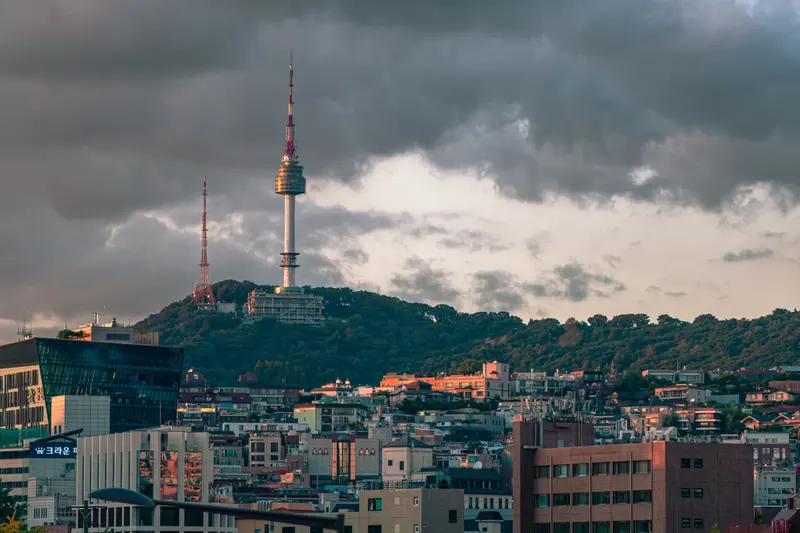
Croissants on Seongbuk-ro, hand drip above Bukjeong Village, and tea in a 1933 writer's hanok near Gilsangsa and Simujang.
Photo: Constantine Kim, Pexels License
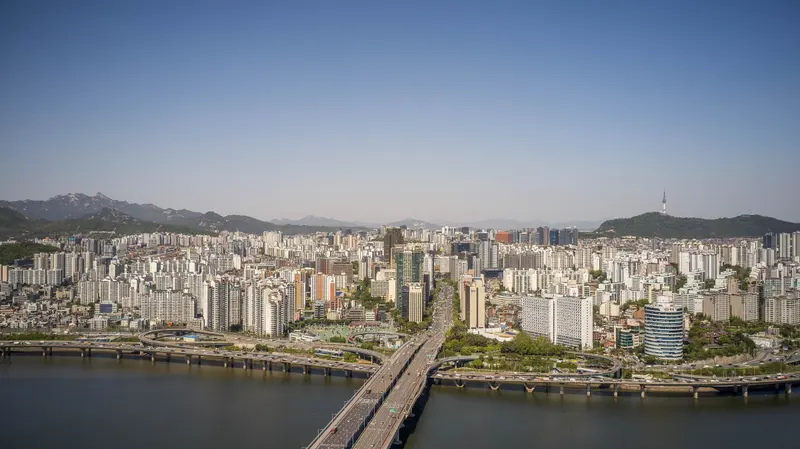
Seongbuk-dong (성북동) lies just outside the old Seoul City Wall, between the Hyehwamun and Sukjeongmun gates, in a valley once known for clear streams, scholar's rocks and peach and cherry trees.1 Its name goes back to 1765, when the Eoyeongcheong, the Joseon army unit that guarded the capital, set up a northern garrison here.1 It is one of the country's old wealthy districts, with 16,503 residents on 2.85 km² in February 2022.1
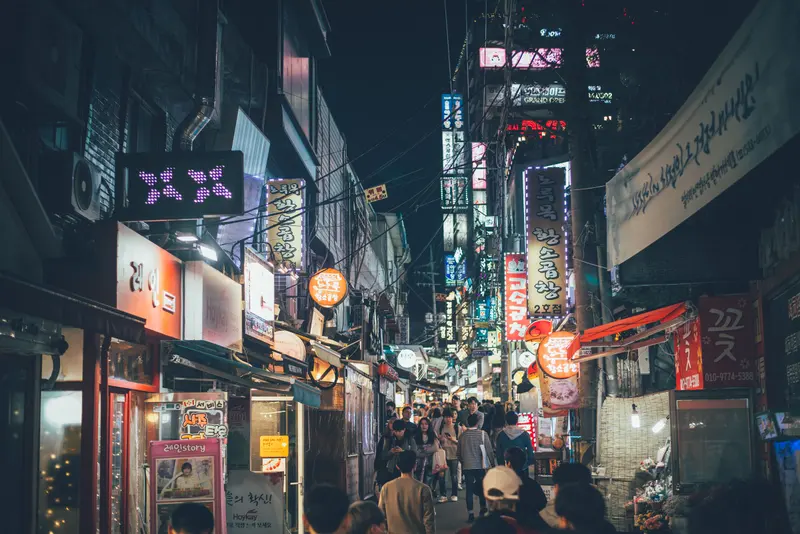
Seongbuk-ro, the road that climbs the valley, and its numbered side lanes have the most cafés. A smaller group sits on Hyehwa-ro and Arirang-ro at the bottom of the hill, and a few more are up on Seonjam-ro and Daesagwan-ro, the quiet residential roads near the top.
Local tip: See Choi Sunu House before winter: it opens Tuesday to Saturday, 10:00–16:00, and closes from December to March.5
Suyeon Sanbang Tea House
Ilsang
Gallery Coffee House
Gwail Cafe
Milpeullekseu
Seongbukdong Kongjip
Obeo Story
Josepui Coffee Namu
Jjaejeu Story Seongbukdong
Kina Seonjamro 46
Peureomkeurik
Dawon
Serina
Soma
Atomoseu
Elmadeure
Haneul
Nothing matches those filters here. See all cafés in Seoul.
Hansung Univ. station on Line 4, signed with the subtitle Samseongyo, opened on 20 April 1985 and averaged about 34,160 passengers a day in 2012.8 Seoul's official guided walk through Seongbuk-dong meets at exit 6, rides the Seongbuk 02 shuttle bus up to Gilsangsa, then walks back down past the Seonjamdan altar site, Choi Sunu House, Simujang and Lee Tae-jun's house, which takes two to three hours.6
Coffee starts at the foot of the hill. Play Coffee, a bakery café, and 째즈스토리 (Jazz Story) share Hyehwa-ro 88, and Bokka is a short walk away on Arirang-ro. On the climb, the first cafés on Seongbuk-ro are 세리나 (Serina) at No. 69 and 밀플렉스 (Milplex) at No. 76.
The Kansong Art Museum began in 1938 as Bohwagak, opened by the collector Jeon Hyeong-pil as Korea's first private museum to keep Korean art and books from being carried off to Japan; the architect Park Gil-ryong designed the building.9 In 2011 it held twelve national treasures, among them a copy of the Hunminjeongeum, the text that sets out the Hangul script.9
Off the lower road, at Seongbuk-ro 15-gil 9, Choi Sunu House is a 1930s hanok (한옥, traditional house) built around a courtyard with a small well.5 Choi, a former director of the National Museum of Korea, lived there from 1976 until his death in 1984 and wrote Leaning on the Pillars of Muryangsujeon in it; a civic trust bought and restored it when it faced demolition.5
Further up, at Seongbuk-ro 155, Boulanger Maison Bukak is known for croissants. Esquire Korea's pick in 2021 was one topped half with custard and half with green-tea cream, with fig-cream, Dojima-cream and kaya versions alongside.7 일상 (Ilsang, "everyday") at No. 106 opens Tuesday to Sunday, 12:00–18:10.
The novelist Lee Tae-jun built his house at Seongbuk-ro 26-gil 8 in 1933 and lived there until 1946, writing the stories Dalbam (Moonlit Night) and Doldari (Stone Bridge) in it.3 It is Seoul Folk Cultural Heritage No. 11: a single L-shaped main building that combines the men's and women's quarters, hip-and-gable at the front and gabled at the back.3 His grand-niece serves tea in it as 수연산방 (Suyeon Sanbang).3
A few lanes up, the monk and poet Han Yong-un, author of The Silence of Love and one of the 33 national representatives of the March 1st Movement, lived at Simujang from 1933 until his death in 1944.2 The small tiled house faces north, and its name, 尋牛莊, comes from the Buddhist parable that likens seeking enlightenment to searching for a lost ox.2 It opens 09:00–18:00 all year.2 ALEX THE COFFEE, in Seongbuk-ro 28-gil, is a lane above Suyeon Sanbang.
Gilsangsa, at Seonjam-ro 5-gil 68, stands on the site of Daewongak, which until the late 1980s ranked with Samcheonggak among the city's grand hanok restaurant houses.4 Its owner, Kim Yeong-han, gave more than 23,000 m² of land and over 40 buildings to the monk Beopjeong, and it opened as a temple in 1997.4 In her youth she was the companion of the poet Baek Seok, who called her Jaya, and she is taken to be the Natasha of his poem about Natasha and a white donkey.10
Across the valley, 조셉의 커피나무 (Joseph's Coffee Tree) looks down on Bukjeong Village (북정마을), an old dal-dongne (달동네, hillside settlement of the poor) where artists now gather.7 Esquire Korea sent readers there for hand drip and specialty coffee from a barista with about 30 years' experience, and suggested a weekday between 15:00 and 16:00 for a quiet window seat.7
In Seongbuk-dong, also browse: Open late Bakery cafés
Seongbuk-ro, the road that climbs the valley from Hansung Univ. station, and its side lanes have the most. Boulanger Maison Bukak, known for its croissants, is at Seongbuk-ro 155, and Ilsang is at No. 106.
Yes. Suyeon Sanbang at Seongbuk-ro 26-gil 8 is the 1933 hanok of the novelist Lee Tae-jun, where he wrote Moonlit Night and Stone Bridge. His grand-niece runs it as a traditional tea house, and it is Seoul Folk Cultural Heritage No. 11.
Take Line 4 to Hansung Univ. station, subtitled Samseongyo. Seoul's official walking tour of Seongbuk-dong starts at exit 6 and takes the Seongbuk 02 shuttle bus up to Gilsangsa, then walks back down past the writers' houses and cafés.
Free listings are free for good. A featured page gives you photos, a menu and your own URL, in your café's own design, for less than a coffee a day.